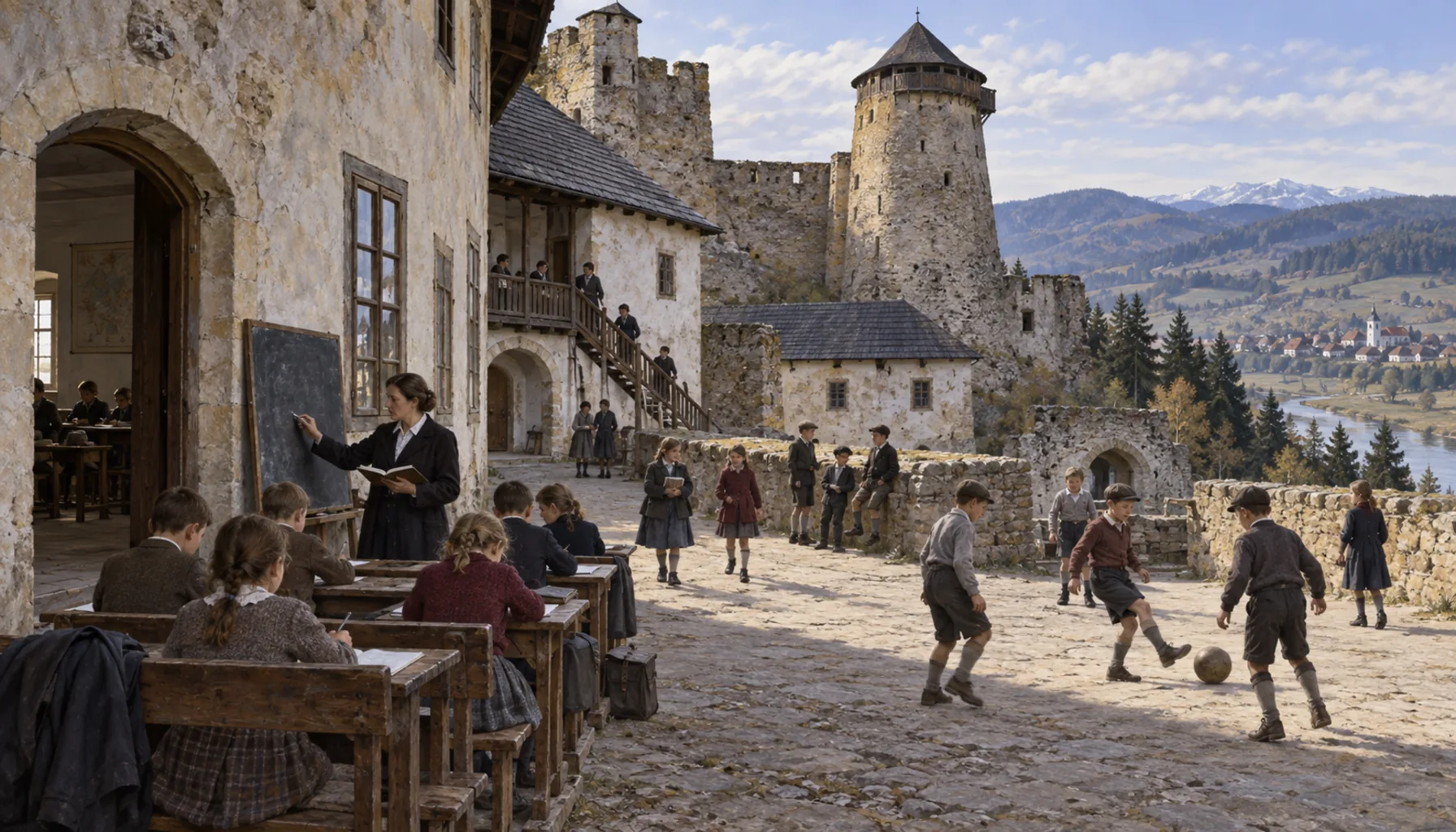
Under the communist state the buildings were used for school purposes before anyone thought seriously about the castle as a monument. Systematic archaeological research began in 1971, and with it the long, patient restoration that is still going on — which is why Ľubovňa today is neither a bare ruin nor a rebuilt château, but a place where some rooms are furnished and interpreted and others are consolidated shells. In the meadow below the hill an open-air museum was assembled out of buildings rescued from the emptying villages of the upper Spiš: log cottages, barns, a smithy, a school, and a wooden Greek Catholic church moved here from Matysová.Za socializmu slúžili hradné budovy najskôr školským účelom a až potom niekoho napadlo brať hrad vážne ako pamiatku. Systematický archeologický výskum sa začal v roku 1971 a s ním dlhá, trpezlivá obnova, ktorá pokračuje dodnes — preto Ľubovňa nie je ani holá zrúcanina, ani znovupostavený zámok, ale miesto, kde sú niektoré miestnosti zariadené a vysvetlené a iné zakonzervované ako holé steny. Na lúke pod kopcom vzniklo múzeum ľudovej architektúry z domov zachránených z vyľudňujúcich sa dedín horného Spiša: zrubové chalupy, stodoly, kováčska vyhňa, škola a drevený gréckokatolícky kostolík prenesený z Matysovej.