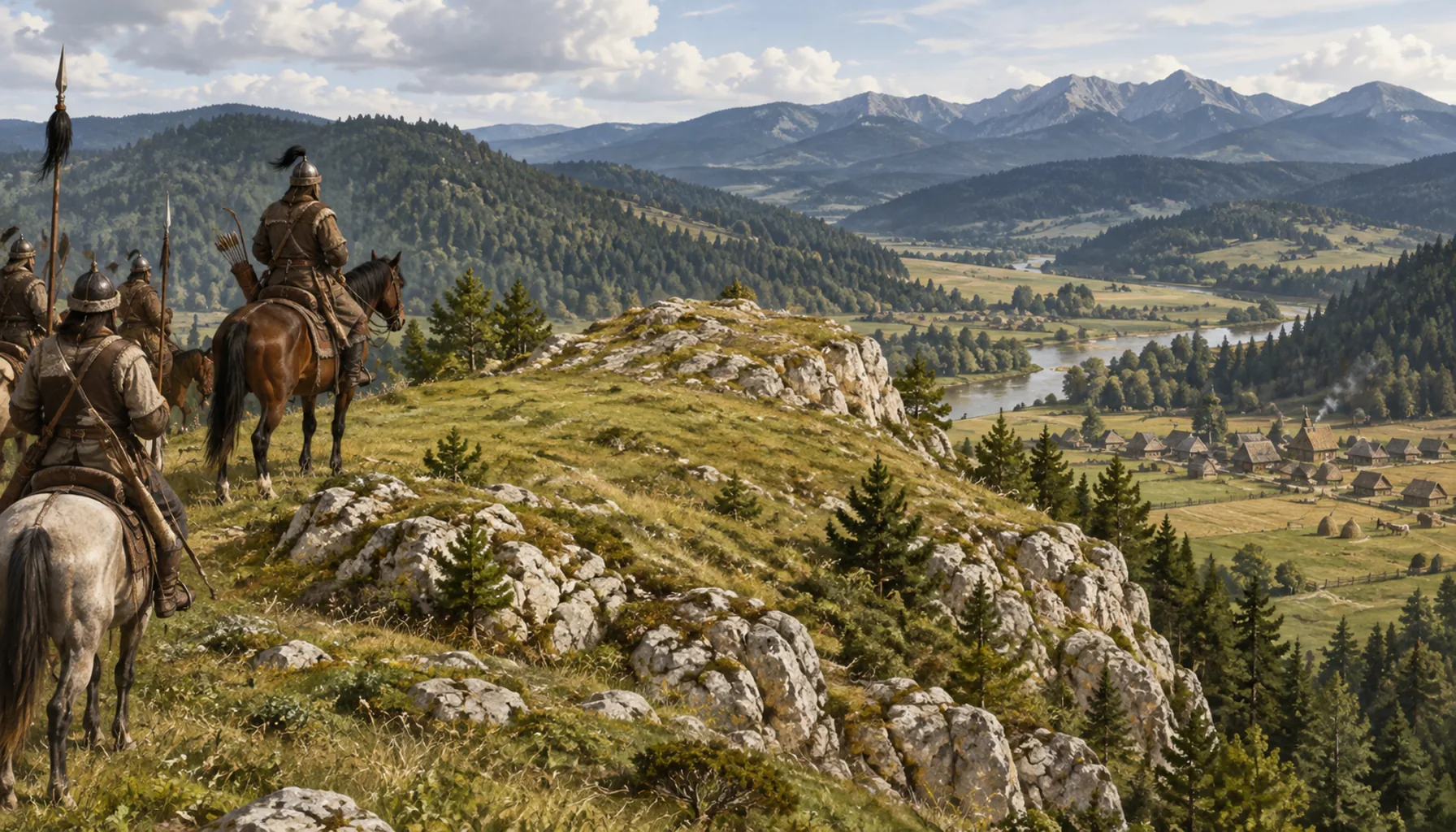
The Mongol invasion of 1241 destroyed no castle here, because there was no castle here to destroy. What it destroyed was every argument against building one. Béla IV had watched timber forts and open towns burn, and the kingdom's answer afterwards was stone on high ground — which is why so many Slovak castles date from the two or three generations after 1241 rather than from before it. Ľubovňa is one of them: raised on a limestone spur in the second half of the thirteenth century or at the very start of the fourteenth, exactly where the Poprad valley opens the road north.Vpád Mongolov v roku 1241 tu nezničil nijaký hrad, lebo tu ešte nijaký nestál. Zničil však všetky námietky proti tomu, aby sa začalo stavať. Belo IV. videl horieť drevené hrádky aj neopevnené mestá a odpoveďou kráľovstva bol kameň na vyvýšenom mieste — preto toľko slovenských hradov pochádza z dvoch či troch generácií po roku 1241, a nie spred neho. Ľubovňa je jedným z nich: vyrástla na vápencovom brale v druhej polovici 13. alebo na samom začiatku 14. storočia, presne tam, kde popradská dolina otvára cestu na sever.