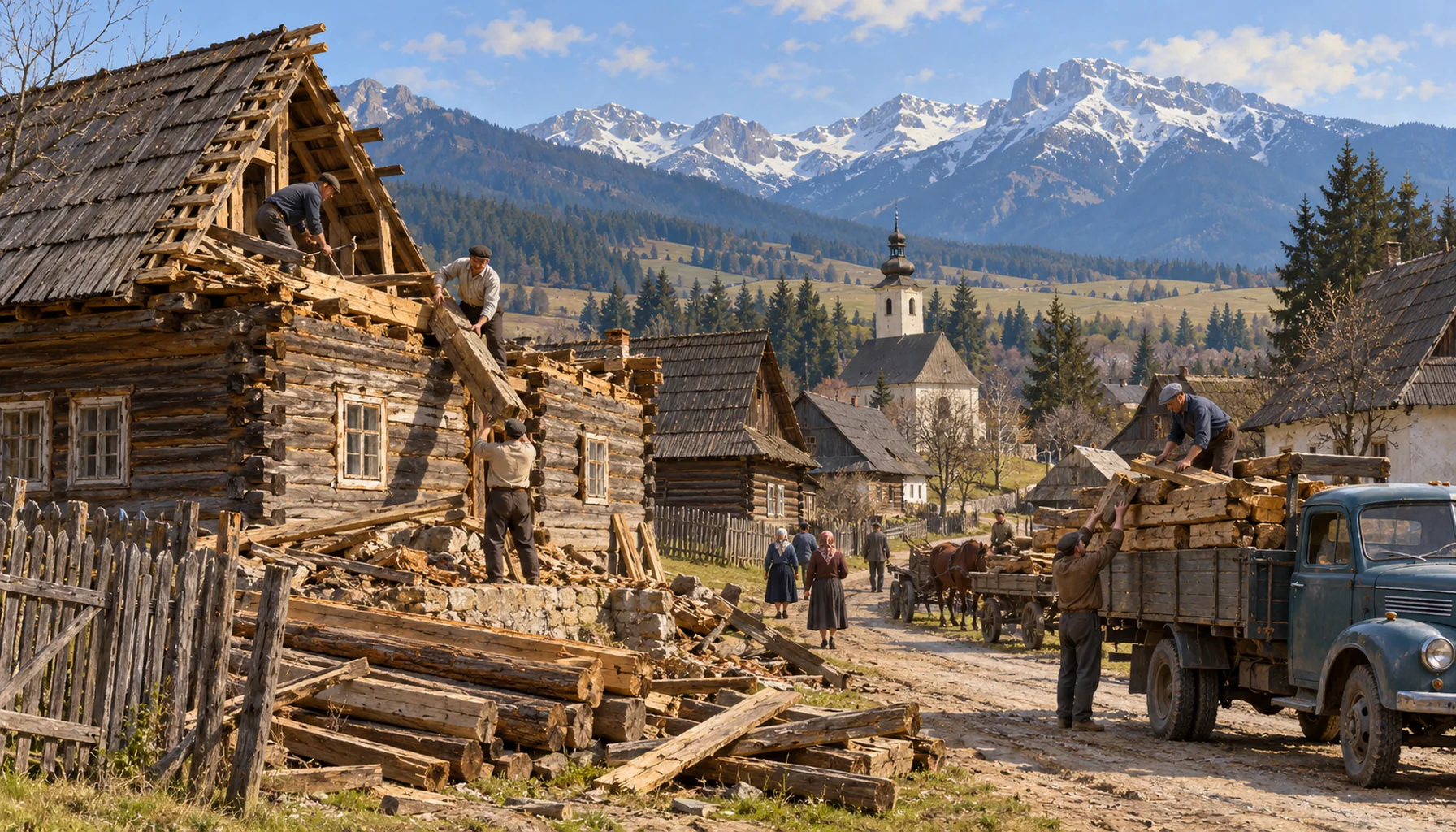
By the 1960s Orava's log buildings were coming down faster than anyone could record them. The Orava Museum's answer was a meadow at Brestová, three kilometres above Zuberec: the foundation stone was laid on 24 September 1967 and the Museum of the Orava Village opened to the public in 1975. More than fifty buildings were dismantled in villages across the valley, carted here and re-erected as a village that never existed — a market row from the lower valley, a Goral hamlet from the upper one, a mill stream with a water mill and a sawmill. Its oldest building came the same way: a timber church of Saint Elizabeth from Zábrež in the lower valley, built at the beginning of the fifteenth century, with a late Gothic painted ceiling, rebuilt on the slope at the top of the site.V šesťdesiatych rokoch padali oravské zruby rýchlejšie, než ich stihol niekto zdokumentovať. Odpoveďou Oravského múzea bola lúka na Brestovej tri kilometre nad Zubercom: 24. septembra 1967 tam položili základný kameň a v roku 1975 sa Múzeum oravskej dediny otvorilo verejnosti. Viac ako päťdesiat stavieb rozobrali v obciach po celej doline, priviezli sem a znovu postavili ako dedinu, ktorá nikdy neexistovala — trhový rad z dolnej Oravy, goralská osada z hornej, mlynský náhon s vodným mlynom a pílou. Rovnako sem prišla aj najstaršia stavba: drevený kostol svätej Alžbety zo Zábreže v dolnej Orave zo začiatku 15. storočia, s neskorogotickým maľovaným stropom, postavený nanovo na stráni v hornej časti areálu.