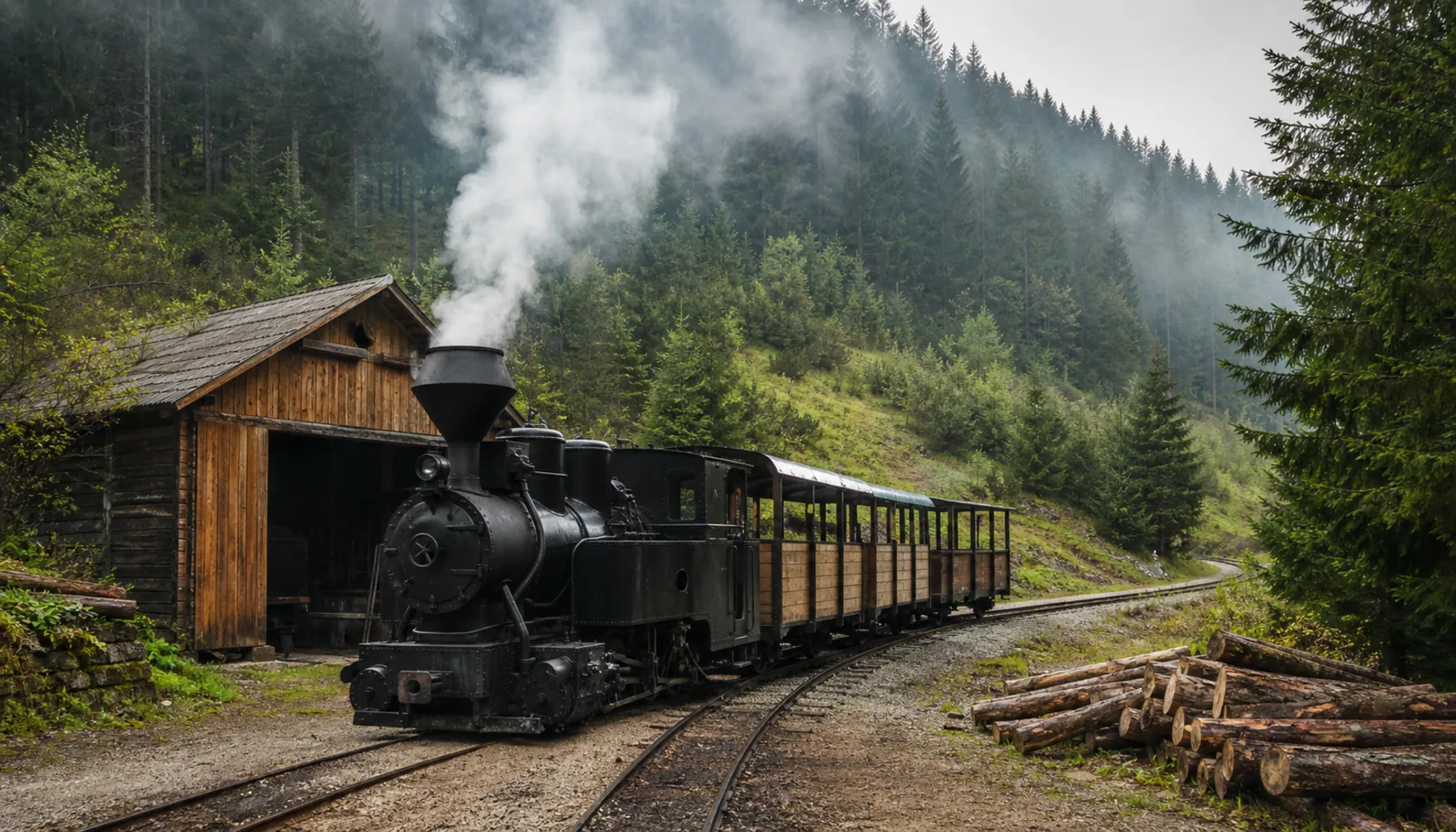
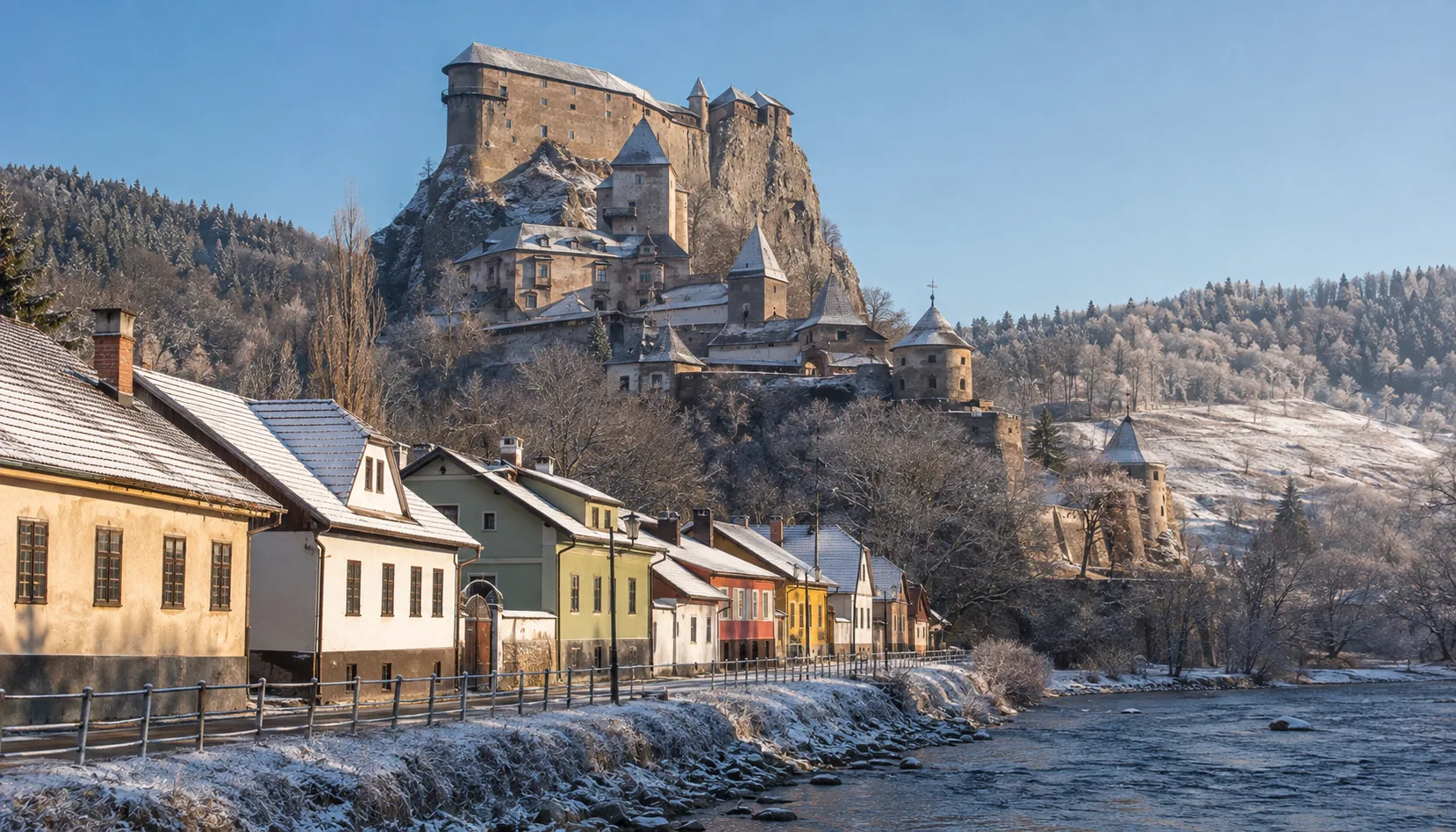
Orava is a valley of villages: four small towns, and everything else forest, pasture and log houses. This section covers the ones where something particular survives — an open-air museum, a street of original log houses, a UNESCO wooden church, a forest railway.Orava je dolina dedín: štyri malé mestá a všetko ostatné les, pasienky a drevenice. Táto časť sa venuje tým obciam, kde sa zachovalo niečo konkrétne — skanzen, ulica pôvodných dreveníc, drevený kostol zo zoznamu UNESCO, lesná železnica.
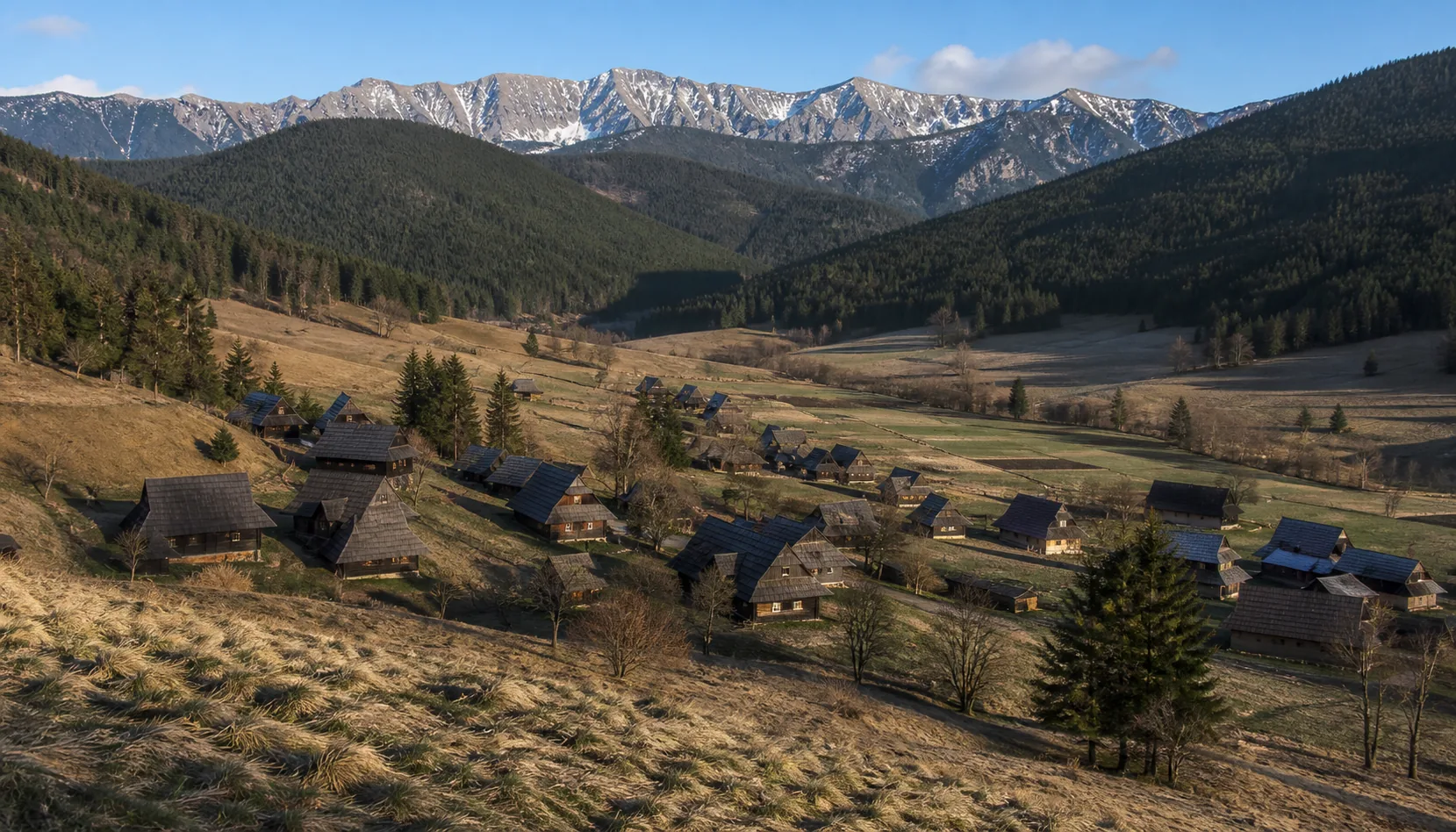
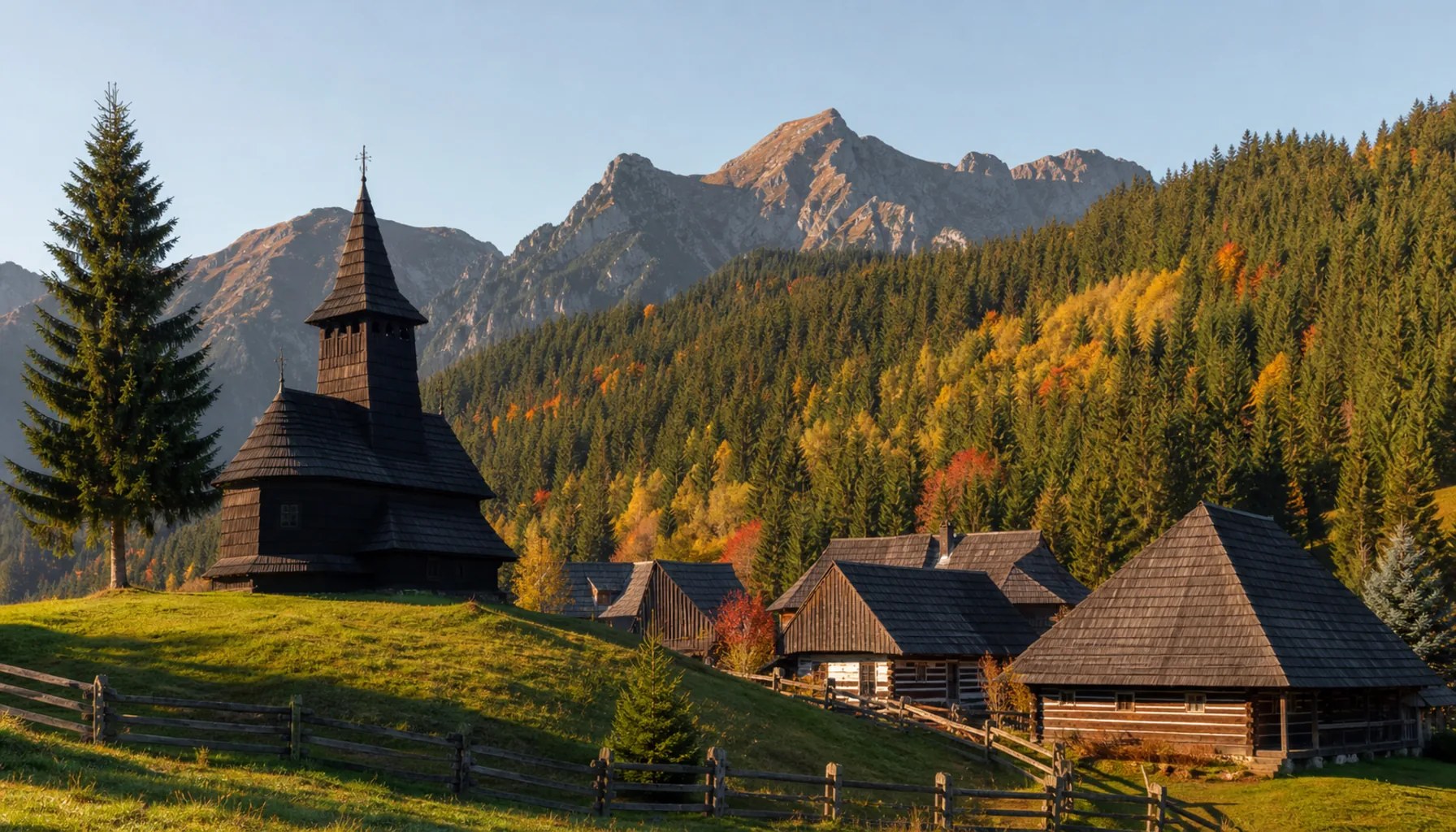
The Orava valley from a hillside, its log villages under the spruce and the Roháče beyondOravská dolina zo svahu, drevenicové dediny pod smrečinami a Roháče v pozadí
A late-settled valleyNeskoro osídlená dolina
Orava filled up from the bottom of the valley upward, and late. The lower reaches around the castle were farmed early; the upper valley, running north towards the Polish border, was colonised in the sixteenth and seventeenth centuries on the terms that governed settlement in these mountains — a locator was granted a stretch of forest and brought settlers in, and they held years free of dues while they cleared it. That is why so many upper-Orava villages are a single long line of houses along a stream, with their fields in narrow strips behind them.Orava sa zapĺňala odspodu doliny nahor — a neskoro. Dolnú časť okolo hradu obrábali už dávno, hornú dolinu tiahnucu sa na sever k poľskej hranici kolonizovali v 16. a 17. storočí za podmienok, aké pri osídľovaní týchto hôr platili: šoltýs dostal kus lesa a priviedol osadníkov, ktorí mali na roky odpustené dávky, kým pôdu vyklčovali. Preto je toľko hornooravských dedín jediným dlhým radom domov pozdĺž potoka s poľami v úzkych pásoch za nimi.
The whole valley belonged to one estate, Orava Castle's. When the Thurzó male line ended in the seventeenth century the estate passed to a body of co-heirs, the Orava Composessorate, which ran the forests, the sawmills and much of the working life of the region into the twentieth century. The soil is thin, the summers short and the winters long; around 1900 Orava sent people to America in numbers, and the habit of keeping a house in the village while the money is earned somewhere else is old here.Celá dolina patrila jednému panstvu — oravskému hradnému. Keď v 17. storočí vymrela mužská vetva Thurzovcov, panstvo prešlo na spoločenstvo spoludedičov, na Oravský komposesorát, ktorý až do 20. storočia riadil lesy, píly a veľkú časť pracovného života kraja. Pôda je tu chudobná, letá krátke a zimy dlhé; okolo roku 1900 odchádzali Oravci do Ameriky vo veľkom a zvyk mať dom v dedine a peniaze zarábať inde je tu starý.
Built of sprucePostavené zo smreka
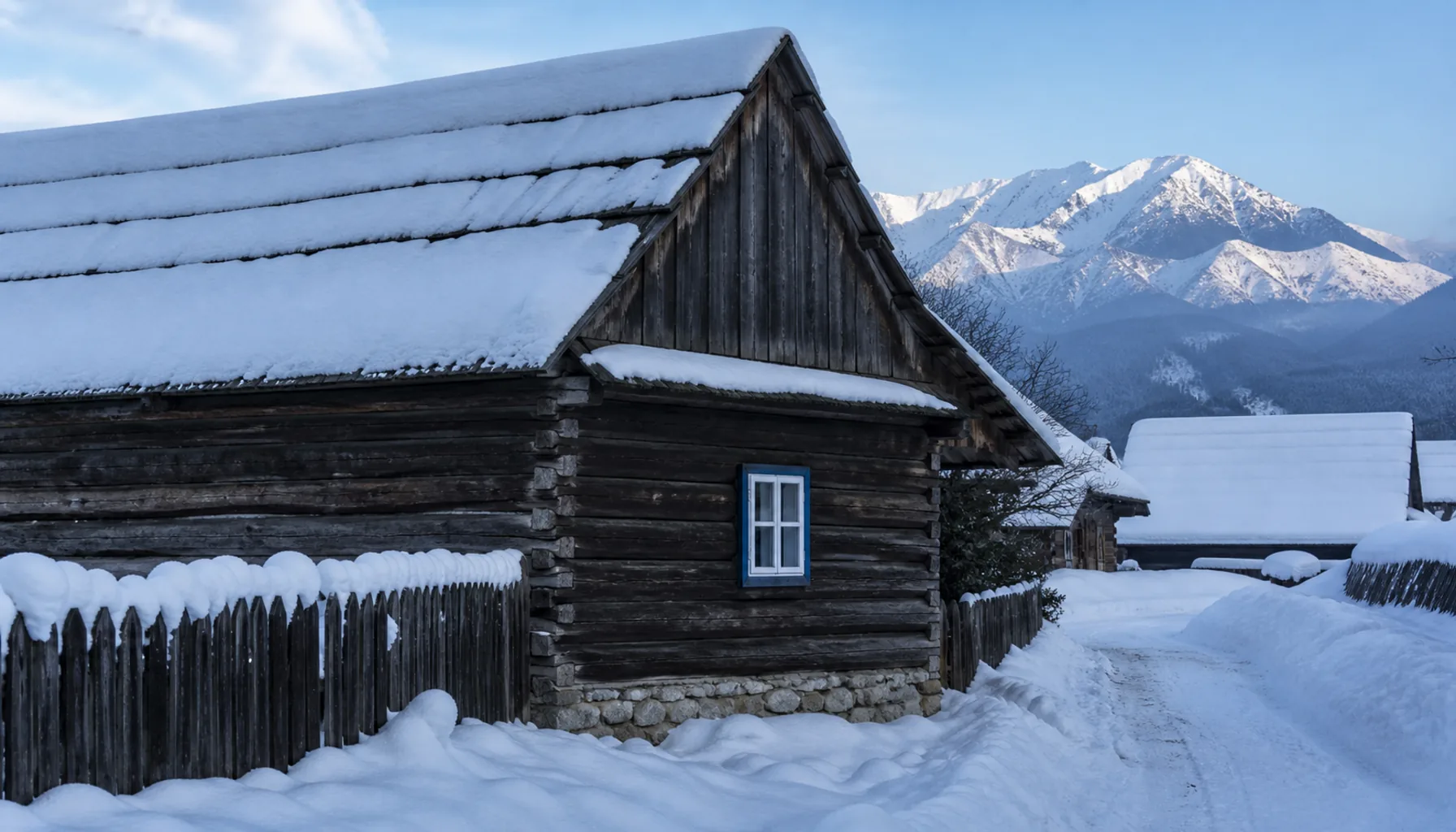
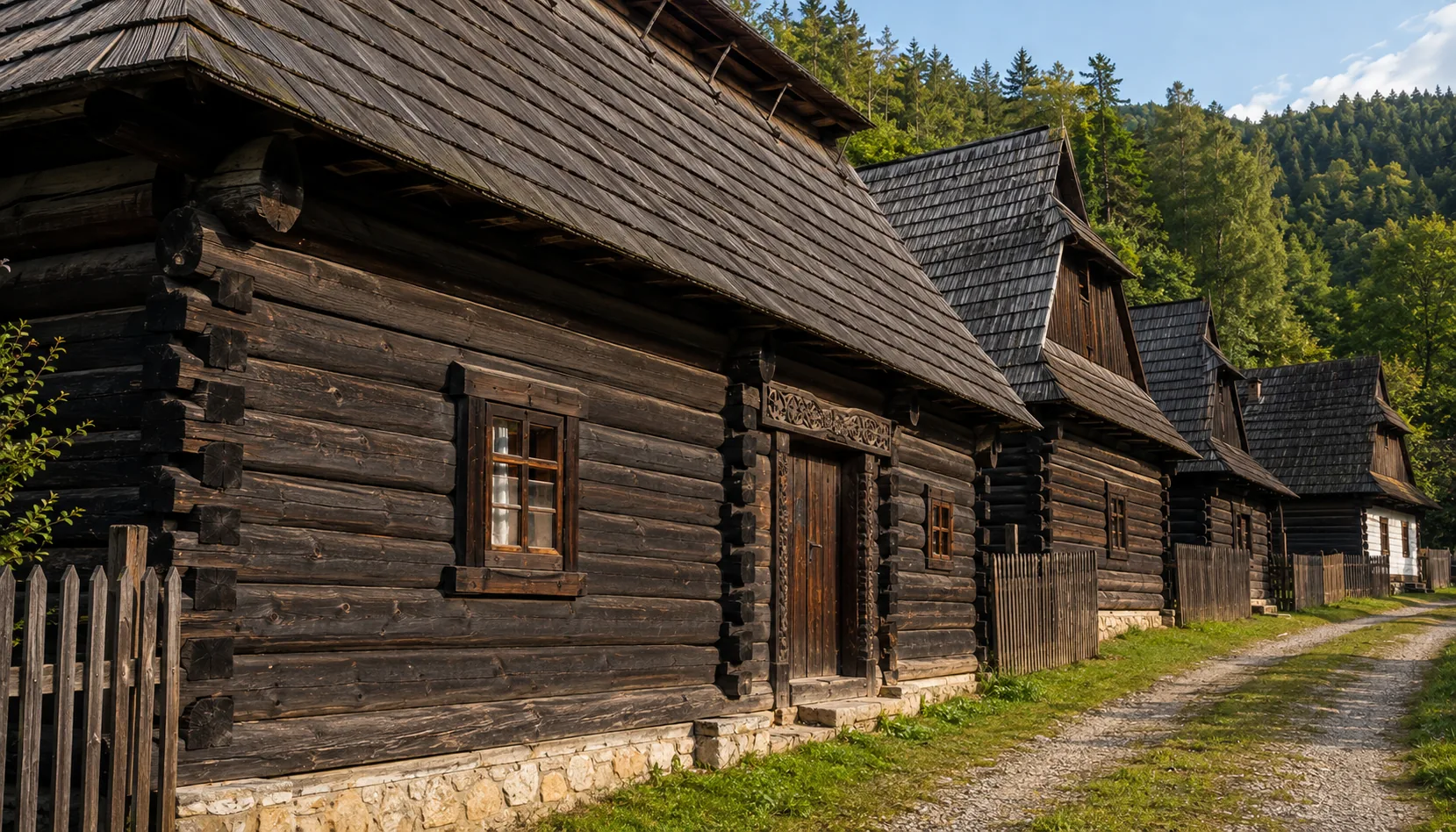
People build with what grows around them, and around Orava grows spruce. The Orava house is squared spruce beams dovetailed at the corners, set on a low stone footing, under a steep roof that was shingle until sheet metal arrived. Weather and soot darken the timber to something close to black. The gable end faces the lane, and behind the door the plan is the old three-part one: room, passage, storeroom.Ľudia stavajú z toho, čo okolo nich rastie, a okolo Oravy rastie smrek. Oravský dom je z tesaných smrekových brvien viazaných v rohoch na zámok, postavený na nízkej kamennej podmurovke, pod strmou strechou, ktorá bola do príchodu plechu šindľová. Počasie a sadze stmavia drevo takmer do čierna. Do uličky hľadí štítová stena a za dverami je starý trojdielny pôdorys: izba, pitvor, komora.
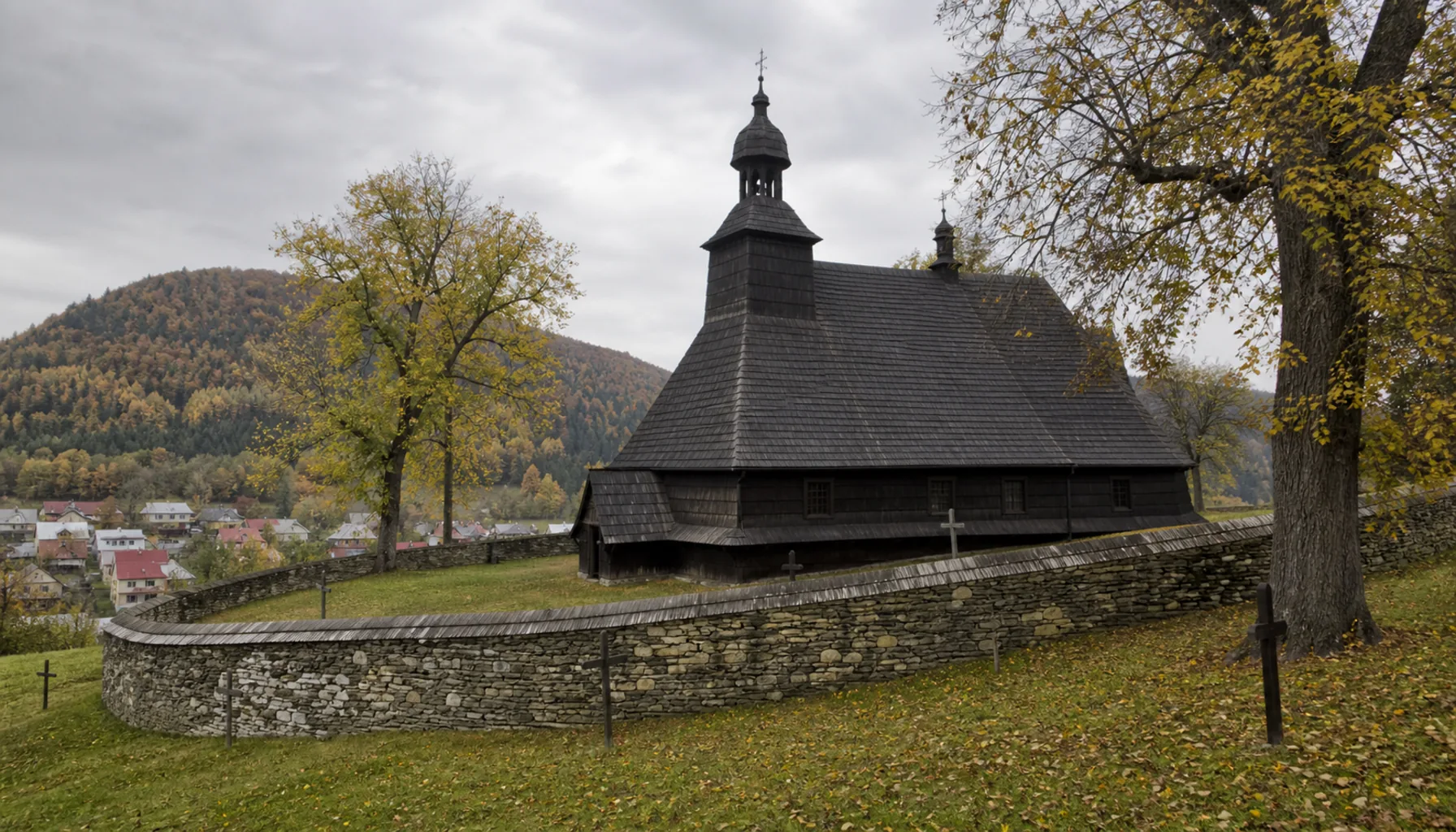
Very little is as old as it looks, because villages here burned. Most of the log houses standing today are nineteenth-century rebuildings on much older plans, which is not a fault in them — it is how a timber landscape survives at all. The twentieth century took its own share by other means: five villages of the upper valley went under the water when the Orava reservoir was filled in the 1950s, and the island church out in the middle of it stands on the hill of one of them.Málo je také staré, ako vyzerá, lebo dediny tu horeli. Väčšina dnešných dreveníc sú prestavby z 19. storočia podľa oveľa starších pôdorysov — a nie je to ich chyba, takto drevená krajina vôbec prežije. Dvadsiate storočie si vzalo svoj diel inak: pri napustení Oravskej priehrady v päťdesiatych rokoch zmizlo pod vodou päť dedín hornej doliny a kostol na ostrove uprostred nej stojí na kopci jednej z nich.
Visiting themAko ich navštíviť
Distances between these villages are short, but the roads are valley roads and the weather is the variable that matters. This is one of the coldest corners of Slovakia; snow lies late, and anything described as seasonal here is seasonal in earnest. Museum opening, guided access to a church and the running of a heritage train all follow the summer half of the year — out of season, assume a door is locked until somebody tells you otherwise.Vzdialenosti medzi týmito obcami sú krátke, no cesty sú dolinové a rozhodujúcou premennou je počasie. Toto je jeden z najchladnejších kútov Slovenska, sneh tu leží dlho a čokoľvek, čo sa označí za sezónne, je sezónne naozaj. Otváracie hodiny múzea, sprístupnenie kostola aj premávka historického vláčika sa riadia letnou polovicou roka — mimo sezóny rátajte s tým, že dvere sú zamknuté, kým vám niekto nepovie opak.
Most of what is worth looking at is somebody's house or somebody's church. Fronts are photographed from the lane, gardens are not; gates stay shut; a log house let as holiday accommodation has people asleep in it. The one place in Orava where the doors are open on purpose is the open-air museum at Zuberec, which is precisely what an open-air museum is for.Väčšina toho, na čo sa oplatí pozerať, je niečí dom alebo niečí kostol. Priečelia sa fotia z uličky, záhrady nie; bránky zostávajú zavreté a v drevenici prenajatej na ubytovanie ľudia spia. Jediné miesto na Orave, kde sú dvere otvorené naschvál, je skanzen v Zuberci — a presne na to skanzen je.