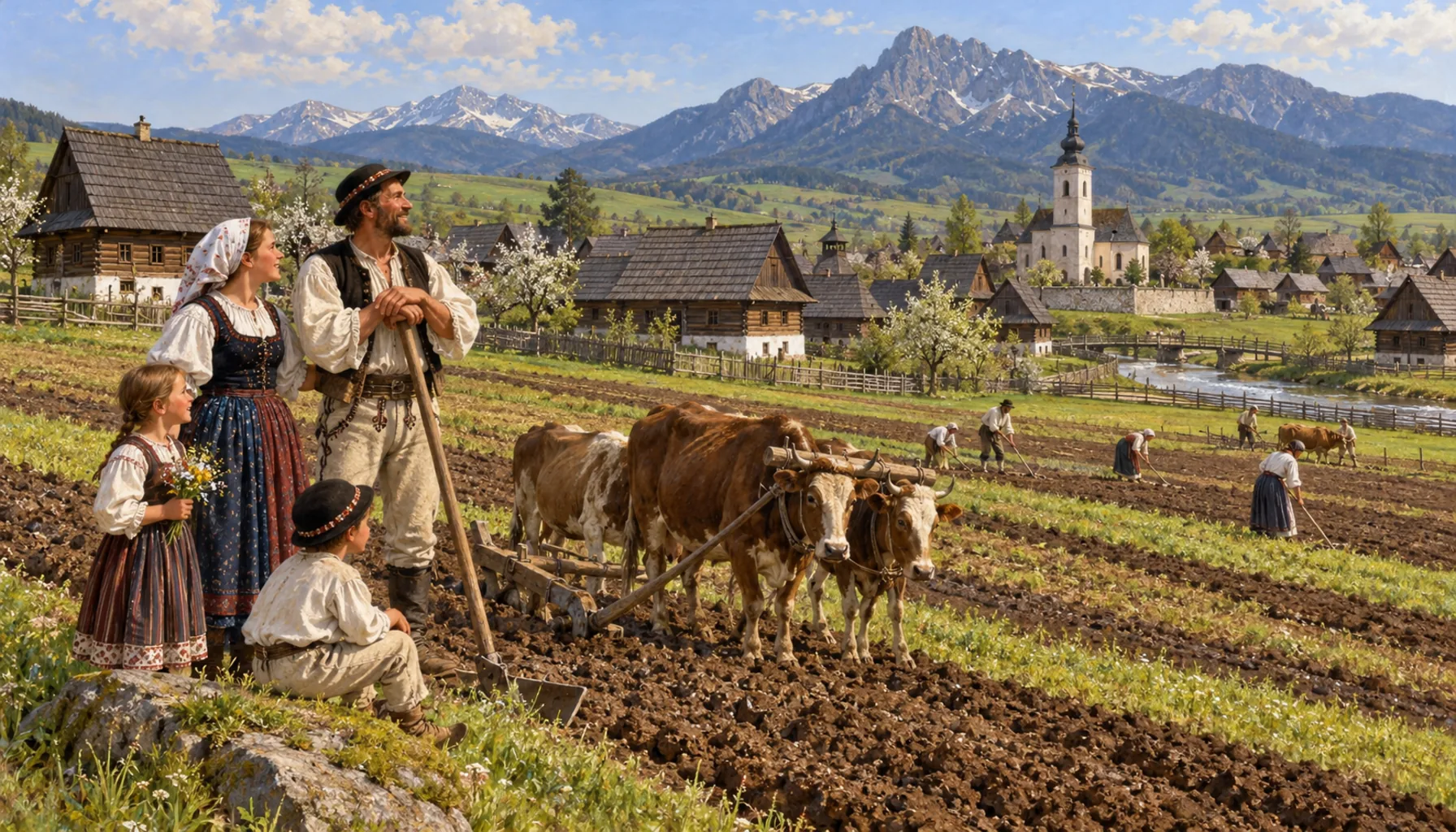
Serfdom was abolished in the Kingdom of Hungary in 1848, and in most of the country that meant a peasant family finally owned the strips it had been working. In Orava it meant much less than it sounds. The fields here are small, stony and high, and the one thing that could actually feed a family — the forest — stayed with the estate: after the palatine Juraj Thurzo died in 1616 the Orava lands were held jointly by his heirs as the Orava Composessorate, a company of co-owners rather than a single lord, and it kept the woods and the sawmills until 1945. So the villagers were free, and still had to hire themselves to the estate to cut its trees. That arithmetic is behind everything that happens next.Poddanstvo v Uhorsku zrušili v roku 1848 a vo väčšine krajiny to znamenalo, že sedliacka rodina konečne vlastnila to, čo dovtedy obrábala. Na Orave to znamenalo oveľa menej, než to znie. Polia sú tu malé, kamenisté a vysoko položené a to jediné, čo rodinu naozaj uživilo — les — zostalo panstvu: po smrti palatína Juraja Thurzu v roku 1616 držali oravské majetky spoločne jeho dedičia ako Oravský komposesorát, teda spoločenstvo spolumajiteľov namiesto jedného pána, a lesy aj píly mu patrili až do roku 1945. Ľudia teda boli slobodní a aj tak sa museli najímať k panstvu na rúbanie jeho stromov. Táto jednoduchá počtová úloha stojí za všetkým, čo nasleduje.