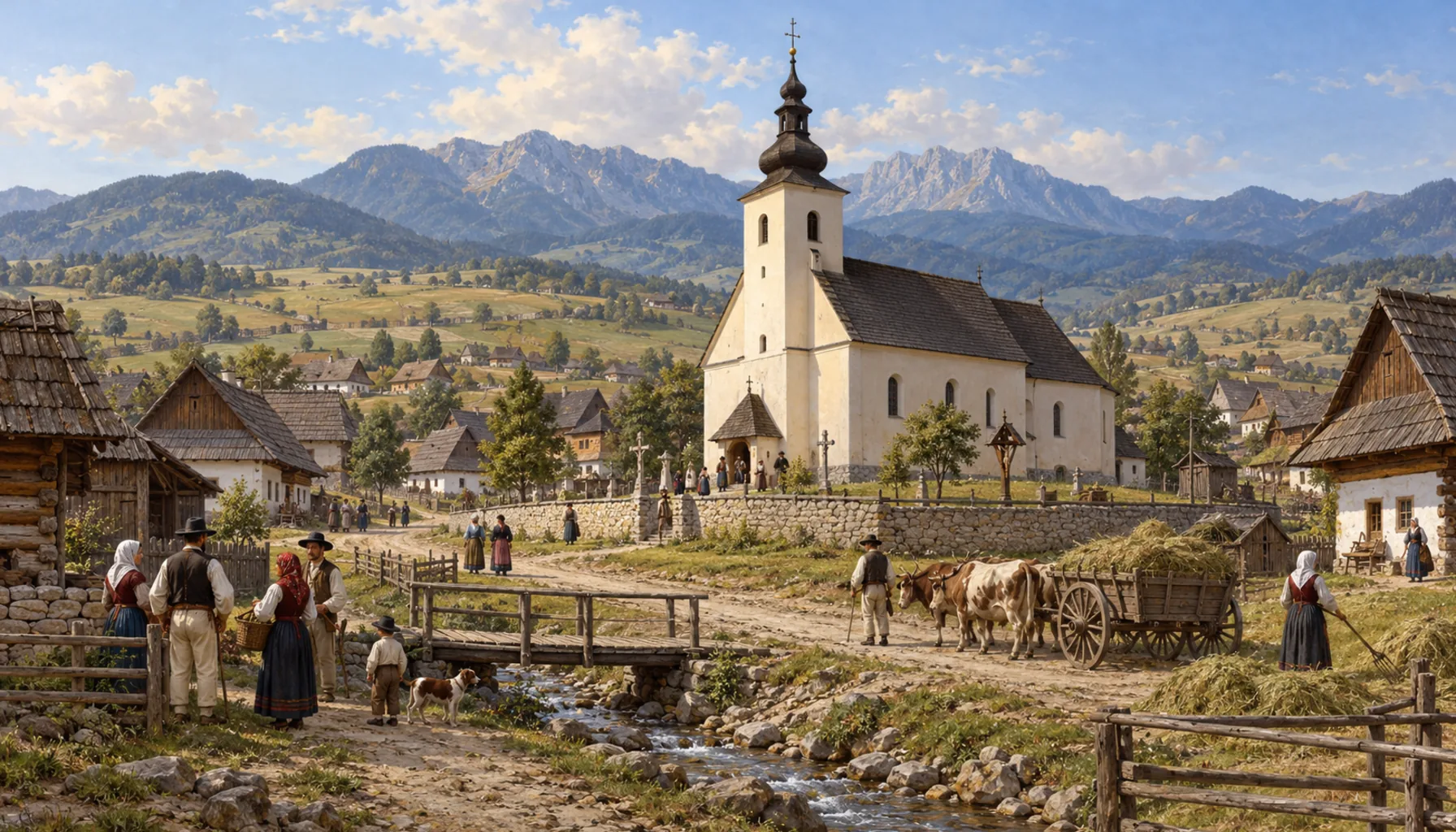
The church of the Seven Sorrows of the Virgin Mary was built in 1829, when the village had grown to 793 people. Nineteen years later serfdom was abolished across the Kingdom of Hungary, and in Orava that changed less than it should have: the fields were small, high and stony, and the forest — the only thing that could properly pay a family — stayed with the estate. After the palatine Juraj Thurzo died in 1616 the Orava lands were held jointly by his heirs as the Orava Composessorate, a company of co-owners, and it kept the woods and the sawmills until 1945. Free villagers went on hiring themselves to it, in its forest, at its price.Kostol Sedembolestnej Panny Márie postavili v roku 1829, keď mala dedina 793 obyvateľov. O devätnásť rokov neskôr zrušili v Uhorsku poddanstvo a na Orave to zmenilo menej, než malo: polia boli malé, vysoko položené a kamenisté, a les — jediné, čo dokázalo rodinu poriadne uživiť — zostal panstvu. Po smrti palatína Juraja Thurzu v roku 1616 držali oravské majetky spoločne jeho dedičia ako Oravský komposesorát, spoločenstvo spolumajiteľov, a lesy aj píly mu patrili až do roku 1945. Slobodní dedinčania sa k nemu naďalej najímali — v jeho lese a za jeho cenu.