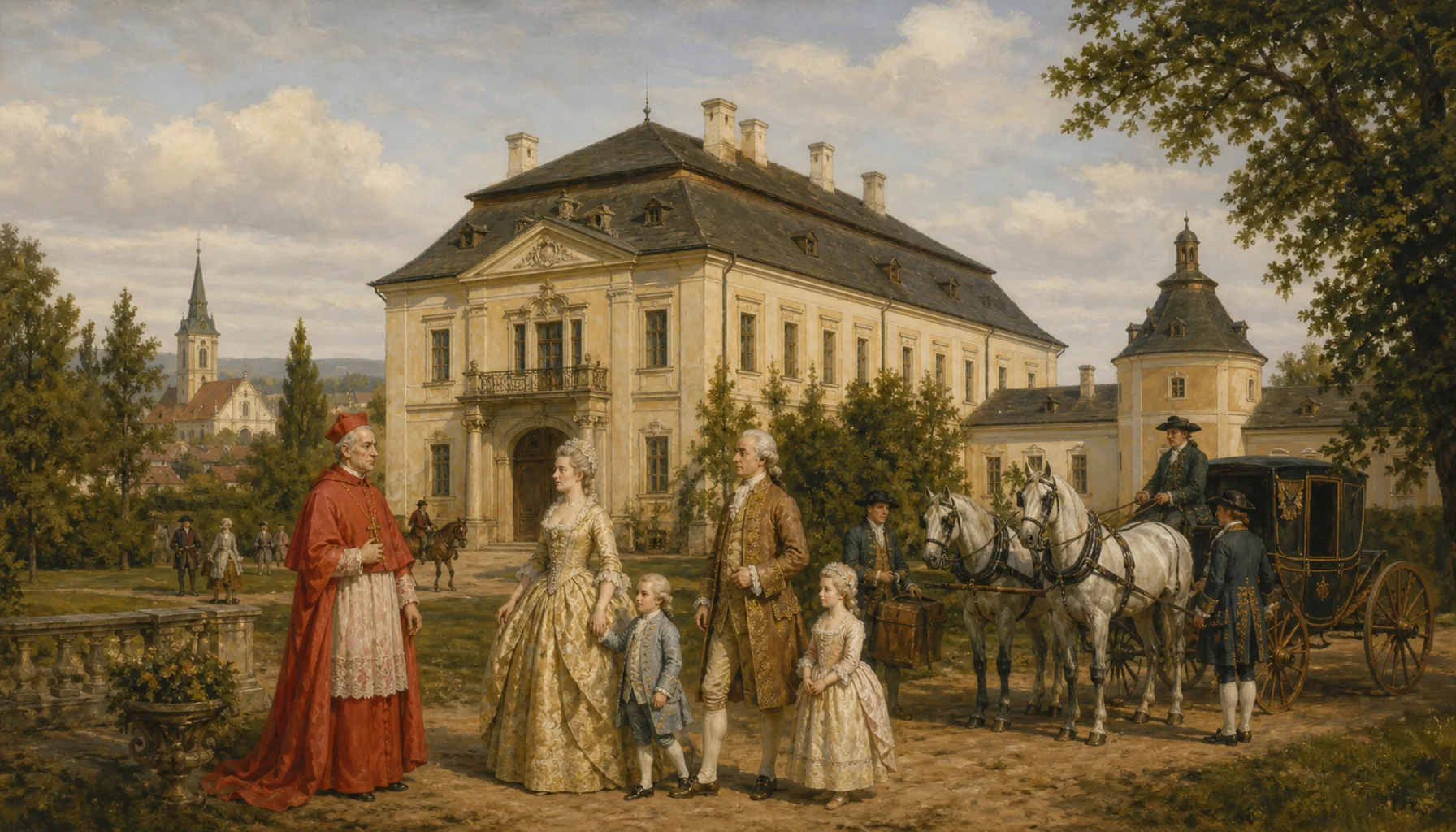
The manor house changed hands and changed shape. After 1779 it was rebuilt in Baroque taste for the family of Christoph Migazzi, the cardinal-archbishop of Vienna, whose relatives held the estate; the romantic, almost fairy-tale face it wears today came from a later remodelling in the nineteenth century. The bigger change came in 1789, when Zlaté Moravce — Aranyosmarót in Hungarian — became the seat of Tekov county, the regional government for a large slice of country between the Nitra and the Hron. A county, or župa, was the level between the village and the kingdom: it collected taxes, held courts and called up soldiers. That is a great deal of importance for a small town, and it is why the place has public buildings out of all proportion to its size.Kaštieľ menil majiteľov aj podobu. Po roku 1779 ho v barokovom duchu prestavali pre rodinu Krištofa Migazziho, viedenského arcibiskupa a kardinála, ktorej patrilo panstvo; romantický, takmer rozprávkový výzor, aký má dnes, dostal až pri neskoršej prestavbe v 19. storočí. Väčšia zmena prišla v roku 1789, keď sa Zlaté Moravce — po maďarsky Aranyosmarót — stali sídlom Tekovskej stolice, teda správy veľkého kraja medzi Nitrou a Hronom. Stolica čiže župa bola stupňom medzi dedinou a kráľovstvom: vyberala dane, súdila a odvádzala vojakov. Na malé mesto je to poriadny kus dôležitosti a je to dôvod, prečo tu stoja verejné budovy neúmerné jeho veľkosti.