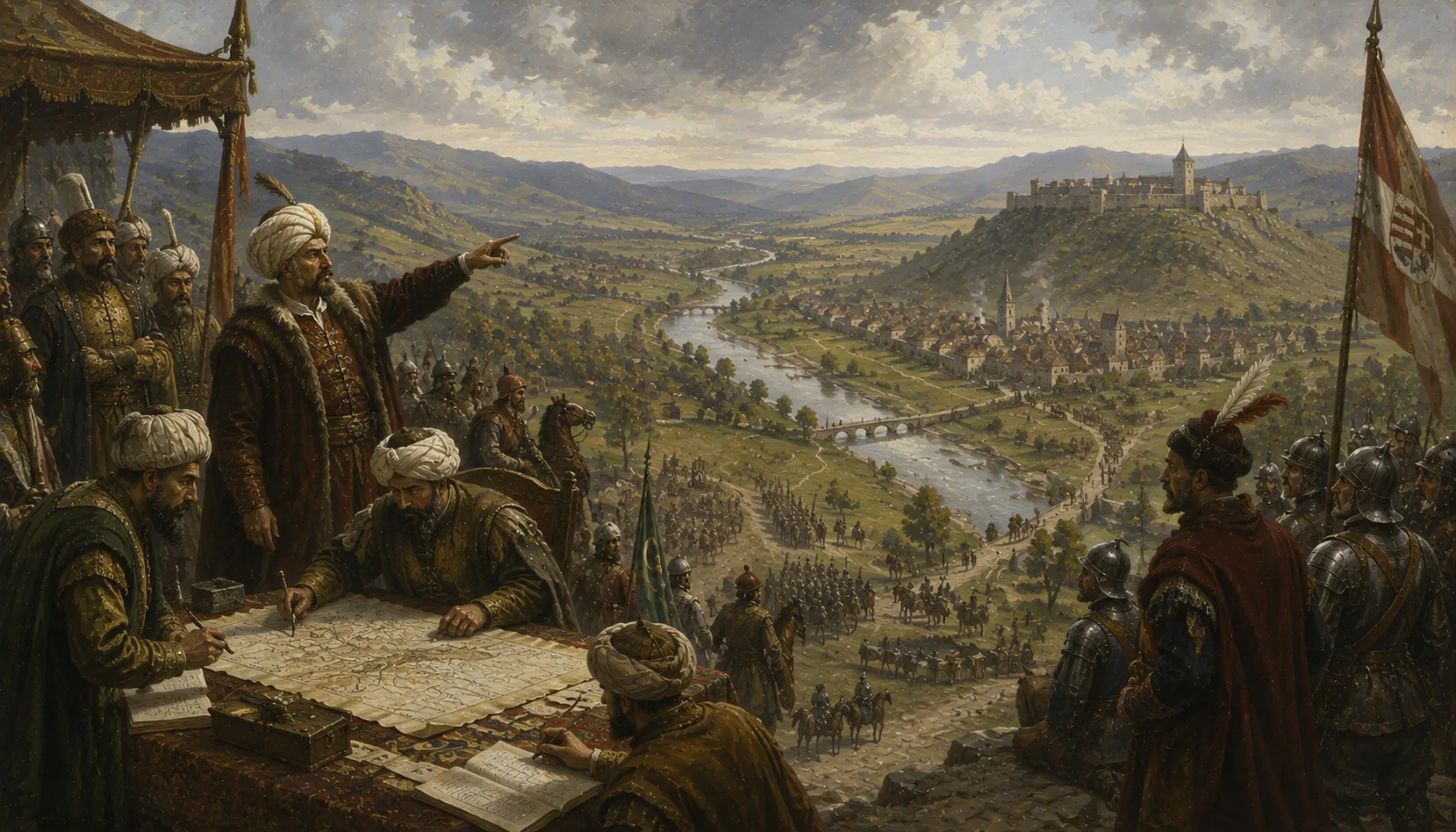
After 1526 the Ottoman frontier crept north, and this valley became one of the routes an army or a raiding party could use to reach the silver and gold towns of the Hron — which is exactly why it was fought over and garrisoned. The river that runs through the town gave its name to one of the most famous treaties in Hungarian history: the Peace of Zsitvatorok of 1606, signed where the Žitava meets the Danube about a hundred kilometres downstream, in which the Habsburg emperor and the Ottoman sultan treated one another as equals for the first time. Through these unsettled years the local nobility built for themselves down in the valley rather than up on a hill: the manor house on the main street began as a Renaissance residence of the Paluška family around 1630. A comfortable house in the town instead of a fortress on a ridge is itself a sign of how the age was changing.Po roku 1526 sa osmanská hranica posúvala na sever a toto údolie sa stalo jednou z ciest, ktorými sa dalo dostať k banským mestám na Pohroní — a práve preto sa oň bojovalo a držali sa v ňom posádky. Rieka, ktorá tečie mestom, dala meno jednej z najznámejších mierových zmlúv uhorských dejín: Žitavskému mieru z roku 1606, podpísanému pri ústí Žitavy do Dunaja asi sto kilometrov po prúde, v ktorom sa habsburský cisár a osmanský sultán prvý raz uznali za rovnocenných. V týchto nepokojných rokoch si tunajšia šľachta stavala nie na kopci, ale dolu v údolí: kaštieľ na hlavnej ulici vznikol okolo roku 1630 ako renesančné sídlo Paluškovcov. Pohodlný dom v meste namiesto pevnosti na hrebeni je sám osebe znakom toho, ako sa doba menila.