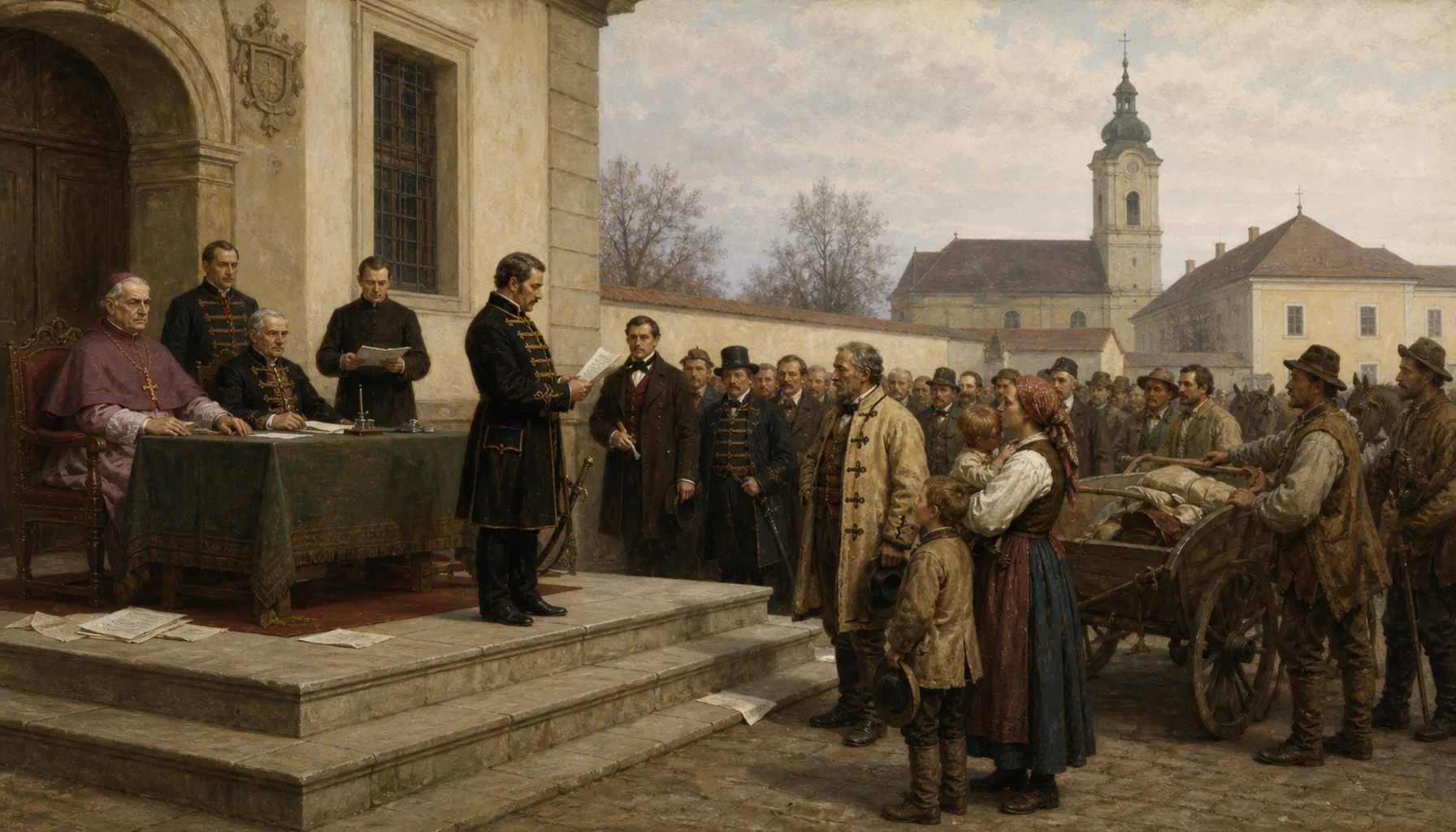
The revolutionary laws of 1848 abolished serfdom and the old private jurisdictions across the Kingdom of Hungary, and with them went the legal basis for the thing that had made Vráble special for five hundred years: an archbishop's court judging an archbishop's nobles. From here on Vráble was an ordinary market town in an ordinary county. It is a good example of how a place can lose its importance without anything dramatic happening to it at all — the world simply reorganised itself around it.Revolučné zákony z roku 1848 zrušili poddanstvo a staré súkromné súdne právomoci v celom Uhorsku a s nimi zanikol aj právny základ toho, čím boli Vráble päťsto rokov výnimočné: arcibiskupského súdu nad arcibiskupovými zemanmi. Odvtedy boli Vráble obyčajným mestečkom v obyčajnej stolici. Je to pekný príklad, ako môže miesto stratiť význam bez toho, aby sa mu čokoľvek dramatické stalo — svet sa okolo neho jednoducho preskupil.