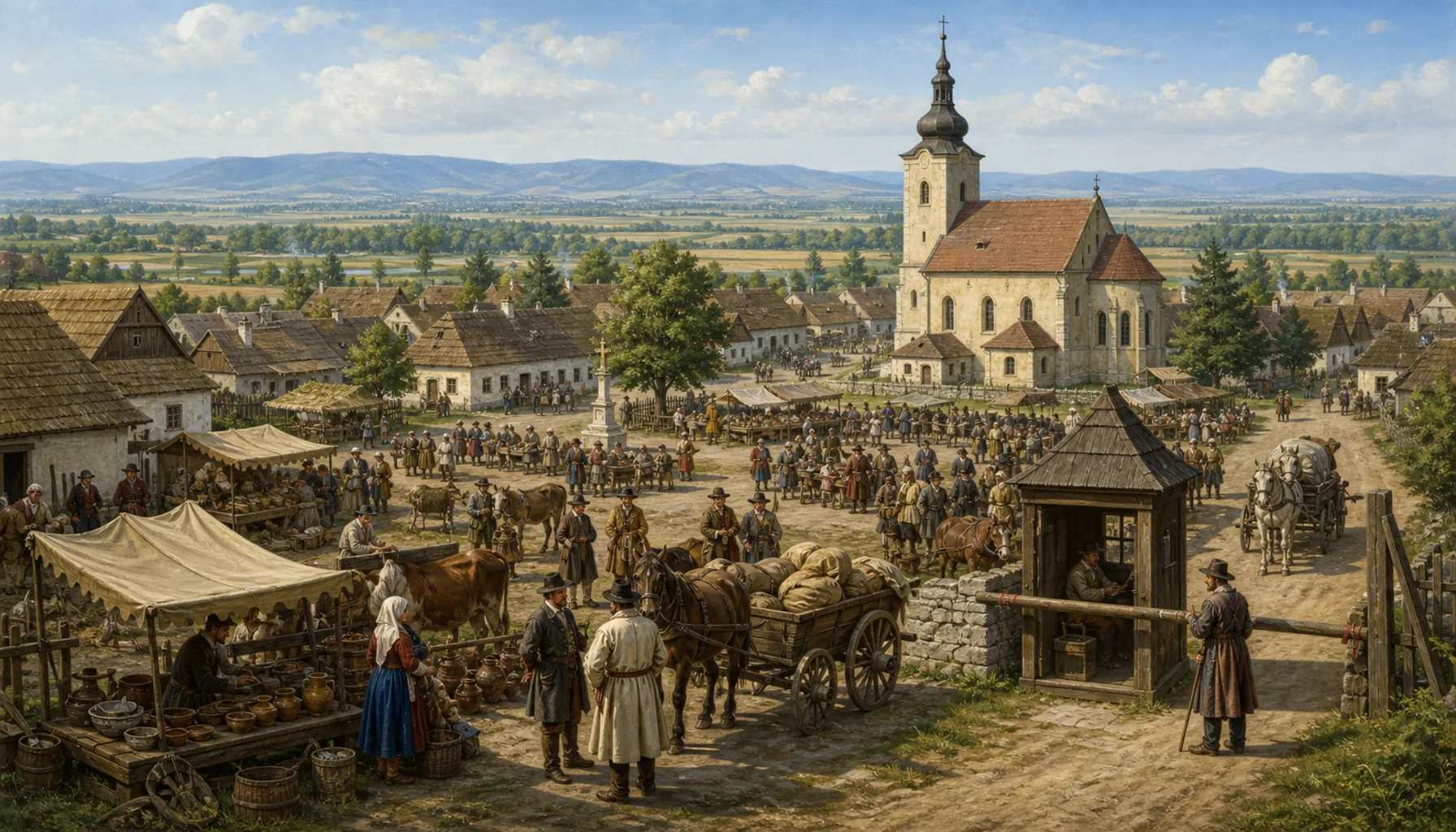
Once the Ottomans had been driven out, the archbishop's seat carried on much as before and Vráble went back to being a market town for the villages of the Žitava valley: fairs, a toll, a church, a few hundred households of farmers and craftsmen. The census of 1828 counted 156 houses and 1,094 people — small, and about the size it had been for centuries. What had really changed was that the peace held. For the first time since the raids began, nobody in the Žitava valley had to plan a year around the chance of being burned out.Keď Osmanov vyhnali, arcibiskupská stolica pokračovala takmer nezmenene a Vráble sa vrátili k tomu, čím boli — trhovým mestečkom pre dediny Žitavskej doliny: jarmoky, mýto, kostol, pár stoviek domácností roľníkov a remeselníkov. Súpis z roku 1828 napočítal 156 domov a 1 094 obyvateľov — málo, a zhruba toľko, koľko tu bývalo po stáročia. Skutočná zmena bola v tom, že mier vydržal. Prvý raz od začiatku nájazdov nemusel nikto v Žitavskej doline plánovať rok s ohľadom na to, či mu vypália dom.