Košice region · VillagesKošický kraj · Obce
A Gemer village with two things worth the drive, and neither of them is on the village street: a Gothic church with medieval wall paintings, and the aragonite cave that carries the village's name from a hill some kilometres away.Gemerská obec s dvoma vecami, pre ktoré sa oplatí prísť — a ani jedna z nich nie je na návsi: gotický kostol so stredovekými nástennými maľbami a aragonitová jaskyňa, ktorá nesie meno obce z kopca vzdialeného niekoľko kilometrov.
Ochtiná lies in the hill country between Štítnik, Jelšava and Revúca, on the southern flank of the Slovak Ore Mountains and a short way north of the karst plateaus. It is a small village strung along a stream, wooded slopes close on both sides.Ochtiná leží v kopcovitom kraji medzi Štítnikom, Jelšavou a Revúcou, na južnom úbočí Slovenského rudohoria a kúsok severne od krasových planín. Je to malá obec roztiahnutá pozdĺž potoka, so zalesnenými svahmi tesne po oboch stranách.
The Ochtinská Aragonite Cave takes its name from here but does not open here. Its entrance is several kilometres away in the Hrádok hill, reached from the road between Jelšava and Štítnik — driving into the village to look for it is a common and avoidable mistake.Ochtinská aragonitová jaskyňa nesie meno obce, no otvára sa inde. Jej vchod je niekoľko kilometrov ďalej vo vrchu Hrádok a ide sa k nemu z cesty medzi Jelšavou a Štítnikom — zájsť do obce a hľadať ju tam je častý a zbytočný omyl.
Ochtiná is one of the Gemer iron villages. Ore was dug and smelted in these valleys from the Middle Ages, and the district's later wealth came from magnesite, quarried and burned at Jelšava and Lubeník a few kilometres west — an industry still working today.Ochtiná je jednou z gemerských železiarskych obcí. Rudu tu v dolinách ťažili a tavili od stredoveku a neskoršie bohatstvo okresu prinieslo magnezitové ložisko, lámané a pálené v Jelšave a Lubeníku pár kilometrov na západ — priemysel, ktorý funguje dodnes.
The village church belongs to a group that gives this corner of Slovakia an importance out of all proportion to its size. Through the fourteenth and fifteenth centuries the parish churches of Gemer were painted inside — saints, apostles, legends, the Last Judgement — and when the region turned Lutheran in the sixteenth century much of that painting was limewashed over rather than destroyed. Poverty left the walls alone for three hundred years, until the limewash came off church after church in the nineteenth and twentieth. Ochtiná is one of the villages where a substantial amount survived, and its church is a fixed point on the region's Gothic route.Kostol v obci patrí do skupiny, ktorá dáva tomuto kútu Slovenska význam neúmerný jeho veľkosti. V 14. a 15. storočí boli gemerské farské kostoly vnútri vymaľované — svätci, apoštoli, legendy, Posledný súd — a keď sa región v 16. storočí priklonil k luteránstvu, veľkú časť malieb radšej zabielili, než zničili. Chudoba potom nechala steny tristo rokov na pokoji, kým v 19. a 20. storočí vápno z jedného kostola za druhým nezosnímali. Ochtiná je jednou z obcí, kde sa zachovalo naozaj veľa, a jej kostol je stálou zastávkou na Gotickej ceste.
The church is small, Gothic and plain outside. Inside, the walls carry figures in horizontal registers, faded to ochre, red and dull green, with bare patched plaster where the painting did not survive. Nothing has been restored to prettiness: you are looking at fragments, and the fragments are the point.Kostol je malý, gotický a zvonku jednoduchý. Vnútri nesú steny postavy vo vodorovných pásoch, vyblednuté do okrovej, červenej a tlmenej zelenej, s holou vyspravenou omietkou tam, kde sa maľba nezachovala. Nič nie je zreštaurované do peknoty: sú to fragmenty a práve o ne ide.
The furnishings are Lutheran — pews, a gallery, a pulpit, a later altar — set in a room built for a different liturgy altogether. That doubling is normal in Gemer and half of what makes these churches interesting.Zariadenie je evanjelické — lavice, empora, kazateľnica, neskorší oltár — osadené v priestore, ktorý postavili pre celkom inú liturgiu. Toto zdvojenie je na Gemeri bežné a je polovicou toho, čo tieto kostoly robí zaujímavými.
The aragonite cave is one of very few caves anywhere shown to the public for aragonite rather than stalactites. Its chambers carry white, needle-fine crystal clusters that grow outwards like frost instead of dripping into columns, and the Milky Way Hall is what people come for. Found by accident in 1954 during exploratory mining in the hill and opened in the early 1970s, it is a short route, well under an hour, at about seven degrees all year.Aragonitová jaskyňa patrí k veľmi málo jaskyniam na svete, ktoré sú sprístupnené pre aragonit, a nie pre kvaple. Jej siene pokrývajú biele, ihličkovito jemné zhluky kryštálov, ktoré rastú do strán ako inovať, namiesto toho aby kvapkaním narástli do stĺpov, a ľudia sem chodia pre Mliečnu cestu. Objavili ju náhodou v roku 1954 pri prieskumnej banskej práci vo vrchu a verejnosti ju sprístupnili začiatkom 70. rokov; trasa je krátka, hlboko pod hodinu, a teplota sa celý rok drží okolo siedmich stupňov.
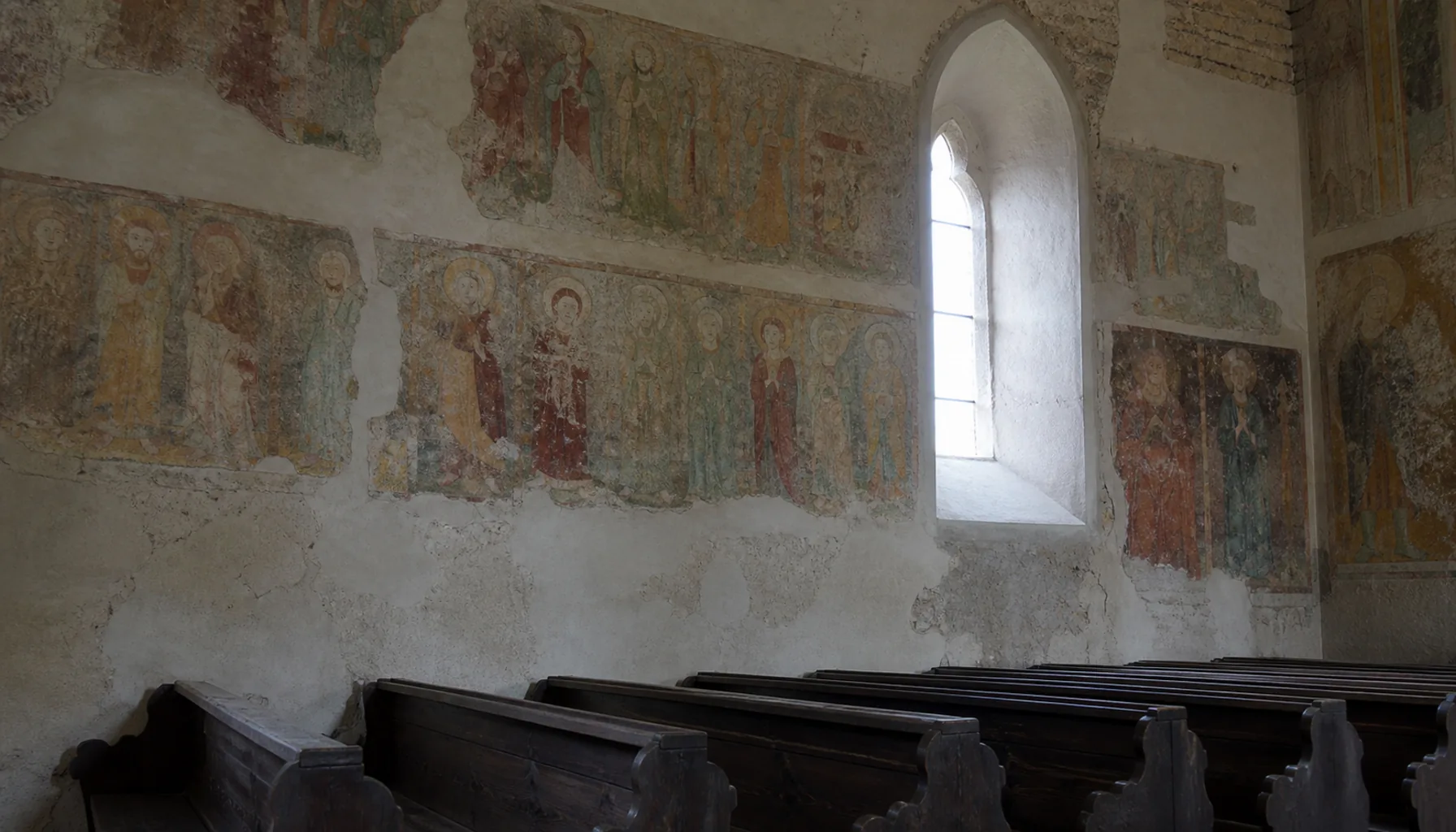
The church is in use and normally locked. Gemer's painted churches are visited by arrangement: a keyholder in the village, or the parish, opens them, and in places one guide covers several churches between neighbouring villages. Telephone ahead or ask at the village office; arriving unannounced usually means looking at the outside.Kostol sa používa a bežne býva zamknutý. Gemerské maľované kostoly sa navštevujú po dohode: otvára ich kľúčnik v obci alebo farnosť a miestami má jeden sprievodca na starosti niekoľko kostolov v susedných obciach. Zatelefonujte vopred alebo sa spýtajte na obecnom úrade; prísť neohlásene väčšinou znamená pozrieť si exteriér.
The village itself is small, quiet and residential, with none of the apparatus of a visitor site. The car park, the ticket desk and the coaches are all at the cave, several kilometres off; the road between is short.Samotná obec je malá, tichá a obytná, bez akéhokoľvek vybavenia turistického miesta. Parkovisko, pokladňa aj autobusy sú pri jaskyni niekoľko kilometrov ďalej; cesta medzi nimi je krátka.
There is no useful passenger rail service into these valleys; come by car or bus from Rožňava, Štítnik or Revúca. The cave entrance is signposted from the road between Jelšava and Štítnik and has its own car park. The nearest practical station is Rožňava, on the Zvolen–Košice line.Použiteľná osobná železničná doprava do týchto dolín nevedie; príďte autom alebo autobusom z Rožňavy, Štítnika či Revúcej. Vchod do jaskyne je značený z cesty medzi Jelšavou a Štítnikom a má vlastné parkovisko. Najbližšou prakticky použiteľnou stanicou je Rožňava na trati Zvolen – Košice.
Sixteen videos for Ochtiná.Šestnásť videí — Ochtiná.