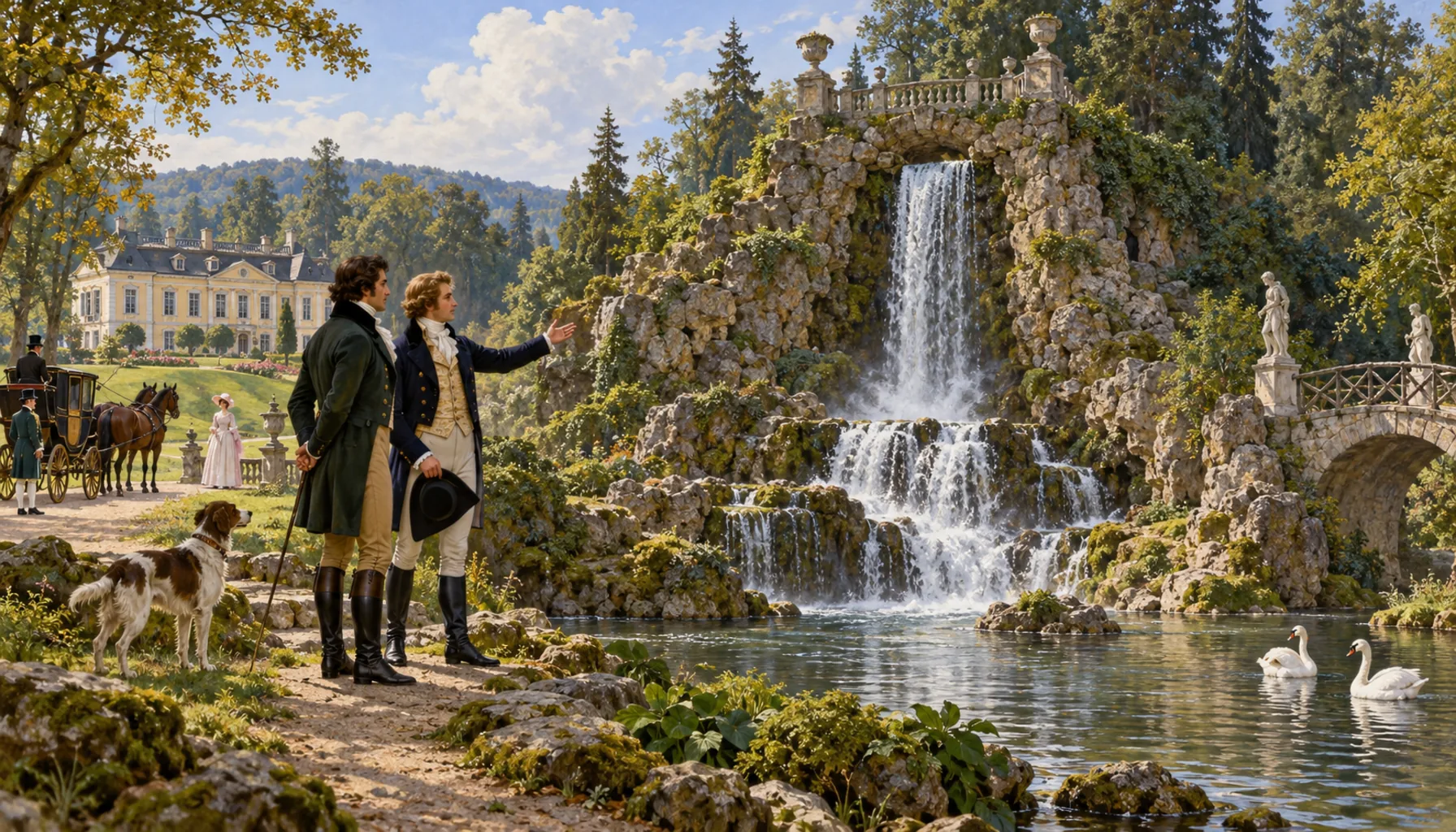
The park got its showpiece in 1823, when Josef Bergmann designed the Roman waterfall — nine metres high, the first Romantic garden structure in Slovakia and still the tallest artificial waterfall in the country. Then the revolution of 1848–1849 swept up the two brothers who would shape this house. Emanuel Andrássy, born 1821, and Július (Gyula) Andrássy, born 1823 at Vlachovo a few kilometres up this same valley, both fought against the Habsburgs; after the defeat Gyula was condemned to death in his absence and hanged in effigy on 21 September 1851 while he lived in London and Paris, and Emanuel went abroad too. Emanuel travelled through India, Ceylon, Java, Bengal and China and published a book about it in 1853. The trophies, weapons and curiosities that crowd Betliar's walls are, to a large extent, the luggage of that exile.Park dostal svoju ozdobu v roku 1823, keď Josef Bergmann navrhol Rímsky vodopád — deväť metrov vysoký, prvú romantickú záhradnú stavbu na Slovensku a dodnes najvyšší umelý vodopád v krajine. Potom revolúcia rokov 1848 – 1849 strhla dvoch bratov, ktorí tento dom sformovali. Emanuel Andráši, narodený 1821, a Július Andráši, narodený 1823 vo Vlachove pár kilometrov vyššie v tej istej doline, bojovali proti Habsburgovcom; po porážke odsúdili Júliusa v neprítomnosti na smrť a 21. septembra 1851 ho obesili in effigie, teda symbolicky, kým žil v Londýne a Paríži, a do cudziny odišiel aj Emanuel. Emanuel precestoval Indiu, Cejlón, Jávu, Bengálsko a Čínu a v roku 1853 o tom vydal knihu. Trofeje, zbrane a kuriozity, ktoré v Betliari zaplňujú steny, sú do veľkej miery batožinou tohto vyhnanstva.