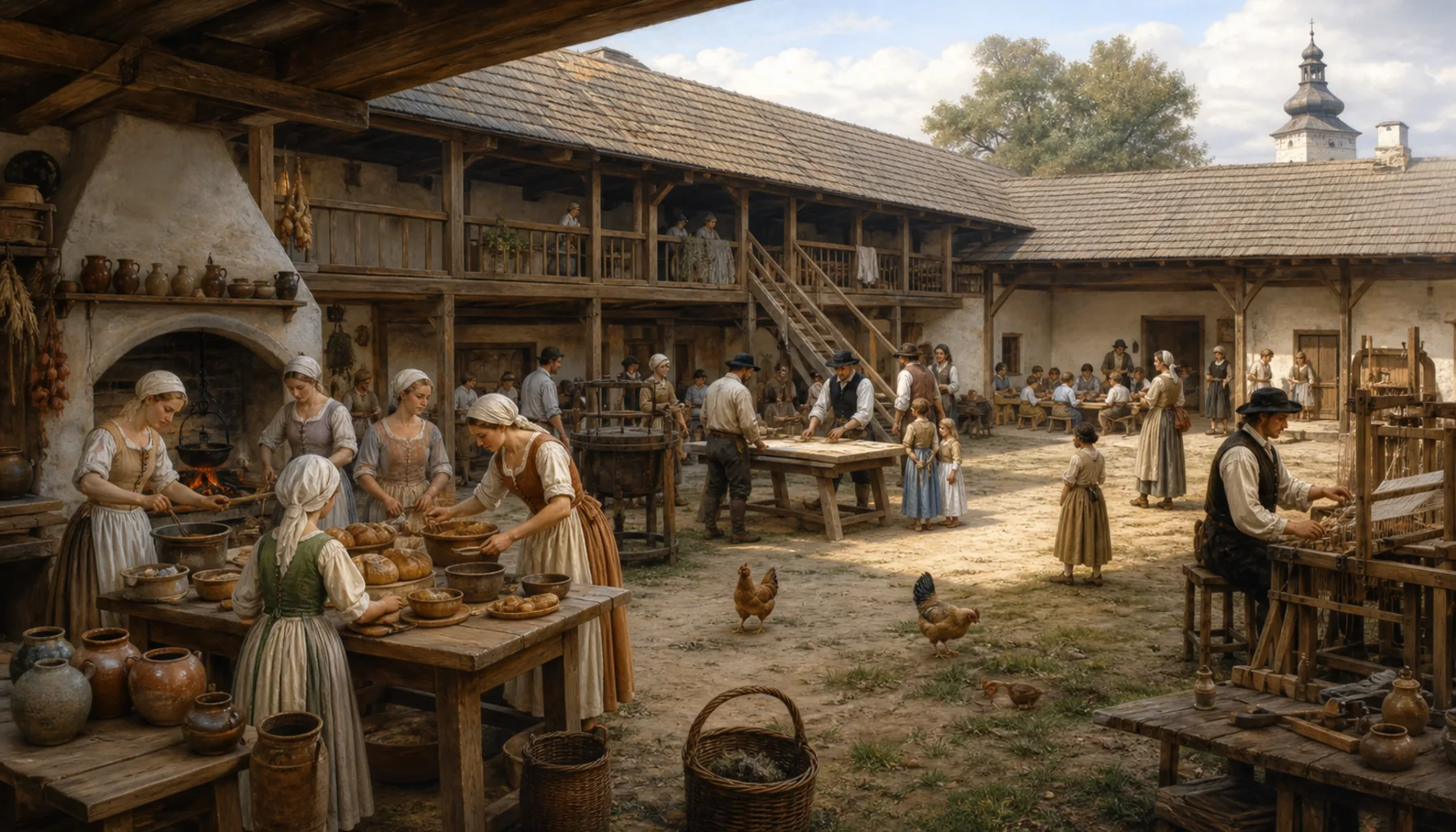
The Habans lived in Haushaben — communal households, which is where the name Habán comes from — with one kitchen, their own school, shared workshops and no private property. That system broke down all over Slovakia at the end of the seventeenth century, worn out by decades of war. They stayed, and kept their faith, their German and their trades, but from then on each family owned its own house and tools. The fighting had come close: the Ottoman army besieged Vienna in 1683, about sixty kilometres from here, and the anti-Habsburg uprisings crossed Záhorie again and again. In those very years, 1683 to 1685, the Kollonich family, who by then held the estate, built the Baroque manor house above the Rudava that still stands in the village.Habáni žili v haushaboch — spoločných domácnostiach, od ktorých majú aj meno — s jednou kuchyňou, vlastnou školou, spoločnými dielňami a bez súkromného majetku. Koncom 17. storočia sa tento poriadok na celom Slovensku rozpadol, vyčerpaný desaťročiami vojen. Zostali tu, udržali si vieru, nemčinu aj remeslá, ale dom a náradie mala odvtedy každá rodina svoje. Vojna bola blízko: roku 1683 obliehali Osmani Viedeň, asi šesťdesiat kilometrov odtiaľto, a protihabsburské povstania prechádzali Záhorím raz za razom. Práve v tých rokoch, 1683 až 1685, postavili Koloničovci, ktorí vtedy panstvo držali, nad Rudavou barokový kaštieľ, ktorý v obci stojí dodnes.