Bratislava region · VillagesBratislavský kraj · Obce

Veľké LeváreVeľké Leváre

The best-preserved Habán settlement in Slovakia: a street of tall communal houses built by Anabaptist refugees who arrived in the sixteenth century, held everything in common, and made the blue-and-white faience that still carries their name.Najlepšie zachovaná habánska osada na Slovensku: ulica vysokých spoločných domov, ktoré postavili novokrstenskí utečenci prichádzajúci v 16. storočí — mali všetko spoločné a vyrábali modro-bielu fajansu, ktorá dodnes nesie ich meno.

Where it standsKde leží

Veľké Leváre lie on the flat sandy ground of Záhorie north of Malacky, roughly forty-five kilometres from Bratislava, between the pine plantations that cover the old dunes and the floodplain of the Morava, which is the Austrian border here. The main road north and the railway to Kúty and Brno both run through the village.Veľké Leváre ležia na rovnej piesočnatej pôde Záhoria severne od Malaciek, asi štyridsaťpäť kilometrov od Bratislavy, medzi borovicovými lesmi na starých presypoch a nivou rieky Moravy, ktorá tu tvorí rakúsku hranicu. Obcou prechádza hlavná cesta na sever aj železnica na Kúty a do Brna.

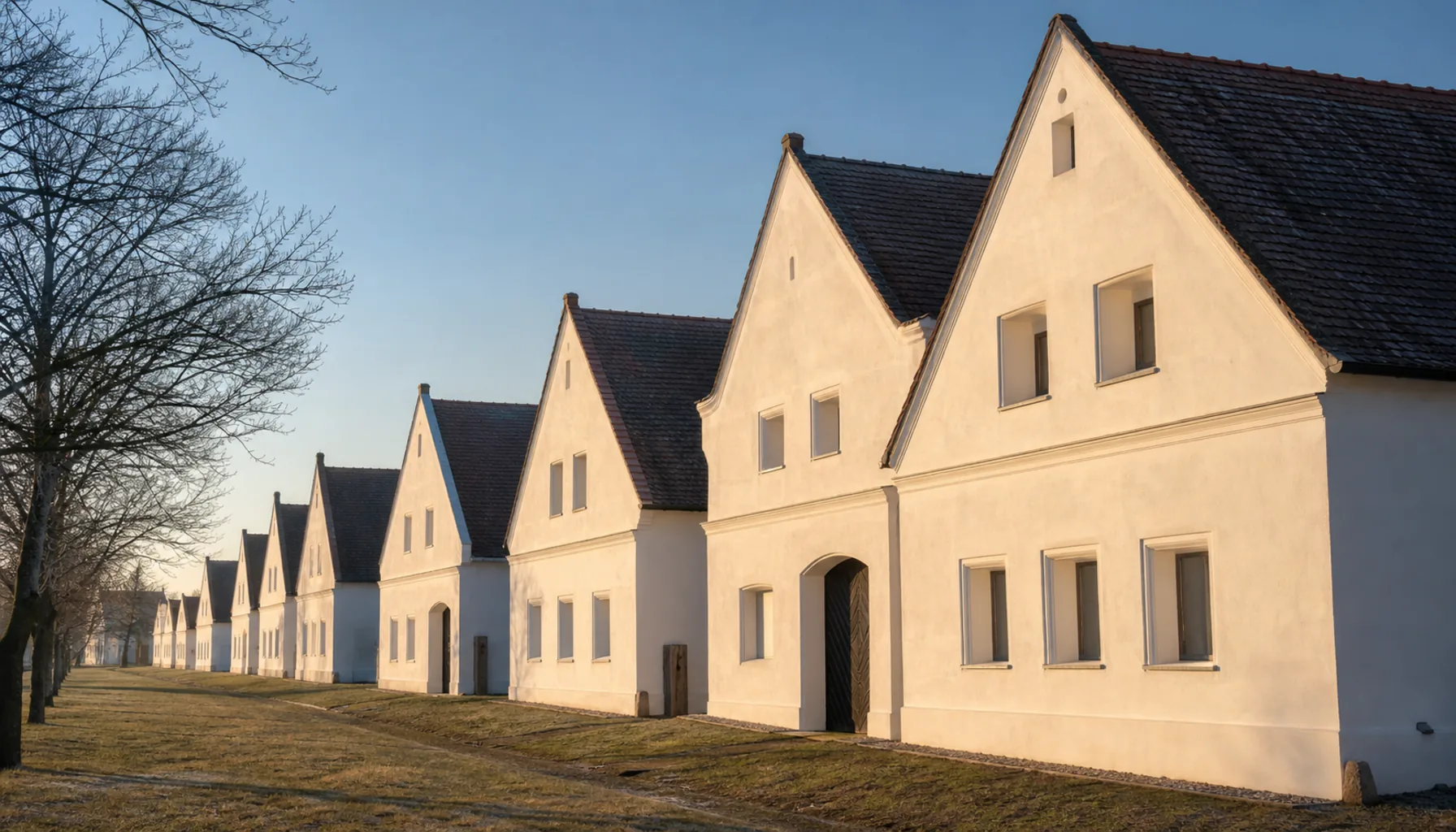
The row of tall Habán houses at Veľké Leváre, built for households that held everything in common
The row of tall Habán houses at Veľké Leváre, built for households that held everything in commonRad vysokých habánskych domov vo Veľkých Levároch, stavaných pre domácnosti so spoločným majetkom

Why it is herePrečo práve tu

The Habáns were Anabaptists — Hutterian Brethren driven out of Moravia and the Tyrol for baptising adults, refusing oaths and refusing to bear arms. Landlords in western Hungary took them in from the sixteenth century onwards because they were exceptionally good at the things the countryside needed: pottery, knives, milling, building, medicine. The Pálffys, who held this end of Záhorie, settled a community at Veľké Leváre.Habáni boli novokrstenci — hutterskí bratia vyhnaní z Moravy a Tirolska za to, že krstili dospelých, odmietali prísahu a odmietali nosiť zbraň. Zemepáni v západnom Uhorsku ich od 16. storočia prijímali, lebo mimoriadne dobre ovládali to, čo vidiek potreboval: hrnčiarstvo, nožiarstvo, mlynárstvo, staviteľstvo, liečiteľstvo. Pálfiovci, ktorí držali tento koniec Záhoria, usadili komunitu vo Veľkých Levároch.

They lived as a court of households holding property in common, with a shared kitchen, a school, workshops and a fixed order of work. Their tin-glazed earthenware, painted in cobalt and manganese on a white ground and by rule without human figures, was sold across the kingdom, and it is what most people now mean by the word Habán.Žili ako dvor domácností so spoločným majetkom, so spoločnou kuchyňou, školou, dielňami a pevným poriadkom práce. Ich keramika s cínovou glazúrou, maľovaná kobaltom a mangánom na bielom podklade a podľa pravidla bez ľudských postáv, sa predávala po celom kráľovstve a práve ju má dnes väčšina ľudí na mysli pod slovom habánsky.

Communal life did not survive the eighteenth century. Under Maria Theresa the communities were pressed into the Catholic church and their common property broken up; some families conformed and stayed, others moved east, and the descendants of that migration are the Hutterite colonies of the North American prairies. What stayed behind at Veľké Leváre was the buildings.Spoločný život osemnáste storočie neprežil. Za Márie Terézie boli komunity dotlačené do katolíckej cirkvi a ich spoločný majetok rozdelený; časť rodín sa podvolila a zostala, iné odišli na východ a potomkami tejto vlny sú hutterské kolónie na severoamerických prériách. Vo Veľkých Levároch zostali domy.
What you actually seeČo naozaj uvidíte

A single wide street of about two dozen houses, and they look like nothing else in a Slovak village: two full storeys, tall steep roofs, small windows, whitewashed walls, set close together and built to hold several families each. The theology is visible in the scale — a household of thirty or forty people needs a different building from a household of six.Jedna široká ulica s asi dvoma desiatkami domov, ktoré sa nepodobajú na nič iné v slovenskej dedine: dve plné podlažia, vysoké strmé strechy, malé okná, biele omietky, domy tesne pri sebe a stavané pre viacero rodín naraz. Na mierke vidieť teológiu — domácnosť tridsiatich či štyridsiatich ľudí potrebuje inú stavbu než domácnosť šiestich.

The core was declared a reserve of folk architecture, which is the only reason the row survived at all, and one of the houses is open as a museum, furnished and fitted out to show how a Habán household worked. Opening is seasonal and short — confirm it before you travel.Jadro vyhlásili za rezerváciu ľudovej architektúry — len preto rad vôbec prežil — a jeden z domov je sprístupnený ako múzeum, zariadený tak, aby ukázal, ako habánska domácnosť fungovala. Otváranie je sezónne a krátke, pred cestou si ho overte.

The village's own parish church is Baroque and on a far grander scale than the Habán row a few hundred metres away. An estate church and a communal house, within sight of each other, are two entirely different answers to the question of what a building is for.Farský kostol obce je barokový a v oveľa veľkorysejšej mierke než habánsky rad vzdialený pár sto metrov. Panský kostol a spoločný dom na dohľad od seba sú dve celkom odlišné odpovede na otázku, načo stavba slúži.

Living village, not a museumŽivá obec, nie skanzen

Veľké Leváre is an ordinary working village and the Habán houses are lived in. Only the museum house can be entered; the rest are private homes whose owners put up with strangers photographing their front walls. Look from the street, do not walk into yards, and treat the row as what it has been for four hundred years — a residential street.Veľké Leváre sú bežnou fungujúcou obcou a v habánskych domoch sa býva. Vstúpiť sa dá len do múzejného domu, ostatné sú súkromné obydlia, ktorých majitelia znášajú, že im cudzí ľudia fotografujú priečelia. Pozerajte sa z ulice, nechoďte do dvorov a berte ten rad ako to, čím je už štyristo rokov — ako obytnú ulicu.

Getting thereAko sa tam dostať

The village is a stop on the electrified main line from Bratislava through Malacky to Kúty and on towards Brno, which makes it one of the easier Slovak folk-architecture reserves to reach without a car. Buses run from Malacky, and by car it is the old road north or a short run off the motorway.Obec je zastávkou na elektrifikovanej hlavnej trati z Bratislavy cez Malacky do Kútov a ďalej na Brno, čo z nej robí jednu z ľahšie dostupných rezervácií ľudovej architektúry aj bez auta. Autobusy premávajú z Malaciek a autom sa ide starou cestou na sever alebo krátkym úsekom z diaľnice.

← Villages← Obce

WatchPozrite si

Sixteen videos for Veľké Leváre.Šestnásť videí — Veľké Leváre.