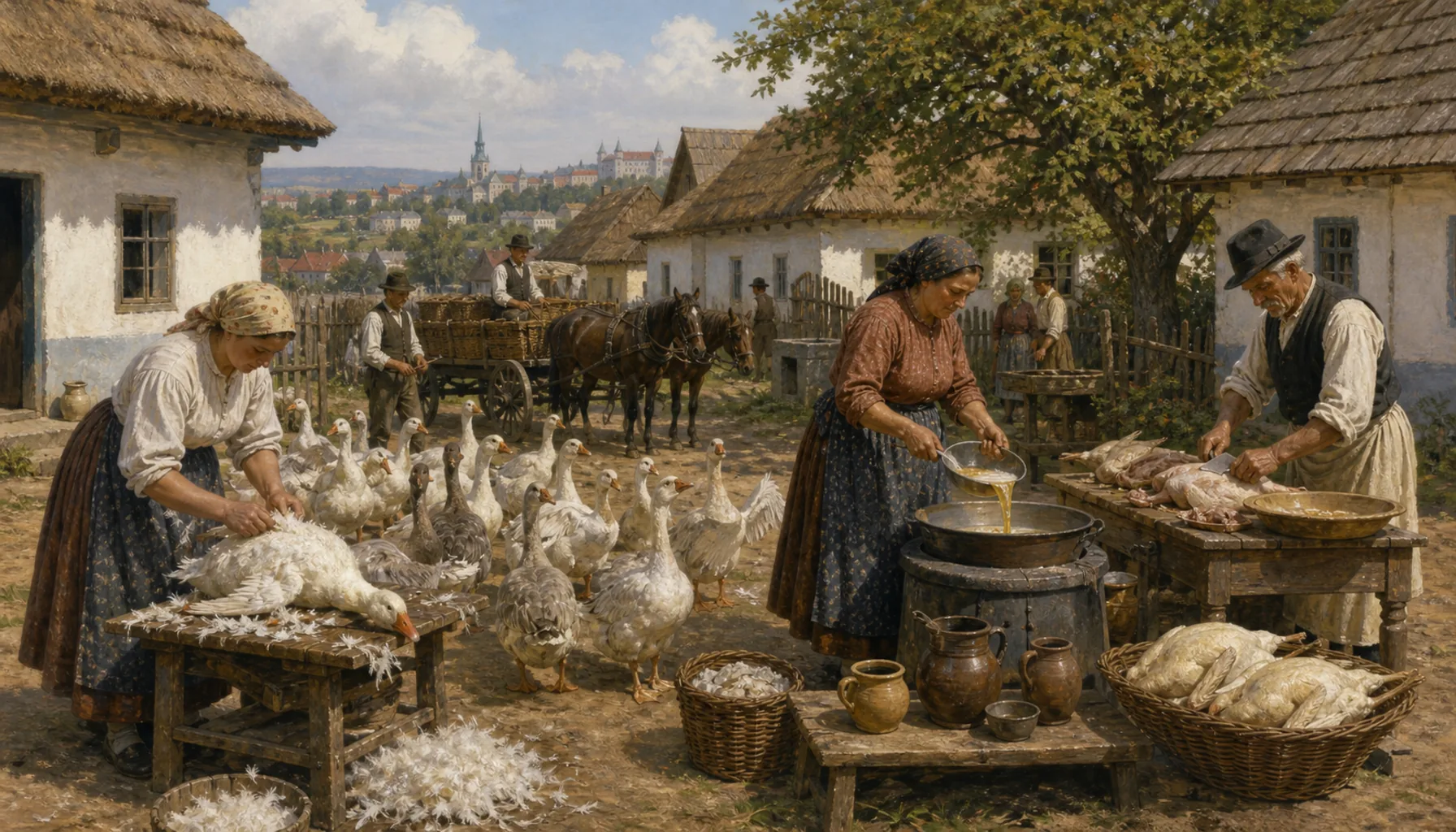
Under Austria-Hungary, Pressburg grew fast and the loess villages north-east of it fed it. Households in Slovenský Grob fattened geese for the city markets, and one bird paid three times over: the meat, the fat, and the down and feathers, which had a trade of their own. What was sold went to town; what was left over was cooked at home. Then, around the turn of the twentieth century, the traffic reversed. Instead of carting the goose into the city, the village began cooking it for people who came out from the city — a set meal, served in the family's own house, in the weeks when the geese were ready and the year's wine was still young.V Rakúsko-Uhorsku Prešporok rýchlo rástol a sprašové dediny na severovýchod od neho ho živili. Grobské domácnosti vykrmovali husi pre mestské trhy a jedna hus sa vyplatila trikrát: mäso, masť a perie s páperím, ktoré malo vlastný obchod. Čo sa predalo, išlo do mesta; čo zvýšilo, sa uvarilo doma. Potom, okolo prelomu 19. a 20. storočia, sa tok obrátil. Namiesto toho, aby sa hus vozila do mesta, začala ju dedina variť pre ľudí, ktorí z mesta prichádzali – pevné menu, podávané v gazdovom vlastnom dome, v tých týždňoch, keď boli husi hotové a víno toho roka ešte mladé.