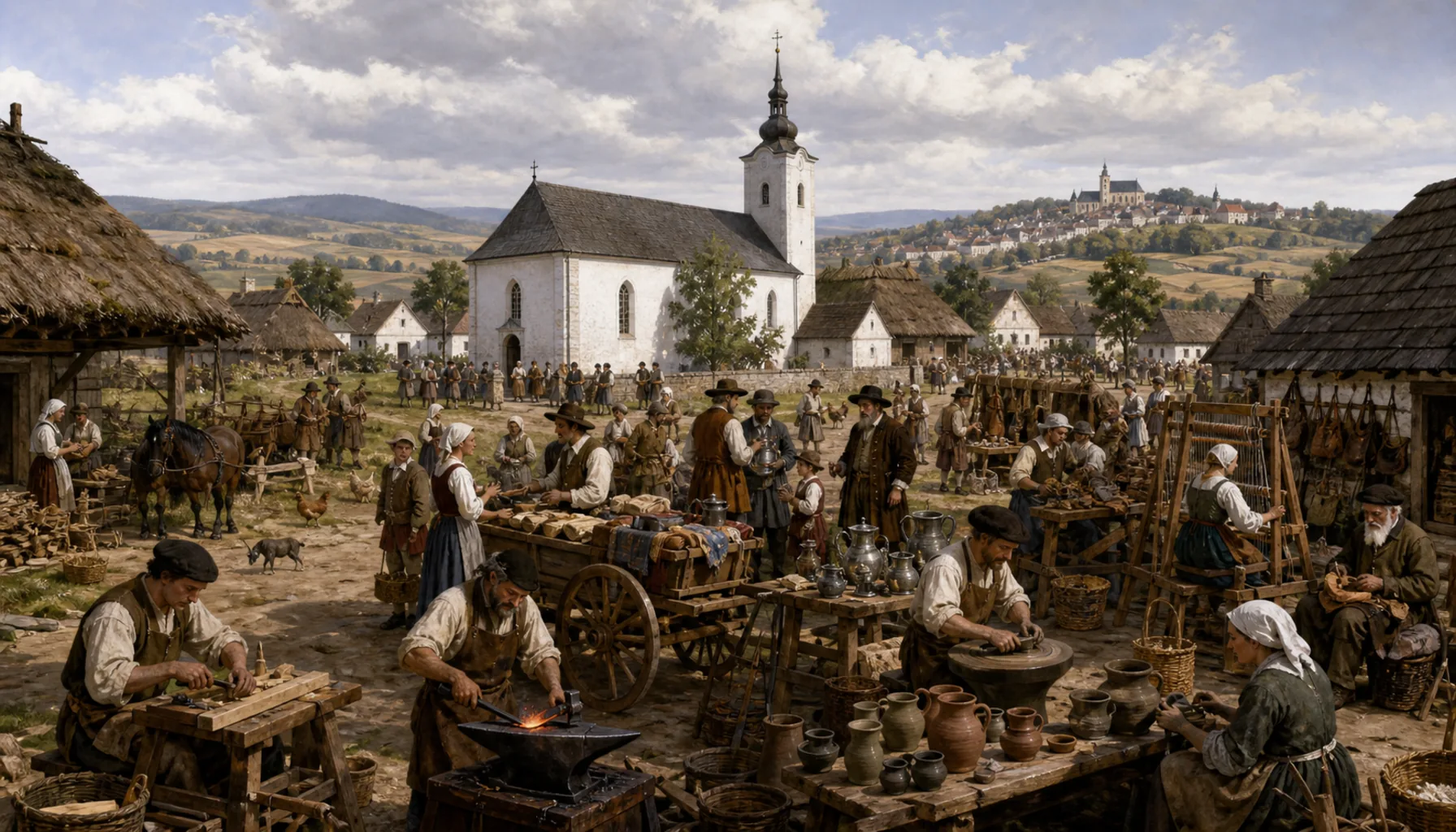
A survey of 1617 counted 26 full peasant holdings in the village and 52 families of craftsmen — more artisans than farmers, which is unusual for a village this size and tells you it was already living off trade with somewhere bigger. The church of St John the Baptist was built in 1635. The village belonged to the Pezinok estate, which the Pálffy family held, and around the turn of the eighteenth century it passed to the Jesuit college at Trnava; sources disagree about whether it was leased or sold outright. These were violent decades on this stretch of road: in December 1704, during Rákóczi's uprising against the Habsburgs, an imperial army beat the kuruc forces at Trnava, less than thirty kilometres up the plain.Súpis z roku 1617 napočítal v dedine 26 celých sedliackych usadlostí a 52 remeselníckych rodín – remeselníkov teda viac než roľníkov, čo je na obec tejto veľkosti nezvyčajné a prezrádza, že už vtedy žila z obchodu s niekým väčším. V roku 1635 postavili Kostol svätého Jána Krstiteľa. Dedina patrila k pezinskému panstvu, ktoré držali Pálfiovci, a na prelome 17. a 18. storočia prešla na jezuitské kolégium v Trnave; pramene sa rozchádzajú v tom, či išlo o prenájom alebo o predaj. Boli to na tomto úseku cesty búrlivé desaťročia: v decembri 1704, počas Rákociho povstania proti Habsburgovcom, porazilo cisárske vojsko kurucov pri Trnave, necelých tridsať kilometrov ďalej po rovine.