Bratislava region · VillagesBratislavský kraj · Obce
Slovenský GrobSlovenský Grob
For two months every autumn this village below the Little Carpathians turns into a single-dish restaurant town: roast goose, lokše and young wine, cooked in courtyard kitchens for people who booked weeks ahead.Dva mesiace v roku sa táto obec pod Malými Karpatmi mení na mesto jediného jedla: pečená hus, lokše a mladé víno, varené v dvorových kuchyniach pre ľudí, ktorí si stôl rezervovali týždne dopredu.
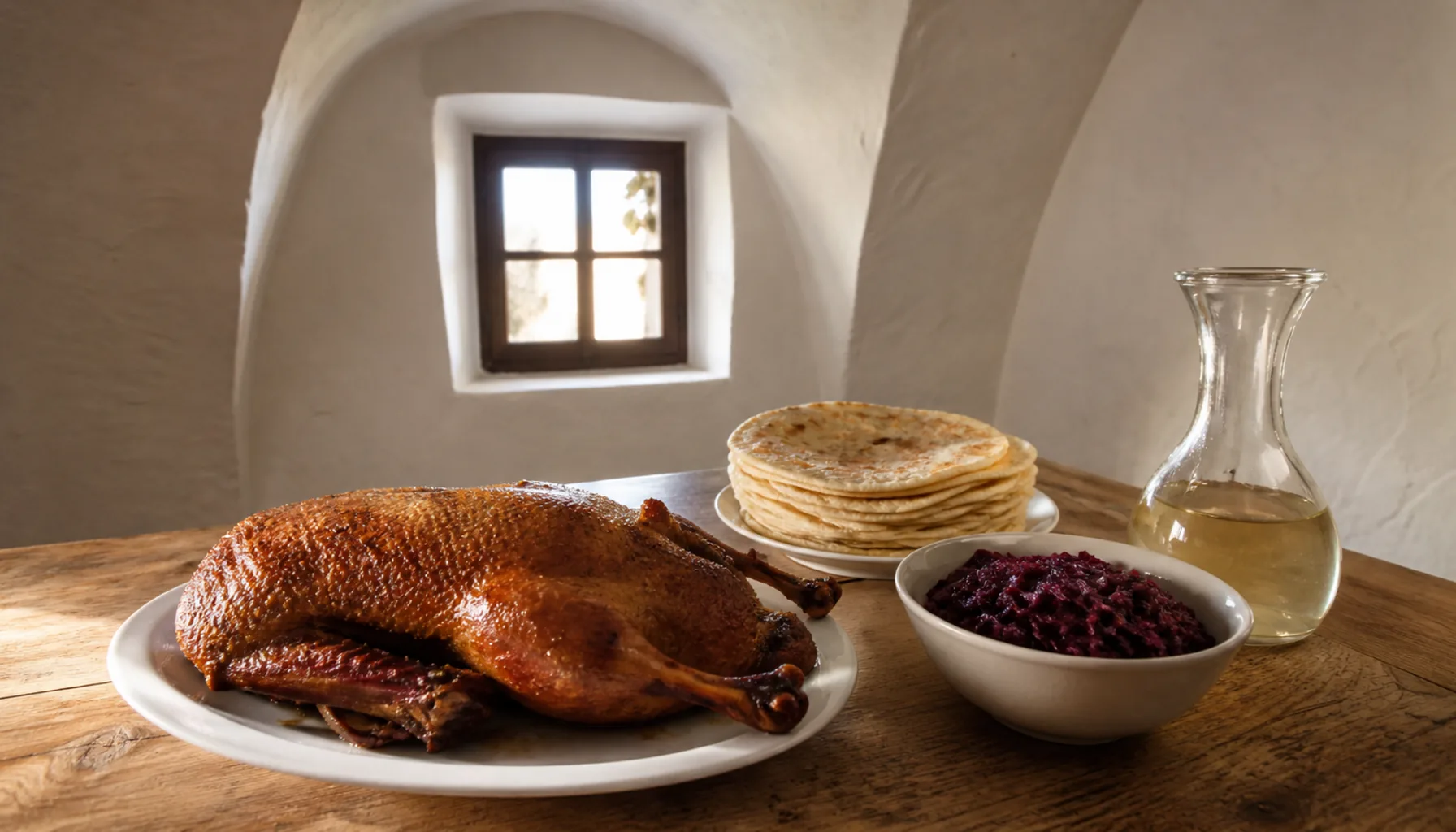
Roast goose with lokše and red cabbage, the fixed autumn meal of Slovenský GrobPečená hus s lokšami a červenou kapustou — pevné jesenné menu Slovenského Grobu
Where it standsKde leží
Slovenský Grob sits on the flat just below the eastern foot of the Little Carpathians, between Svätý Jur and Pezinok and about twenty kilometres north-east of Bratislava. The vineyard slope begins a short way above the village; the ground below it is deep loess, and this was market-garden and poultry country long before it was anything else.Slovenský Grob leží na rovine tesne pod východným úpätím Malých Karpát, medzi Svätým Jurom a Pezinkom, asi dvadsať kilometrov severovýchodne od Bratislavy. Vinohradnícky svah sa začína kúsok nad obcou; pôda pod ním je hlboká spraš a bola to krajina zeleninárstva a hydiny dávno predtým, než bola čímkoľvek iným.
The name it shares with neighbouring Chorvátsky Grob — Slovak Grob and Croatian Grob — records the sixteenth-century Croat refugees settled across this corner of the country as the Ottomans advanced, and who kept their language in some of these villages for generations.Meno, ktoré má spoločné so susedným Chorvátskym Grobom — slovenský a chorvátsky — zaznamenáva chorvátskych utečencov 16. storočia, ktorých usadili po tomto kúte krajiny počas osmanského postupu a ktorí si v niektorých z týchto obcí udržali jazyk po generácie.
Why it is herePrečo práve tu
Geese came before restaurants. Households here fattened geese for the Pressburg markets, and the down and feathers were as much of the income as the meat. The birds went to the city; what was left over was cooked at home.Husi boli skôr ako reštaurácie. Tunajšie gazdiné vykrmovali husi pre prešporské trhy a perie s páperím prinášali rovnaký príjem ako mäso. Vtáky išli do mesta, to, čo zvýšilo, sa uvarilo doma.
Around the turn of the twentieth century the traffic reversed. Instead of taking the goose to Bratislava, the village began cooking it for people who came out from Bratislava, and the arrangement stuck: a set meal, served in the family's own house, in the season when the geese were ready and the year's wine was still young.Okolo prelomu 19. a 20. storočia sa tok obrátil. Namiesto toho, aby sa hus vozila do Bratislavy, začala ju obec variť pre ľudí, ktorí prichádzali z Bratislavy — a to usporiadanie sa udržalo: pevné menu, podávané v gazdovom vlastnom dome, v čase, keď boli husi hotové a víno toho roka ešte mladé.
The menu has not been renegotiated since. Roast goose; lokše, the thin potato flatbreads brushed with the fat from the roasting tin; stewed red cabbage; the liver; and young wine or must to drink. Ordering something else is possible and beside the point.O menu sa odvtedy nevyjednáva. Pečená hus; lokše, tenké zemiakové placky potreté masťou z pekáča; dusená červená kapusta; pečienka; a k tomu mladé víno alebo burčiak. Objednať si niečo iné sa dá, ale míňa sa to účinku.
What you actually seeČo naozaj uvidíte
Out of season, very little: an ordinary village street with a lot of new housing around its edges and a surprising number of gates carrying a house name and a goose. In season, from late summer into November, the same street is lined with cars and the courtyards behind those gates are dining rooms.Mimo sezóny takmer nič: bežná dedinská ulica s množstvom novej výstavby na okrajoch a s prekvapivo veľkým počtom brán, na ktorých je meno domu a hus. V sezóne, od konca leta do novembra, lemujú tú istú ulicu autá a dvory za tými bránami sa menia na jedálne.
The houses are family operations rather than restaurants in the ordinary sense, and they differ from one another more than a fixed menu would suggest — in the room you eat in, in how the lokše are made, in whether the wine is the family's own. Tables in October are taken well in advance, sometimes months, and walking in on spec on a Saturday will not work.Domy sú rodinné prevádzky, nie reštaurácie v bežnom zmysle, a líšia sa navzájom viac, než by pevné menu naznačovalo — miestnosťou, v ktorej sa je, spôsobom, akým sa robia lokše, aj tým, či je víno vlastné. Stoly na október bývajú obsadené dlho dopredu, niekedy mesiace, a prísť v sobotu bez rezervácie nevyjde.
Portions are built for people who have been working outdoors. A goose is normally ordered for a table rather than for a person, and leaving with a box is normal.Porcie sú stavané pre ľudí, ktorí robili vonku. Hus sa zvyčajne objednáva na stôl, nie na osobu, a odísť s krabicou je bežné.
Living village, not a museumŽivá obec, nie skanzen
Slovenský Grob is a working village that hosts a very large number of visitors for two months and then goes back to being a commuter settlement. Nothing about it is staged: there is no folk programme, no museum and no season-long opening. Houses set their own dates, several close entirely outside the autumn, and this is not the village for a spontaneous lunch in April.Slovenský Grob je fungujúca obec, ktorá dva mesiace hostí veľmi veľa návštevníkov a potom sa vracia k tomu, že je satelitným sídlom. Nič tu nie je nainscenované: žiadny folklórny program, žiadne múzeum, žiadne celoročné otváranie. Domy si určujú vlastné termíny, viaceré sú mimo jesene úplne zavreté a na spontánny aprílový obed to nie je tá správna obec.
One practical thing follows from the wine: Slovakia allows no alcohol at all in a driver's blood, so most tables settle their transport before they settle the menu.Z vína vyplýva jedna praktická vec: Slovensko nepripúšťa v krvi vodiča žiadny alkohol, takže väčšina stolov si vyrieši dopravu skôr než menu.
Getting thereAko sa tam dostať
There is no station in the village; the nearest are at Svätý Jur and Pezinok on the line from Bratislava towards Trnava, with buses on from there, and regional buses also run direct from the capital. By car it is a short turn off the Bratislava–Pezinok road.V obci stanica nie je; najbližšie sú vo Svätom Jure a v Pezinku na trati z Bratislavy smerom na Trnavu a odtiaľ pokračujú autobusy — priame regionálne spoje idú aj z hlavného mesta. Autom je to krátka odbočka z cesty Bratislava – Pezinok.
Explore Slovenský GrobObjavujte Slovenský Grob
Every part of this place with a page of its own.Každá časť tohto miesta, ktorá má vlastnú stránku.