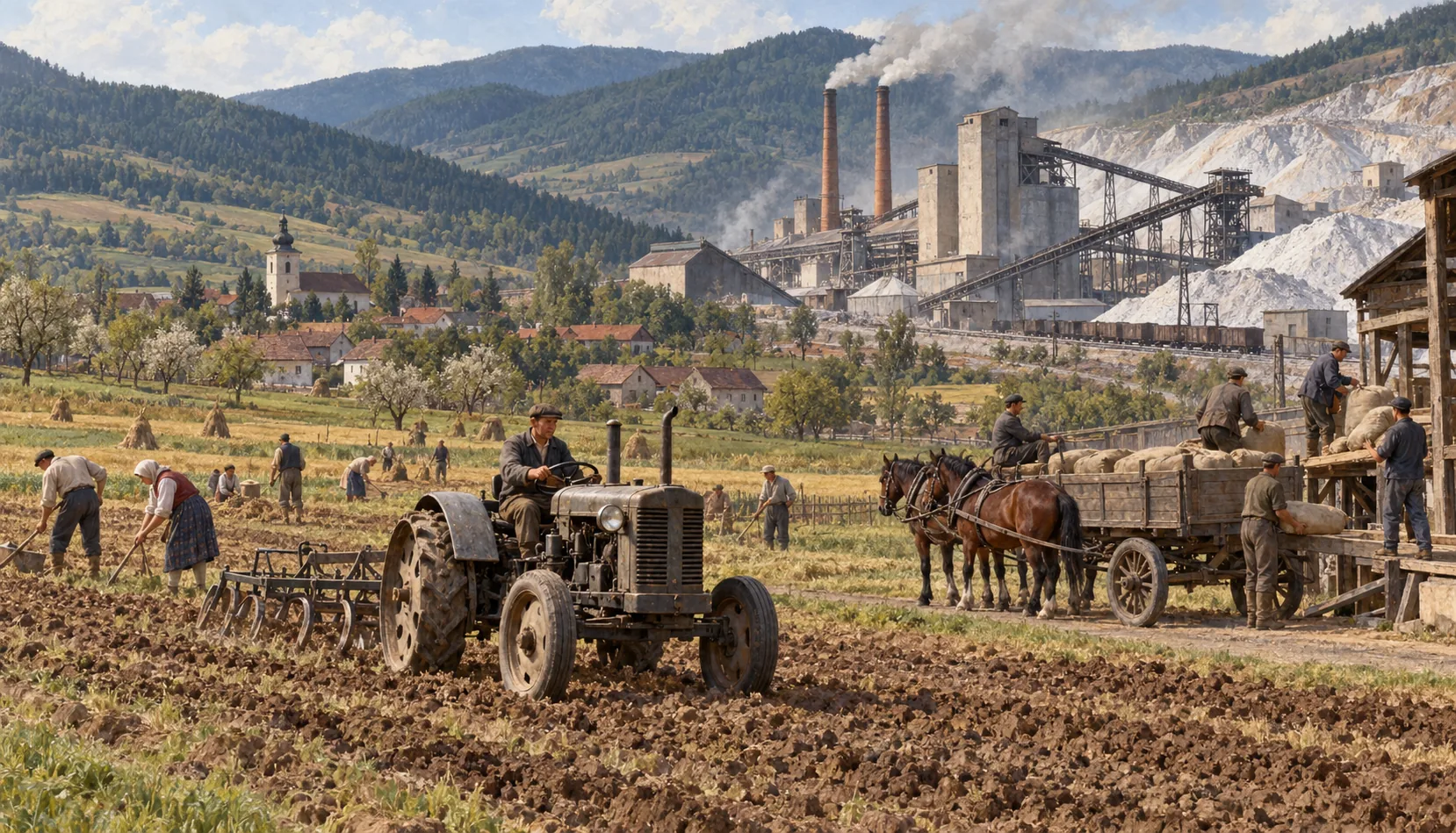
After 1948 the fields went into a farming cooperative and the magnesite plants at Jelšava and Lubeník became the employers of the whole district, taking workers from villages for twenty kilometres around. Šivetice emptied slowly of young people, as villages across Gemer did. The one thing that went in the other direction was the rotunda: during the twentieth century the lime was taken off its walls and the medieval painting came back into view, and conservators recognised the building for what it is — one of the most important Romanesque churches in the country, in a village most Slovaks have never heard of.Po roku 1948 skončili polia v jednotnom roľníckom družstve a magnezitky v Jelšave a v Lubeníku sa stali zamestnávateľmi celého okresu; brali robotníkov z dedín na dvadsať kilometrov naokolo. Šivetice sa pomaly vyprázdňovali od mladých ľudí, tak ako dediny po celom Gemeri. Jedinou vecou, ktorá išla opačným smerom, bola rotunda: v priebehu dvadsiateho storočia zo stien sňali vápno, stredoveká maľba sa vrátila na svetlo a reštaurátori v stavbe rozpoznali to, čím naozaj je — jeden z najvýznamnejších románskych kostolov v krajine, v dedine, o ktorej väčšina Slovákov nikdy nepočula.