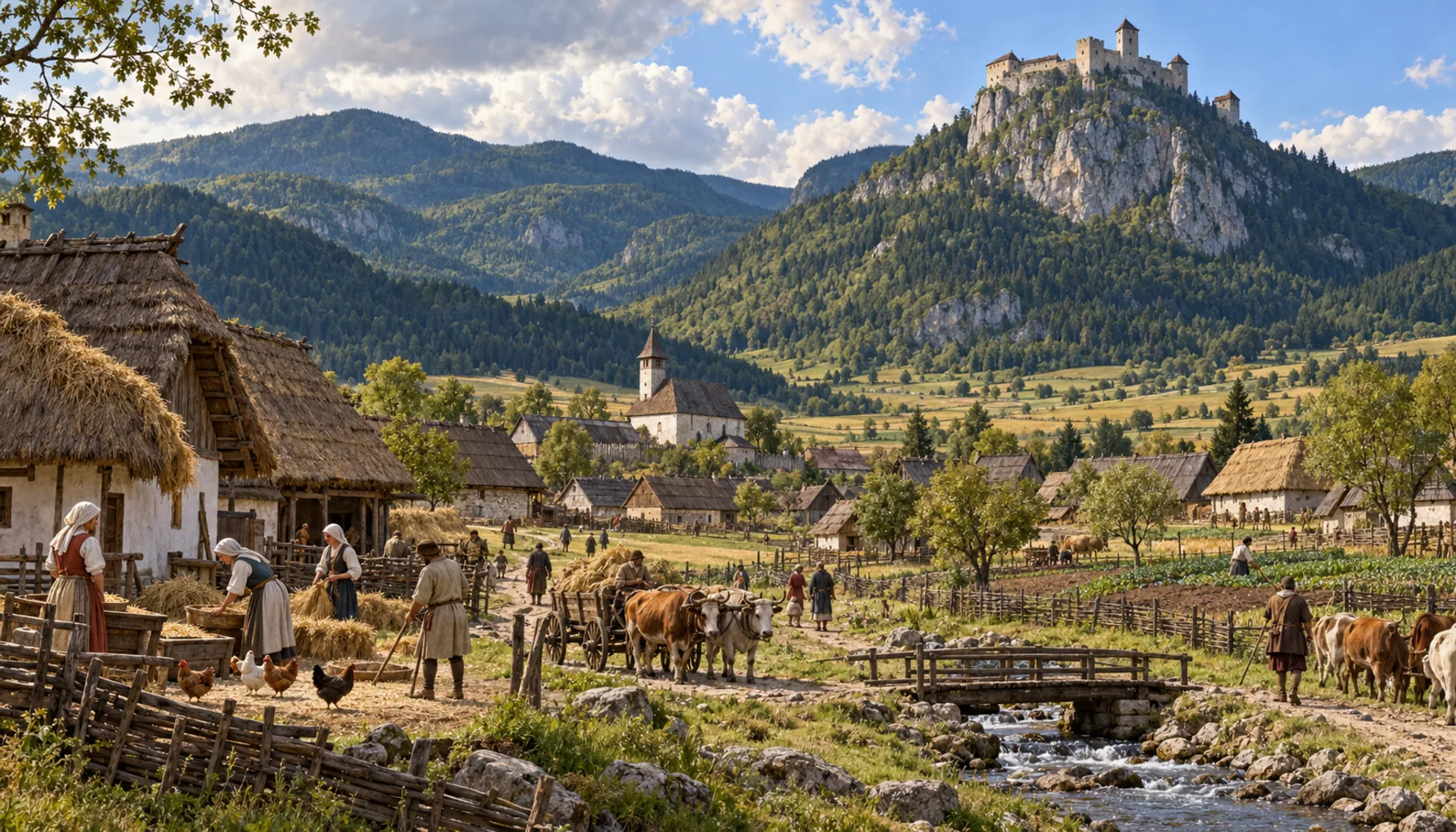
In the fifteenth century the village passed from the Jelšava estate to the domain of Muráň, the castle high in the mountains to the north, and for the next three hundred years its fate was decided by whoever held that rock. Clerks wrote the name down as they heard it — Swethe in 1435, Zwyhete in 1453, Sywethe in 1455 — which is normal in a period with no fixed spelling and is one of the ways historians follow a village through the records. These were violent decades in Gemer: magnates kept private armies, Bohemian mercenary captains ran much of upper Hungary in the name of a boy king, and a village simply belonged to whoever could take the castle above it.V pätnástom storočí prešla obec z jelšavského panstva pod hradné panstvo Muráň — hradu vysoko v horách na severe — a na ďalších tristo rokov o jej osude rozhodoval ten, kto držal tú skalu. Pisári meno zapisovali tak, ako ho počuli: Swethe v roku 1435, Zwyhete v roku 1453, Sywethe v roku 1455. V čase bez ustáleného pravopisu je to bežné a je to jeden zo spôsobov, ako historici sledujú dedinu v prameňoch. Boli to v Gemeri násilné desaťročia: magnáti si držali súkromné vojská, českí žoldnierski kapitáni ovládali v mene maloletého kráľa veľkú časť horného Uhorska — a dedina jednoducho patrila tomu, kto dobyl hrad nad ňou.