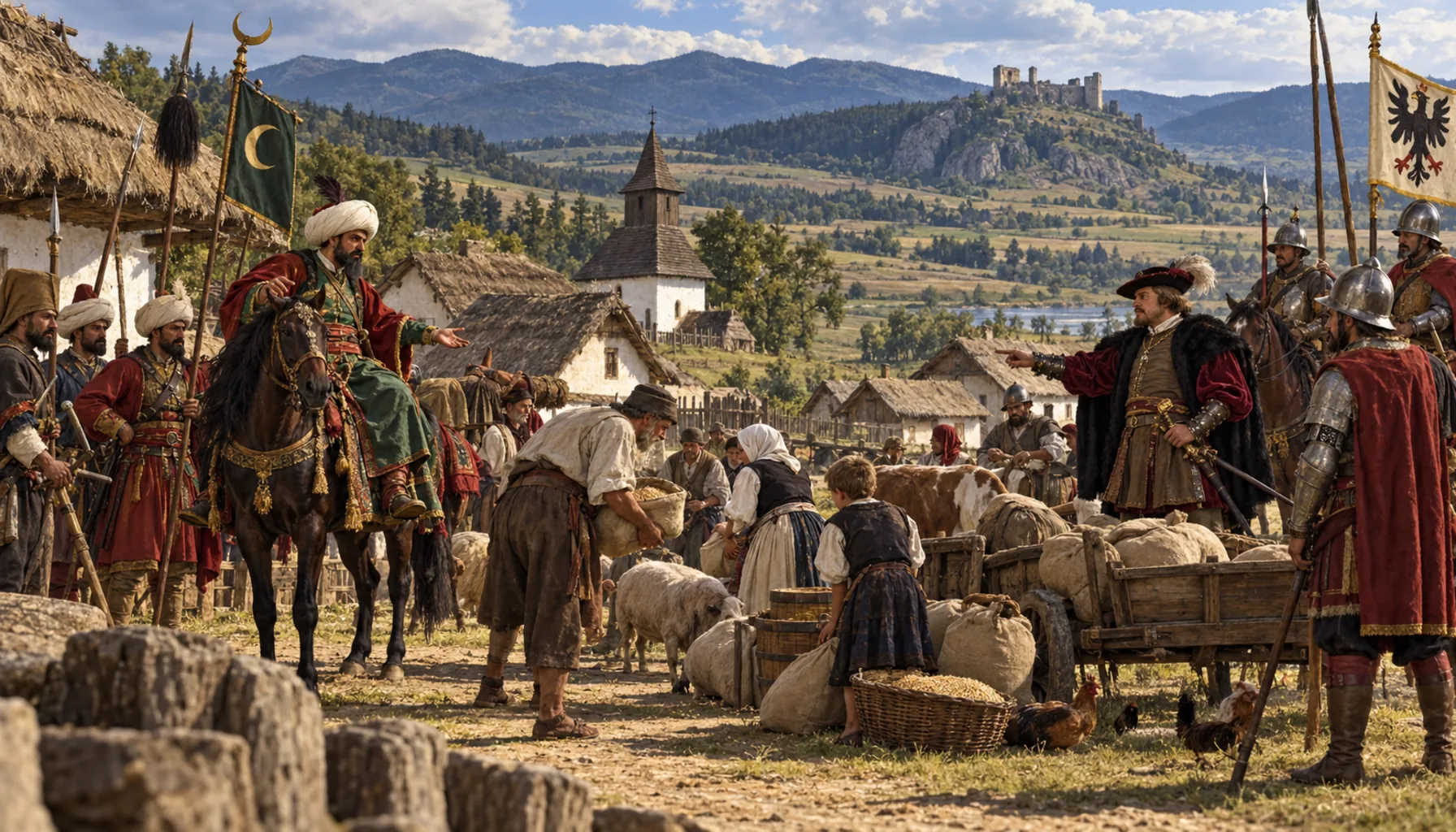
After the Ottoman victory at Mohács in 1526 the Kingdom of Hungary broke apart, and the Turkish frontier came close to Gemer; once the fortress of Fiľakovo fell in 1554, villages in this region could find themselves taxed by an Ottoman official and by their Christian landlord at the same time, and refusing either was dangerous. In the same century the Reformation swept through Gemer and the rotunda, like almost every church in the region, passed to the Lutherans; it is documented in their hands in the seventeenth century. Muráň, the castle this village belonged to, was notorious in these decades: in the 1540s it was held by the robber baron Matej Bašo, who raided the surrounding country from it until a royal army stormed the castle and executed him in 1549.Po osmanskom víťazstve pri Moháči roku 1526 sa Uhorské kráľovstvo rozpadlo a turecká hranica sa priblížila ku Gemeru; keď v roku 1554 padla pevnosť Fiľakovo, dediny tohto kraja mohli platiť naraz tureckému úradníkovi aj vlastnému kresťanskému zemepánovi — a odmietnuť ktoréhokoľvek z nich bolo nebezpečné. V tom istom storočí prešla Gemerom reformácia a rotunda, ako takmer každý kostol v kraji, pripadla evanjelikom; v ich rukách je doložená v sedemnástom storočí. Muráň, hrad, ku ktorému obec patrila, bol v týchto desaťročiach povestný: v štyridsiatych rokoch 16. storočia na ňom sedel lúpežný rytier Matej Bašo, ktorý odtiaľ plienil okolie, kým hrad nedobylo kráľovské vojsko a Baša v roku 1549 nepopravilo.