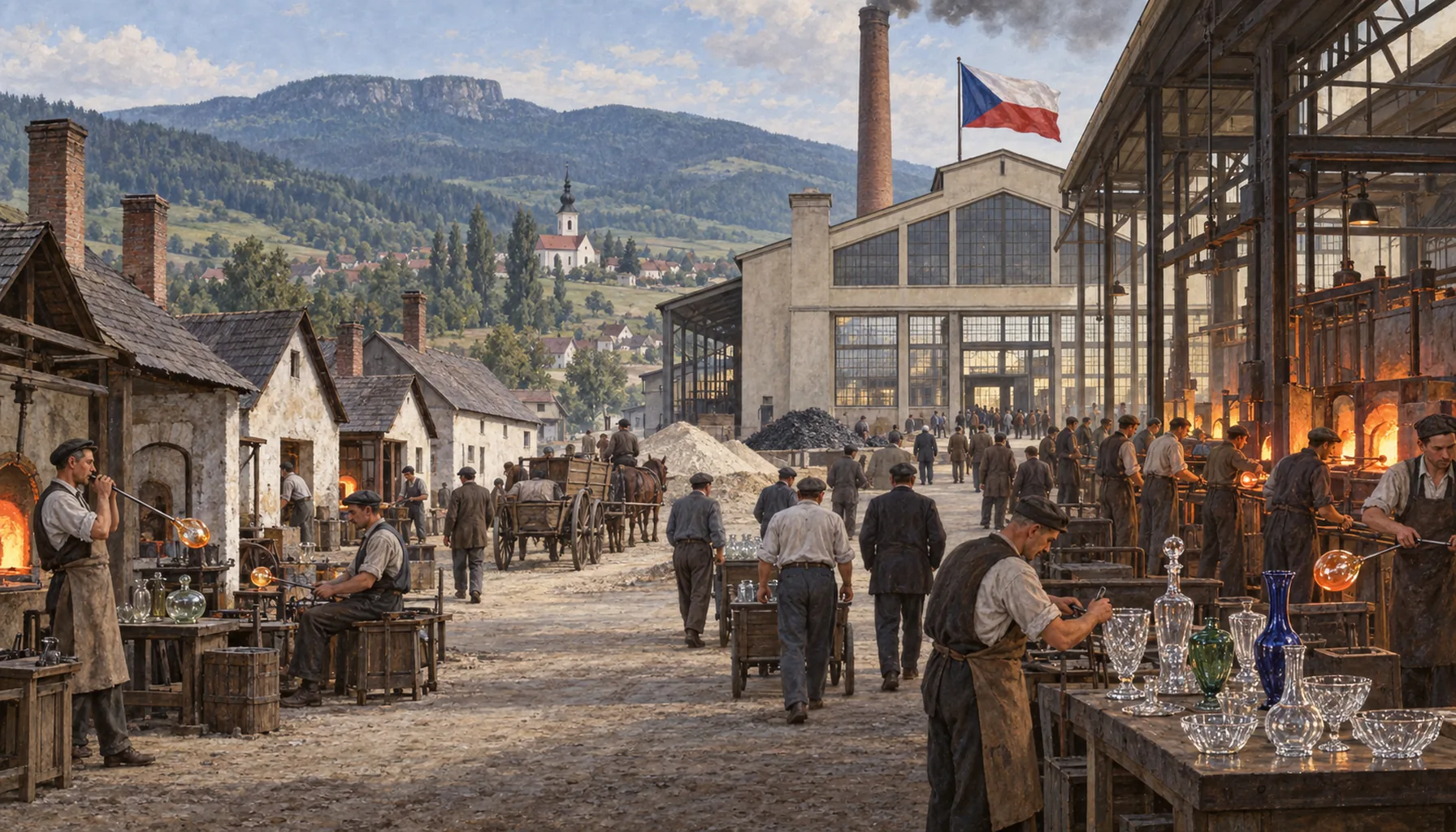
After 1948 the state took the glassworks and combined the scattered private works into a single industry that employed most of the district. Poltár made pressed and blown domestic glass — the tumblers and vases that stood in half the kitchens in Czechoslovakia. From 1952 building-materials production expanded and a kaolin mine was opened, kaolin being the white clay that goes into porcelain and refractories. In 1966 the neighbouring villages of Slaná Lehota and Zelené were joined to Poltár and the place was raised to a town.Po roku 1948 štát sklárne prevzal a roztrúsené súkromné hute spojil do jedného odvetvia, ktoré zamestnávalo väčšinu okresu. V Poltári sa vyrábalo lisované a fúkané úžitkové sklo — poháre a vázy, ktoré stáli v polovici československých kuchýň. Od roku 1952 sa rozvinula výroba stavebných hmôt a otvorila sa baňa na kaolín, bielu hlinu, z ktorej sa robí porcelán a žiaruvzdorné materiály. V roku 1966 pripojili k Poltáru susedné obce Slaná Lehota a Zelené a obec povýšili na mesto.