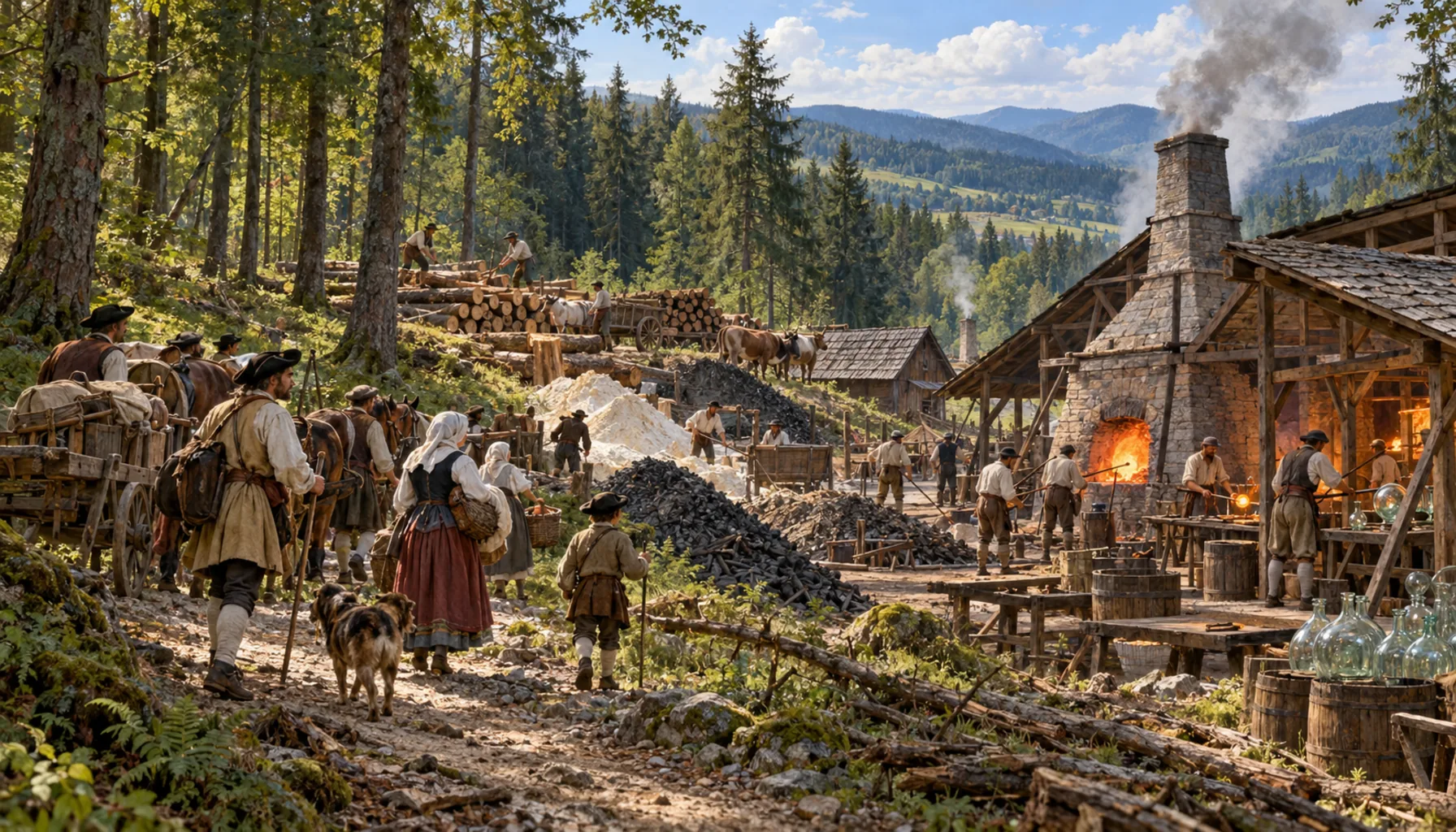
From the eighteenth century glassmakers moved into these forests. A glasshouse needs three things, and Novohrad had all of them on the spot: quartz sand, endless wood to fire the furnace, and more wood burnt into ash for potash, the flux that lets sand melt at a workable temperature. Each works was built where the wood was, and a company village grew around it, so the map of this district is really a map of furnaces. The estate itself passed to the Géczy family in 1742.Od osemnásteho storočia sa do týchto lesov sťahovali sklári. Sklárska huta potrebuje tri veci a Novohrad ich mal všetky na mieste: kremenný piesok, nekonečné drevo do pece a ďalšie drevo spálené na popol pre potaš, tavivo, vďaka ktorému sa piesok roztaví pri zvládnuteľnej teplote. Každá huta vyrástla tam, kde bolo drevo, a okolo nej vznikla závodná osada — mapa tohto okresu je preto v skutočnosti mapou pecí. Samotné panstvo prešlo v roku 1742 na Gécziovcov.