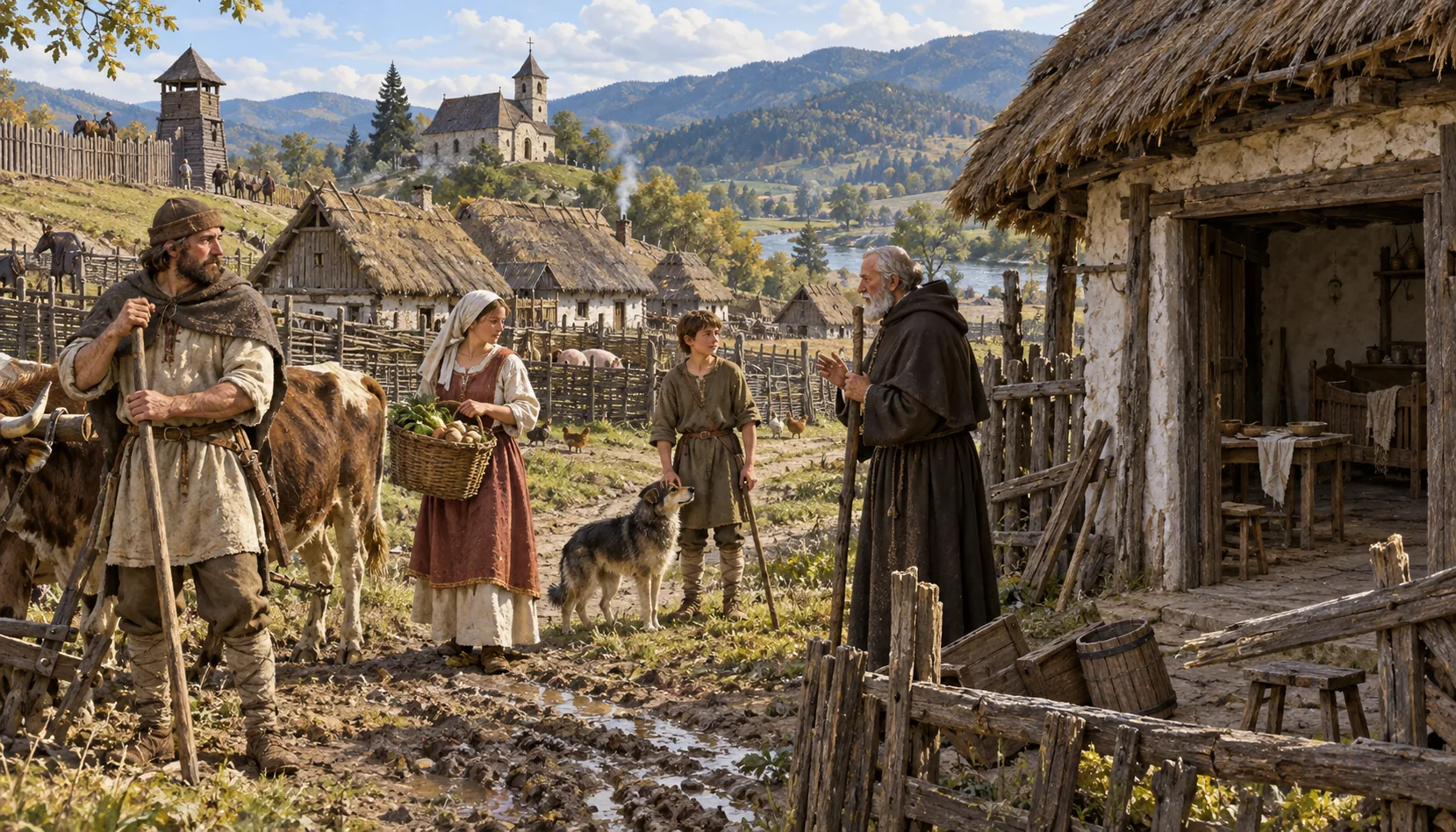
The first written mention is given as 1246 by some sources and 1330 by others — a good reminder that a first mention is a fact about a surviving document, not about when people arrived. Later charters call the place Nagpolthar, Felsupolthar, Kyspoltar and Varalyapolthar in 1409, and Polthar in 1439: four Poltárs, so this was a scatter of hamlets rather than one village. It belonged to the Zách family until 1330, then to the Sóós family. 1330 is the year Felicián Zách attacked King Charles Robert and his family at Visegrád, and the king had the entire Zách kindred hunted down and its estates seized — which would explain neatly why the name stops here at exactly that point.Prvú písomnú zmienku uvádzajú niektoré pramene k roku 1246, iné k roku 1330 — pekná pripomienka toho, že prvá zmienka je údaj o zachovanej listine, nie o tom, kedy sem ľudia prišli. Neskoršie listiny nazývajú toto miesto v roku 1409 Nagpolthar, Felsupolthar, Kyspoltar a Varalyapolthar a v roku 1439 Polthar: štyri Poltáre, teda skôr roztrúsené osady než jedna dedina. Do roku 1330 patrilo Zachovcom, potom Šóšovcom. Rok 1330 je rokom, keď Felicián Zach napadol vo Vyšehrade kráľa Karola Róberta a jeho rodinu a kráľ dal celý Zachovský rod vyhubiť a jeho majetky zhabať — čo by pekne vysvetľovalo, prečo sa meno rodu presne v tomto bode z Poltára stráca.