Banská Bystrica region · TownsBanskobystrický kraj · Mestá
PoltárPoltár
A glassmaking town on the upper Ipeľ, where the forests of the Vepor hills once fed a scatter of small glassworks. Most of the furnaces that made Poltár's name have gone cold, but the valley is still known by them.Sklárske mesto na hornom Ipli, kde lesy Veporských vrchov kedysi živili roztrúsené sklárne. Väčšina pecí, ktoré urobili Poltáru meno, vychladla, ale dolina je nimi známa dodnes.
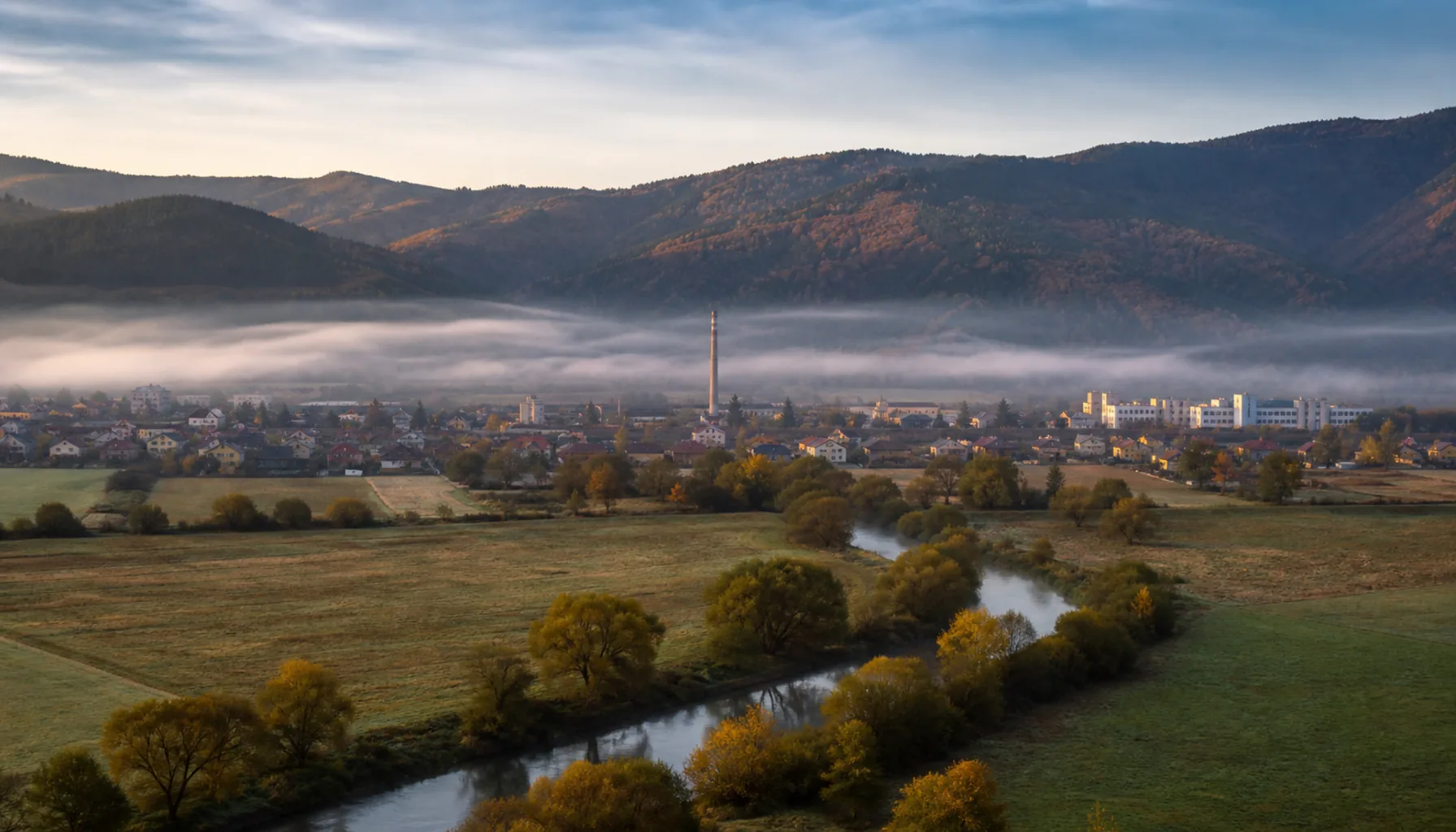
The upper Ipeľ valley at Poltár, with the wooded foothills of the Vepor behind the townÚdolie horného Ipľa pri Poltári so zalesneným predhorím Vepra za mestom
Where it standsKde leží
Poltár stands on the upper Ipeľ, in the Novohrad country where the Lučenec basin runs up against the wooded foothills of the Veporské vrchy. Lučenec is about twenty kilometres to the south-west; behind the town the valley narrows and climbs towards Málinec and the watershed of the Slovak Ore Mountains.Poltár leží na hornom Ipli, v Novohrade, tam, kde Lučenecká kotlina naráža na zalesnené predhorie Veporských vrchov. Lučenec je asi dvadsať kilometrov na juhozápad; za mestom sa dolina zužuje a stúpa smerom na Málinec a k rozvodiu Slovenského rudohoria.
It has been the seat of its own district since Slovakia's districts were redrawn in 1996, which makes it one of the smallest district towns in the country — an administrative centre for a valley of villages rather than a city in its own right.Od nového územného členenia v roku 1996 je sídlom vlastného okresu, čím patrí k najmenším okresným mestám v krajine — je skôr správnym strediskom doliny plnej dedín než mestom v pravom zmysle slova.
The storyHistória
The village on the Ipeľ is medieval, but what made Poltár was glass. From the eighteenth century the Novohrad forests offered a glasshouse everything it needed — quartz sand, potash from wood ash, and timber to burn — and small works were founded up and down these valleys: Katarínska Huta, Zlatno, Utekáč and others, each a company settlement built around its own furnace.Dedina na Ipli je stredoveká, ale mesto z nej urobilo až sklo. Od osemnásteho storočia ponúkali novohradské lesy sklárskej huti všetko, čo potrebovala — kremenný piesok, potaš z dreveného popola a drevo na kúrenie — a v týchto dolinách vznikali menšie huty: Katarínska Huta, Zlatno, Utekáč a ďalšie, každá ako závodná osada okolo vlastnej pece.
In the nineteenth century the trade consolidated into larger factories, and after 1948 the state combined them into an industry that employed most of the district. Poltár itself made pressed and blown domestic glass; the clays of the same hills fed brickworks and refractory plants, the one at Kalinovo down the valley being the best known.V devätnástom storočí sa výroba sústredila do väčších tovární a po roku 1948 ich štát spojil do odvetvia, ktoré zamestnávalo väčšinu okresu. V Poltári sa vyrábalo lisované a fúkané úžitkové sklo; íly z tých istých kopcov živili tehelne a šamotárne, z ktorých je najznámejšia tá v Kalinove nižšie v doline.
The 1990s were hard on all of it. Export markets disappeared, several works closed outright, and the district has been living with the consequences ever since. Glass is still worked here on a far smaller scale, and the skill has not entirely left the valley.Deväťdesiate roky zasiahli všetko naraz. Vývozné trhy zmizli, viaceré závody sa zavreli a okres s tým žije dodnes. Sklo sa tu stále spracúva, hoci v oveľa menšom rozsahu — remeslo z doliny celkom neodišlo.
What to seeČo vidieť
Poltár is not a monument town and does not pretend to be. Its centre is twentieth-century, built around the works rather than around a square, and the older fabric is thin. What is worth the detour is the glass country upstream, where rows of company houses still stand below the sites of the old furnaces.Poltár nie je pamiatkové mesto a ani sa tak netvári. Jeho centrum je z dvadsiateho storočia, postavené okolo závodov, nie okolo námestia, a staršej zástavby je málo. Za odbočku stojí sklárska krajina vyššie v doline, kde pod miestami niekdajších pecí dodnes stoja rady závodných domov.
Above the town the Ipeľ valley leads into the Veporské vrchy — quiet wooded hills with marked paths and very few people on them. The Málinec reservoir upstream was built to supply drinking water, so it is closed to swimming, but it sits in fine country.Nad mestom vedie údolie Ipľa do Veporských vrchov — tichých zalesnených kopcov so značenými chodníkmi a s minimom ľudí na nich. Vodná nádrž Málinec vyššie v doline vznikla ako zdroj pitnej vody, takže kúpanie v nej je zakázané, no leží v peknom kraji.
The rest of Novohrad is close: Lučenec, the castle rock at Fiľakovo, and the volcanic hills of the Cerová vrchovina towards the border.Zvyšok Novohradu je blízko: Lučenec, hradná skala vo Fiľakove a sopečné kopce Cerovej vrchoviny smerom k hranici.
Work and industryPráca a priemysel
Glass, refractories and wood were the district's three industries, and wood is the steadiest of them. Forestry and sawmilling continue, smaller manufacturers have taken over parts of the old plants, and a good many people commute to Lučenec or further.Sklo, žiaruvzdorné materiály a drevo boli tromi odvetviami okresu a drevo je z nich najstálejšie. Lesníctvo a píly fungujú ďalej, časti starých závodov prevzali menší výrobcovia a nemálo ľudí dochádza za prácou do Lučenca alebo ďalej.
Unemployment in the Poltár district has been among the highest in Slovakia for years and the population has been falling. That is the plain situation, and it is also why the valley is so quiet.Nezamestnanosť v okrese Poltár patrí roky k najvyšším na Slovensku a počet obyvateľov klesá. To je holý stav vecí — a zároveň dôvod, prečo je dolina taká tichá.
Getting thereAko sa tam dostať
A branch railway climbs to Poltár from Lučenec and buses run the same road more often; by car the route is the road north-east out of Lučenec towards Málinec. Nothing in the district is much more than half an hour from Lučenec, which is the nearest place with trains in several directions.Do Poltára vedie odbočná železničná trať z Lučenca a autobusy chodia po tej istej ceste častejšie; autom sa ide z Lučenca na severovýchod smerom na Málinec. Z ktorejkoľvek časti okresu je do Lučenca nanajvýš asi pol hodiny a Lučenec je najbližším miestom s vlakmi na viac strán.
Explore PoltárObjavujte Poltár
Every part of this place with a page of its own.Každá časť tohto miesta, ktorá má vlastnú stránku.