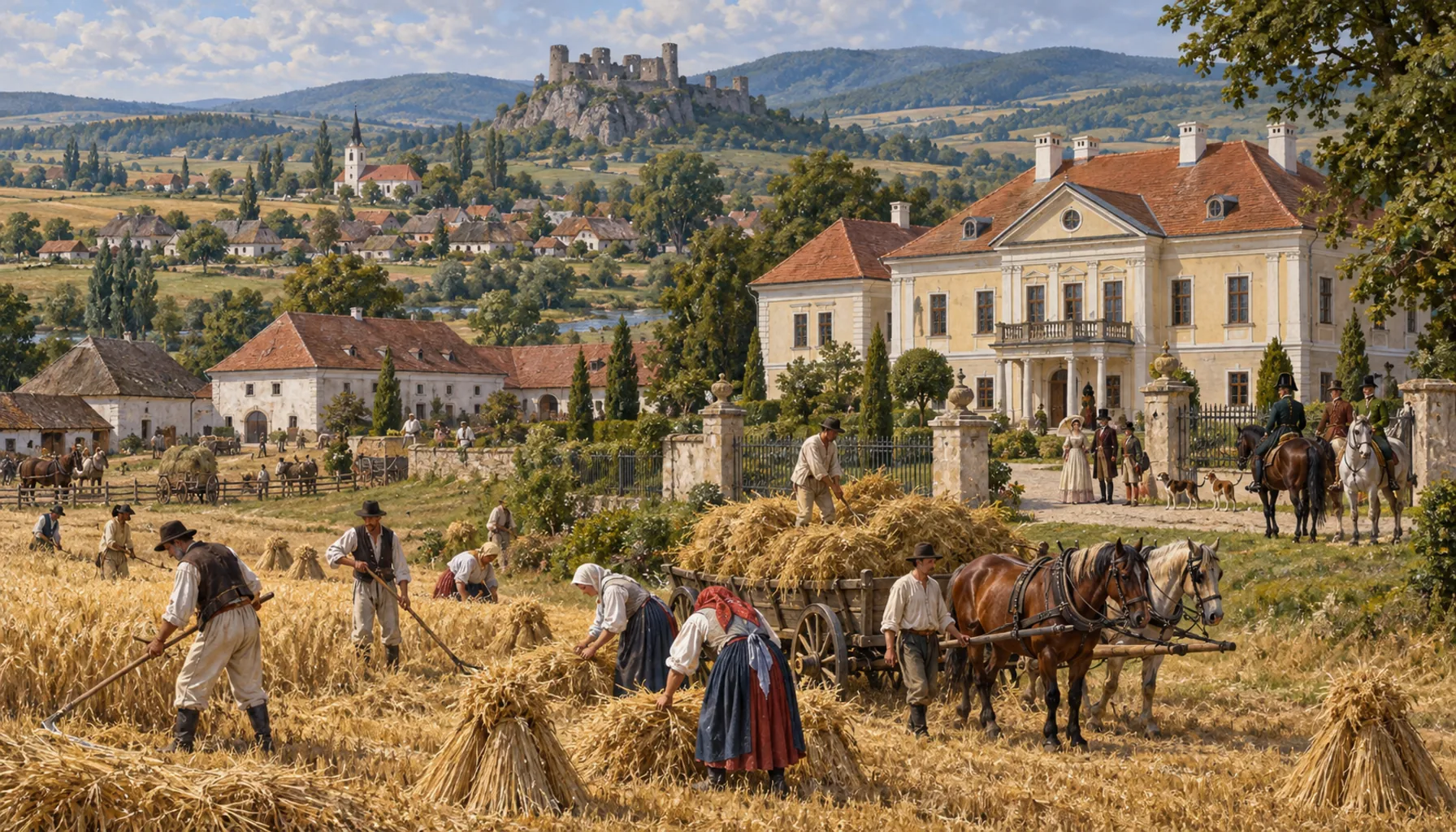
Two manor houses went up here in these decades — the Berchtold house in 1830 and the Cebrián house in 1847 — and they tell you who owned the land around Fiľakovo: noble families with estates, and villages of tenants who owed them labour. The revolution of 1848 abolished that obligation across the Hungarian kingdom. Tenants became the owners of the plots they had worked, the landlords were compensated by the state, and one law changed the countryside around this town more than the previous three hundred years had.V týchto desaťročiach tu vyrástli dva kaštiele — Berchtoldovský roku 1830 a Cebriánovský roku 1847 — a samy hovoria, komu patrila pôda okolo Fiľakova: šľachtickým rodom s panstvami a dedinám poddaných, ktorí im boli povinní robotou. Revolúcia roku 1848 túto povinnosť v celom Uhorsku zrušila. Z poddaných sa stali vlastníci pôdy, ktorú dovtedy obrábali, zemepánov odškodnil štát a jediný zákon zmenil vidiek okolo tohto mesta viac než predchádzajúcich tristo rokov.