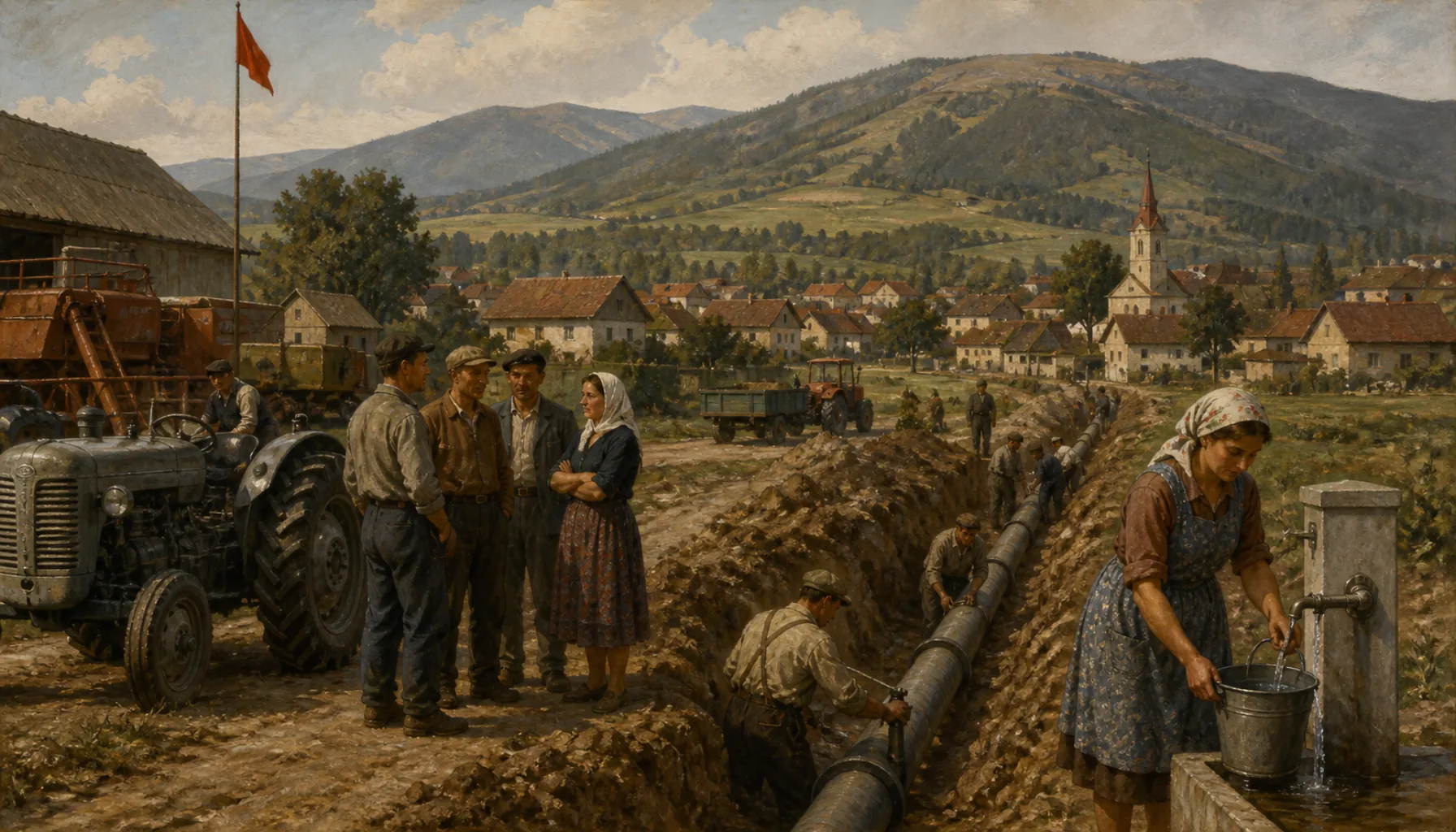
The forty years after 1948 did to Blatnica what they did to most Slovak villages, and it cut both ways. The land went into a collective farm and the old strip fields disappeared; at the same time the village got things it had never had — new roads, a public water main, electric current, the telephone, and buses that actually ran. Young people commuted to work in Martin instead of farming their fathers' land. Behind the village the Veľká Fatra was declared a protected landscape area in 1972, and the castle on the rock stayed exactly what it had been since 1790: a ruin.Štyridsať rokov po roku 1948 urobilo s Blatnicou to, čo s väčšinou slovenských dedín, a malo to dve strany. Pôda skončila v jednotnom roľníckom družstve a staré úzke políčka zmizli; obec však zároveň dostala veci, ktoré predtým nemala — nové cesty, verejný vodovod, elektrinu, telefón a autobusy, ktoré naozaj chodili. Mladí ľudia namiesto otcovských roličiek dochádzali za prácou do Martina. Veľká Fatra za dedinou bola roku 1972 vyhlásená za chránenú krajinnú oblasť a hrad na skale zostal presne tým, čím bol od roku 1790 — zrúcaninou.