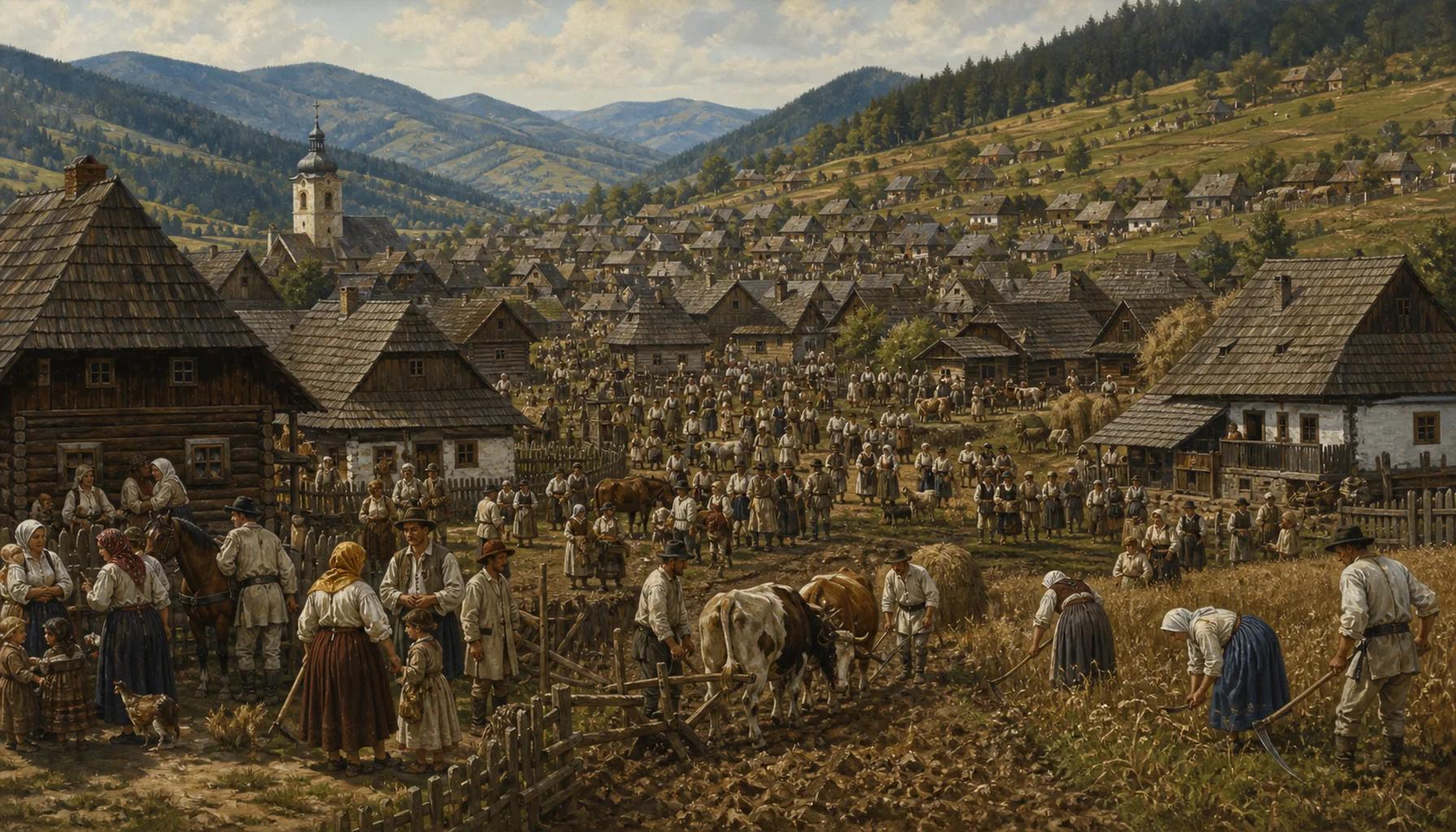
Maria Theresa's census of 1784 counted 4,832 people in 864 houses at Turzovka; by 1801 there were 5,740. Those are startling numbers for a mountain settlement less than two hundred years old, and they contain the whole problem of the Kysuce: the population grew far faster than the land could feed it. Holdings were divided between sons until they were too small to live on, the growing season is short, and the soil is thin and wet. So the men went out to earn — first as seasonal harvest labour down in the Hungarian lowland, and increasingly as drotári, travelling tinkers who bound cracked clay pots back together with wire and then made wire ware to sell. By the early twentieth century there were about 5,000 tinkers working out of Slovakia's poorest districts, some with workshops as far away as Russia and the United States.Tereziánsky súpis z roku 1784 narátal v Turzovke 4 832 ľudí v 864 domoch, v roku 1801 ich bolo 5 740. Na horskú osadu mladšiu než dvesto rokov sú to prekvapivé čísla a je v nich celý problém Kysúc: obyvateľstvo rástlo oveľa rýchlejšie, než ho pôda dokázala uživiť. Gazdovstvá sa delili medzi synov, kým z nich nezostali políčka, na ktorých sa žiť nedá, vegetačné obdobie je krátke a pôda plytká a mokrá. Muži teda odchádzali zarábať — najprv na sezónne žatevné práce do uhorskej nížiny a čoraz viac ako drotári, vandrovní remeselníci, ktorí zväzovali prasknuté hlinené hrnce drôtom a neskôr vyrábali drôtený tovar na predaj. Začiatkom dvadsiateho storočia pracovalo z najchudobnejších slovenských okresov okolo 5 000 drotárov, niektorí mali dielne až v Rusku a v Spojených štátoch.