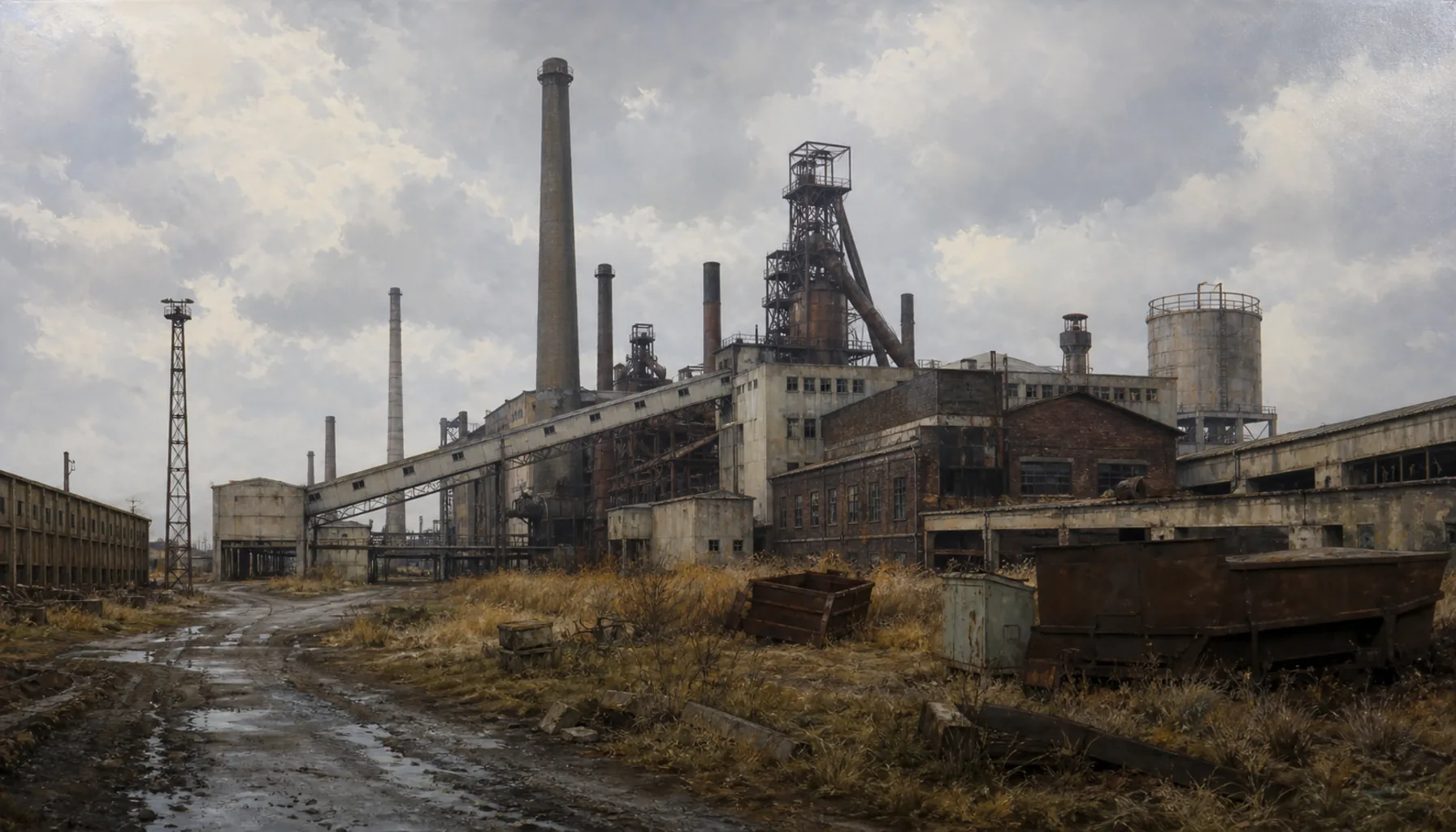
The smelter could not survive the loss of its planned market and its cheap imported ore, and it closed in the early nineteen-nineties. It left two things behind: unemployment in a town built around a single employer, and a badly contaminated site, because decades of smelting had put heavy metals into the ground. Cleaning that up and finding a new use for the land took most of the next two decades — which is a fair description of what happened to a lot of Slovak industrial towns after 1989.Huť neprežila stratu plánovaného odbytu ani lacnej dovážanej rudy a začiatkom deväťdesiatych rokov ju zavreli. Zostali po nej dve veci: nezamestnanosť v meste postavenom okolo jedného zamestnávateľa a ťažko znečistený areál, lebo desaťročia tavenia dostali do zeme ťažké kovy. Vyčistiť ho a nájsť preň nové využitie trvalo väčšinu ďalších dvoch desaťročí — a to je celkom presný opis toho, čo sa po roku 1989 stalo s mnohými slovenskými priemyselnými mestami.