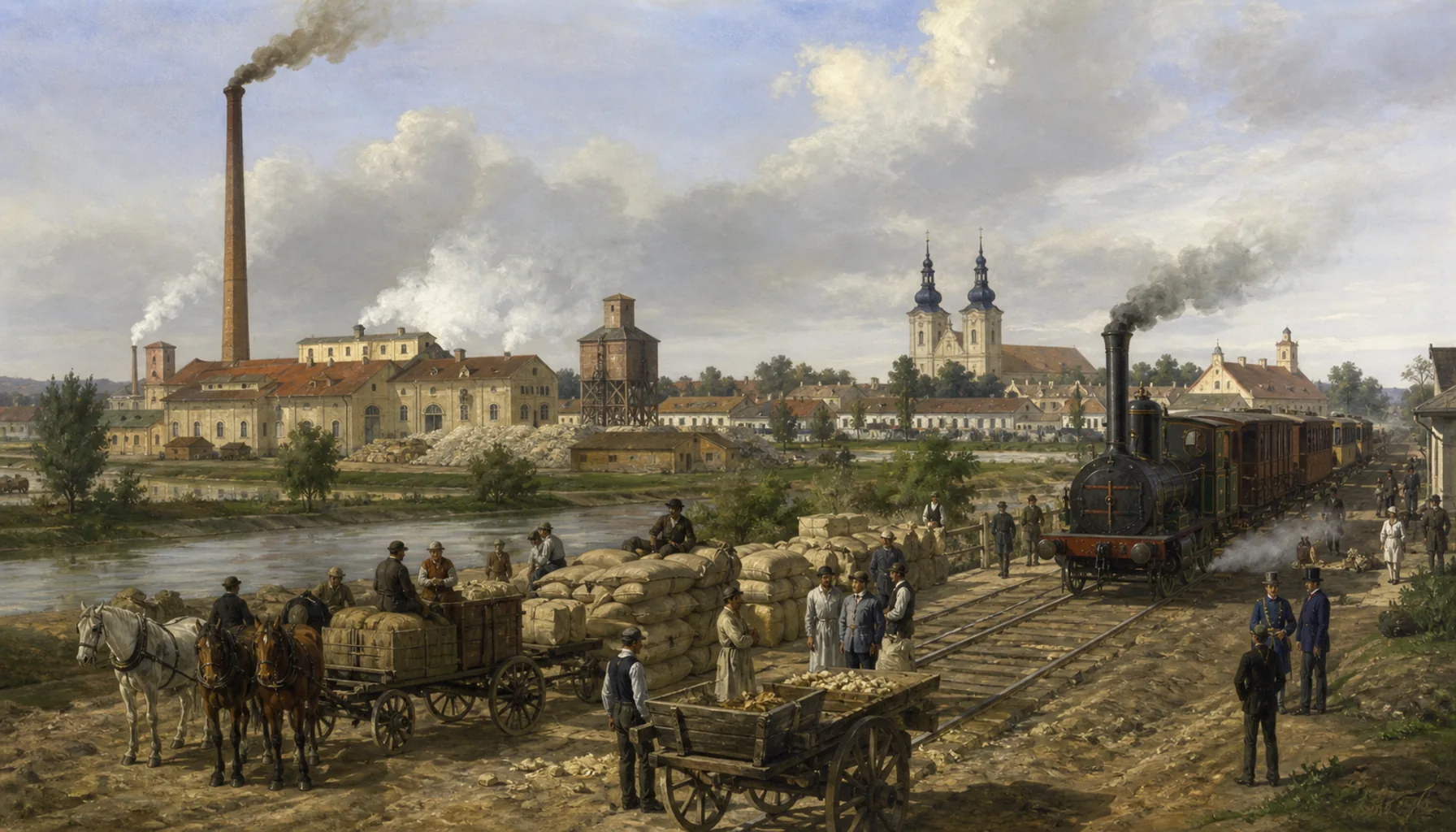
Two things arrived in Sereď in successive years and changed what the town lived on. A sugar refinery — a factory turning beet into sugar — opened in 1845. In 1846 the horse-drawn railway from Bratislava through Trnava was extended to Sereď and ended here: the first railway in the Kingdom of Hungary, its wagons pulled by horses along iron rails, built to bring grain down to the Danube. Sources disagree about what it did to the town — Slovak accounts treat the terminus as a prize, English ones say the old road trade fell away once goods went by rail. Both can be true at once, and that is usually what a new technology does to a market town.V dvoch po sebe idúcich rokoch prišlo do Serede to, čo zmenilo, z čoho mesto žije. Roku 1845 tu začal pracovať cukrovar, teda továreň, ktorá z repy vyrába cukor. Roku 1846 predĺžili konskú železnicu z Bratislavy cez Trnavu až sem a Sereď sa stala jej konečnou stanicou: bola to prvá železnica v celom Uhorsku, vozne po koľajniciach ťahali kone a stavala sa preto, aby obilie doviezla k Dunaju. Pramene sa rozchádzajú v tom, čo to mestu prinieslo — slovenské píšu o konečnej stanici ako o výhre, anglické o tom, že stará cestná obchodná premávka od roku 1846 upadla. Pokojne môže platiť oboje; presne to nová technika s trhovým mestom obyčajne urobí.