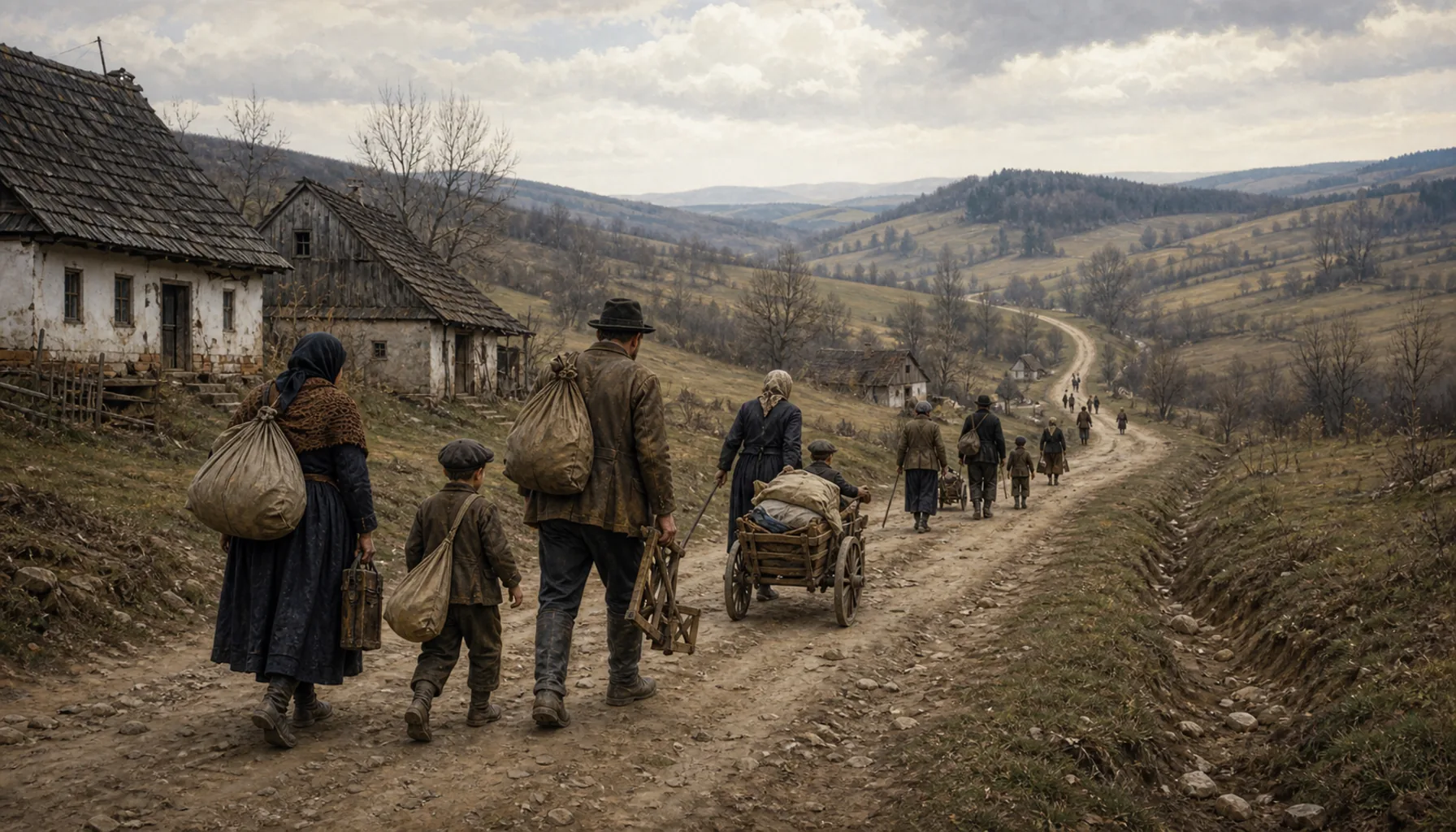
The crafts that had kept Myjava alive lost their markets at the end of the nineteenth century, and between poverty and Magyarisation — the policy of turning everyone in Hungary into a Hungarian speaker — the Kopanice emptied westwards. People from Myjava went to the United States above all, and some to Canada and Argentina: to New York, Chicago, Pittsburgh and Cleveland, but most of all to a small town called Little Falls in New York State, which became the largest single Myjava colony abroad. A district could lose a large share of its young men in twenty years that way. The folk music, dialect and dress of this region were recorded so thoroughly precisely because everyone could see the life that produced them draining away.Remeslá, ktoré Myjavu živili, koncom 19. storočia stratili odbyt a medzi chudobou a maďarizáciou — politikou, ktorá mala z každého obyvateľa Uhorska urobiť Maďara — sa kopanice vyprázdňovali smerom na západ. Myjavčania odchádzali predovšetkým do Spojených štátov, časť do Kanady a Argentíny: do New Yorku, Chicaga, Pittsburghu a Clevelandu, ale najviac do mestečka Little Falls v štáte New York, kde vznikla najväčšia myjavská kolónia v zahraničí. Kraj takto vedel za dvadsať rokov prísť o veľkú časť mladých mužov. Ľudovú hudbu, nárečie a kroj tohto regiónu zapísali tak dôkladne práve preto, že každý videl, ako život, ktorý ich vytvoril, mizne.