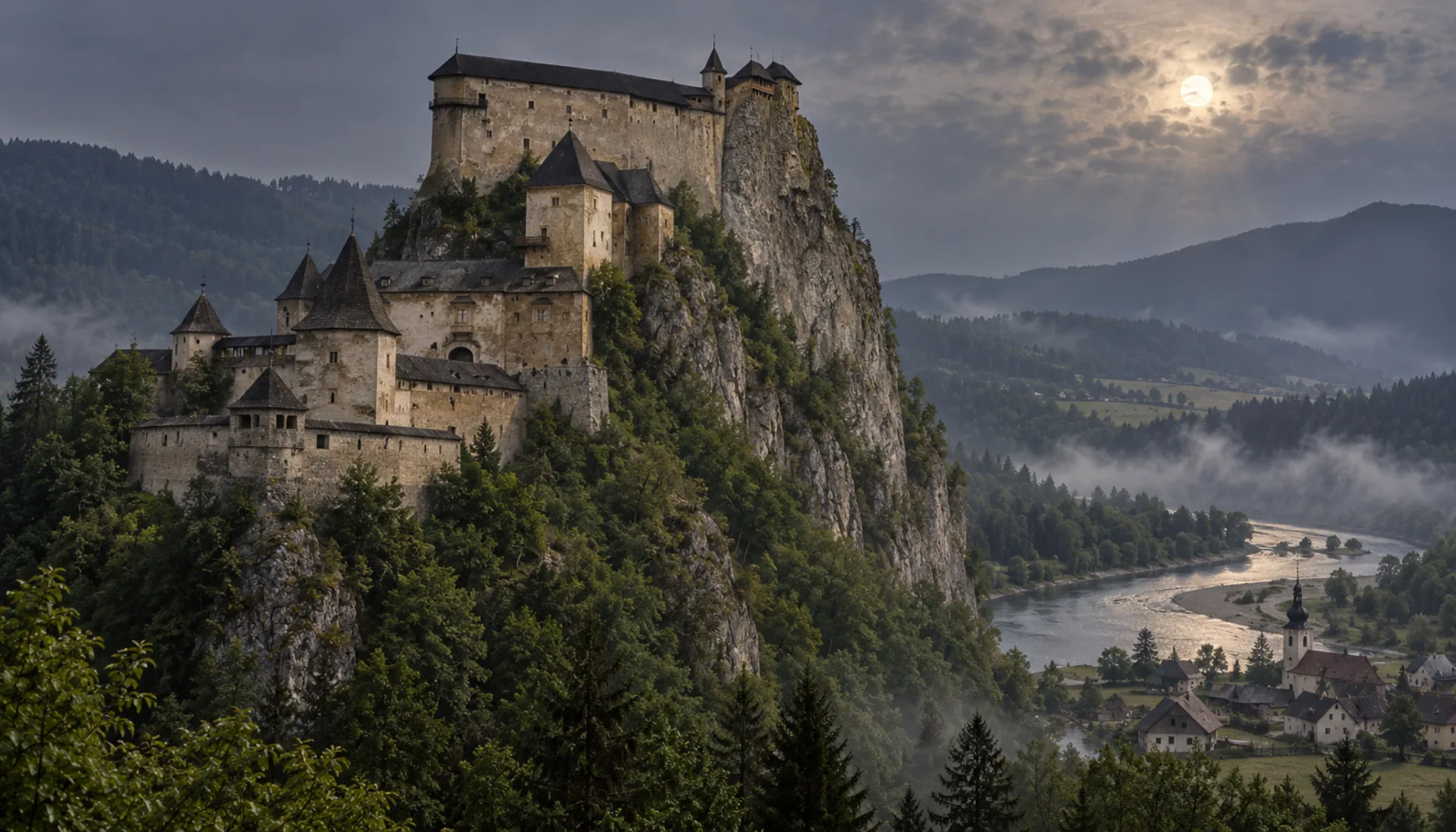
In 1922 the German director F. W. Murnau brought a film crew to Orava and used the castle as Count Orlok's lair in Nosferatu — the first great vampire film, and an unlicensed reworking of Bram Stoker's Dracula with the names changed. The choice was not accidental. Murnau needed a castle that would read as menace in a single silent shot, with no dialogue to explain it, and Orava gives you exactly that: filmed from the valley floor, black against a pale sky, the stack of walls becomes one jagged shape and needs no caption. Stoker's widow sued over the unlicensed adaptation and won, and a court ordered the prints destroyed — but copies had already scattered too far to be gathered back, and the film survived. So did the castle's second career. To a great many people abroad this is not the seat of a Hungarian palatine at all; it is a vampire's house.V roku 1922 priviedol nemecký režisér F. W. Murnau na Oravu filmový štáb a použil hrad ako sídlo grófa Orloka vo filme Nosferatu — prvom veľkom upírskom filme a nelicencovanom prepise Stokerovho románu Dracula so zmenenými menami. Nebola to náhoda. Murnau potreboval hrad, ktorý v jedinom nemom zábere prečítate ako hrozbu, bez dialógu na vysvetlenie, a Orava dá presne to: nasnímaná z dna doliny, čierna proti svetlej oblohe, sa tá kopa múrov zmení na jeden zubatý tvar, ku ktorému netreba titulok. Stokerova vdova sa za nepovolený prepis súdila a vyhrala; súd nariadil kópie zničiť — lenže tie sa už rozišli priďaleko, než aby ich bolo možné pozbierať, a film prežil. A s ním aj druhá kariéra hradu. Pre veľkú časť sveta to nie je sídlo uhorského palatína, ale dom upíra.