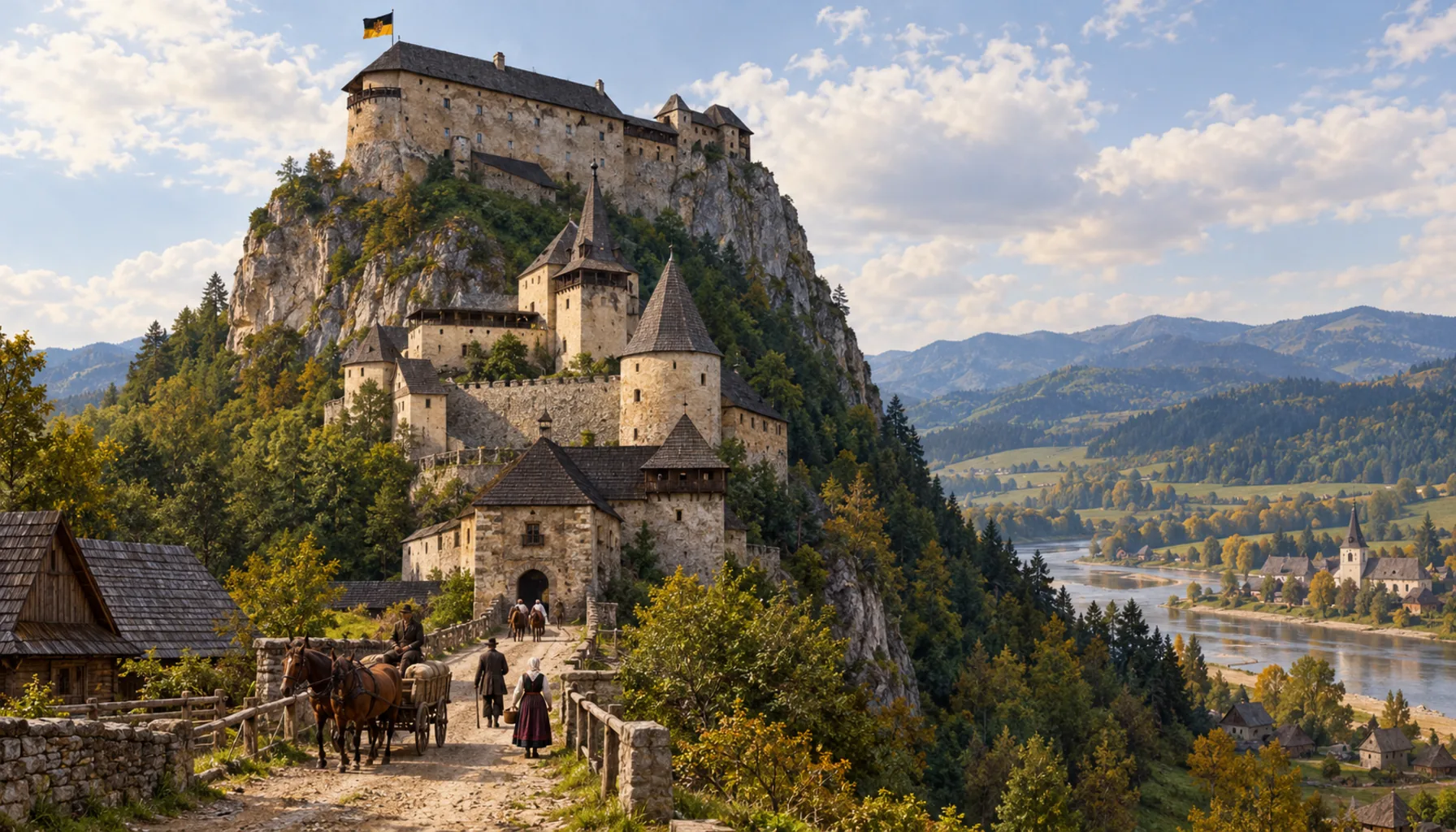
Austria-Hungary ended in 1918 and Orava became Czechoslovak, but the castle did not change hands. The composesorate, founded in 1626, went on owning and running the Orava estate — its forests, its sawmills, its offices in the village under the rock — into the twentieth century. That continuity is unusual and it matters. By this date most Slovak castles had been roofless ruins for a century, or were the property of an aristocratic family that lived somewhere more comfortable and visited in summer. Orava was neither. It was a working headquarters with an institution behind it, and institutions repair roofs.Rakúsko-Uhorsko sa v roku 1918 skončilo a Orava sa stala československou, ale hrad majiteľa nezmenil. Komposesorát, založený roku 1626, vlastnil a spravoval oravské panstvo aj naďalej — jeho lesy, píly a úrady v dedine pod skalou — až do 20. storočia. Tá kontinuita je nezvyčajná a je dôležitá. V tom čase už väčšina slovenských hradov bola sto rokov zrúcaninou bez strechy alebo majetkom šľachtickej rodiny, ktorá bývala niekde pohodlnejšie a chodila sem v lete. Orava nebola ani jedno. Bola fungujúcim riaditeľstvom s inštitúciou za chrbtom — a inštitúcie strechy opravujú.