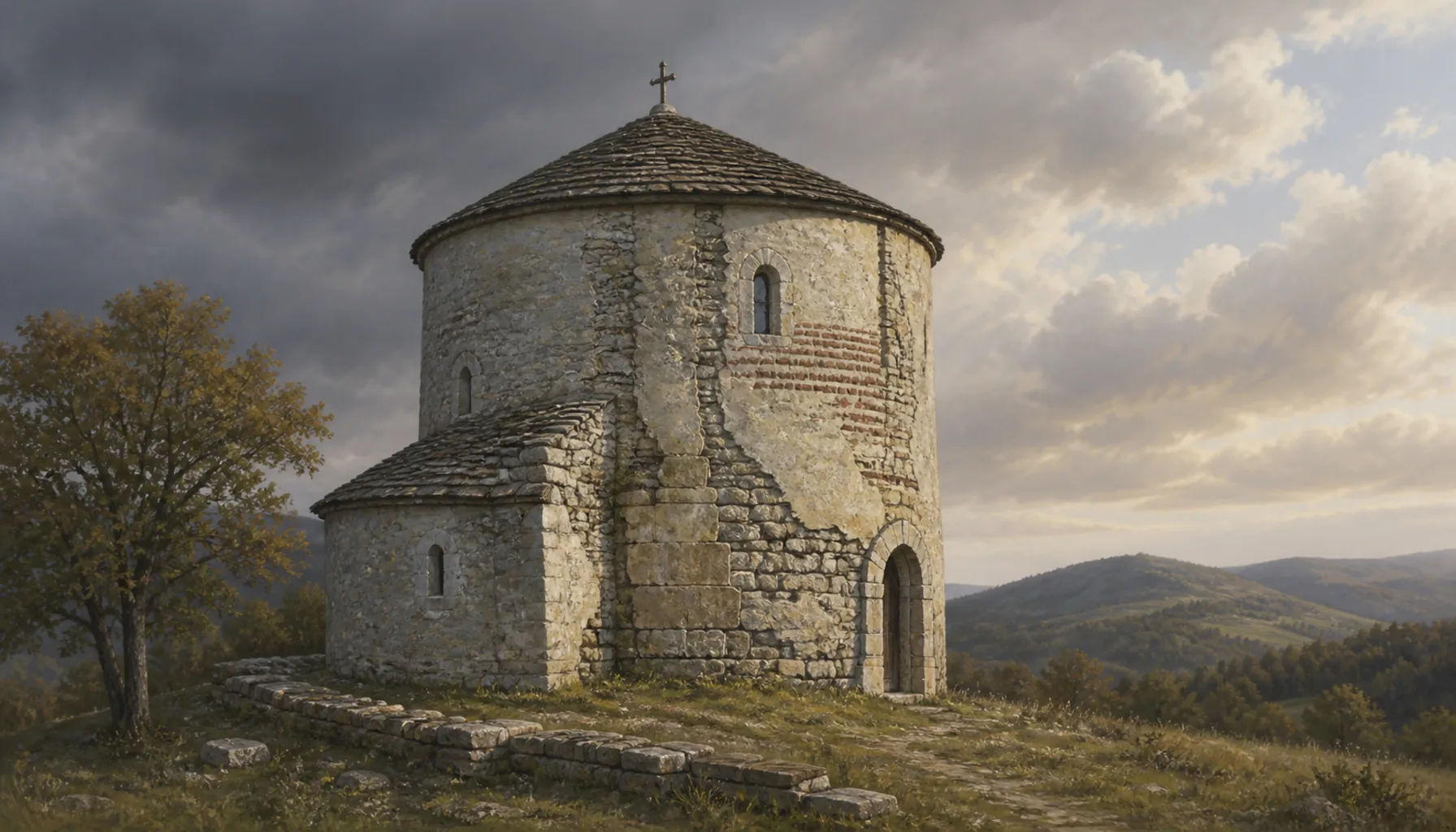
The dating of the rotunda is the most argued-over question in the earliest architecture of Slovakia. Ruttkay's excavation put the standing building in the early eleventh century while not excluding something older; a study published in 2012, resting on what the restoration work uncovered, argued that the whole building belongs to the first third of the ninth century; more recent opinion tends to place it somewhere between the end of the ninth and the second half of the tenth. Objects of the eleventh century were found in the graves around it, so the church was certainly in use by then. The village itself first appears in writing in 1185 as Sarfew — Hungarian Sárfő, "muddy spring", while the Slovak Blatnica comes from blato, mud. Two languages, the same wet ground.Datovanie rotundy je najspornejšia otázka najstaršej architektúry na Slovensku. Ruttkayov výskum kládol stojacu stavbu na začiatok 11. storočia, hoci nevylučoval ani staršiu; štúdia z roku 2012, opretá o reštaurátorské zistenia, tvrdí, že celá stavba pochádza z prvej tretiny 9. storočia; novšie názory ju najčastejšie kladú medzi koniec 9. a druhú polovicu 10. storočia. V hroboch okolo kostolíka sa našli predmety z 11. storočia, takže vtedy sa tu už určite pochovávalo. Samotná dedina sa prvý raz spomína v roku 1185 ako Sarfew – maďarské Sárfő znamená „blatný prameň“ a slovenská Blatnica pochádza z blata. Dva jazyky, tá istá mokrá zem.