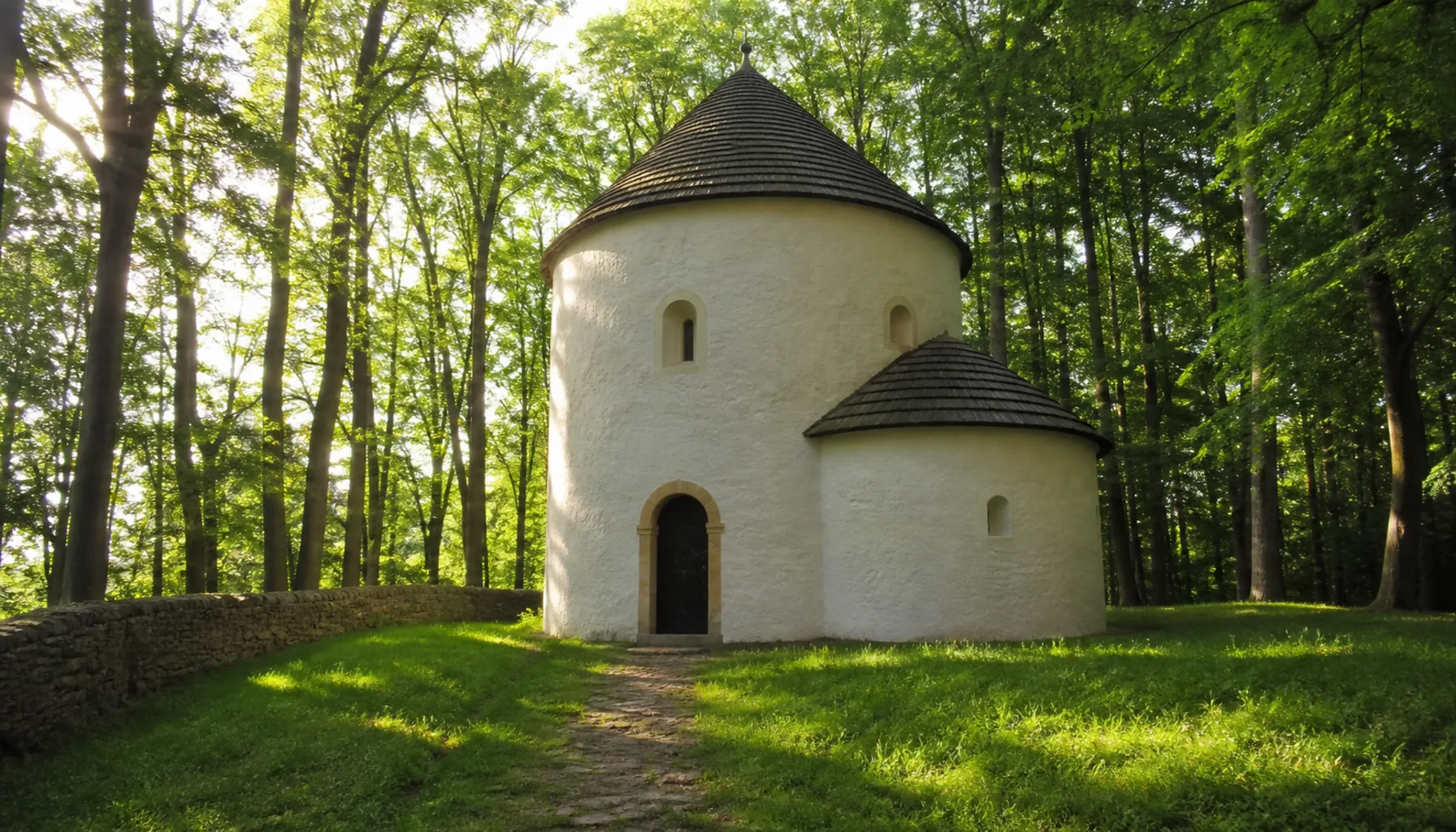
A village at the foot of the Považský Inovec whose real monument stands in the forest above it: a small round church of contested but certainly very great age, reached on foot through the beeches.Obec na úpätí Považského Inovca, ktorej skutočná pamiatka stojí v lese nad ňou: malý okrúhly kostolík sporného, no určite veľmi vysokého veku, prístupný pešo cez bučiny.
The rotunda of St George in its forest clearing above Nitrianska BlatnicaRotunda svätého Juraja na lesnej čistine nad Nitrianskou Blatnicou
Where it standsKde leží
Nitrianska Blatnica lies on the eastern flank of the Považský Inovec, north-west of Topoľčany, where the wooded range meets the farmland of the upper Nitra valley. The village sits on the flat; the ground rises steeply behind it towards Marhát, the highest point of this part of the range.Nitrianska Blatnica leží na východnom úbočí Považského Inovca severozápadne od Topoľčian, tam, kde sa zalesnené pohorie stretáva s poľami horného Ponitria. Obec stojí na rovine, terén za ňou prudko stúpa k Marhátu, najvyššiemu bodu tejto časti pohoria.
Why it is herePrečo práve tu
The rotunda of St George stands on the slope above the village. It is a small round church with an apse, of a type found in central Europe from the early medieval period onwards, and excavation has shown building phases going back a very long way. How far is disputed: a ninth-century, Great Moravian origin has been argued for and argued against, and the question is not settled.Nad obcou na svahu stojí rotunda svätého Juraja. Je to malý okrúhly kostolík s apsidou, typu, aký sa v strednej Európe vyskytuje od včasného stredoveku, a výskum odkryl stavebné fázy siahajúce veľmi ďaleko. Ako ďaleko, je sporné: pôvod v 9. storočí, teda veľkomoravský, sa obhajoval aj vyvracal a otázka nie je uzavretá.
What is not in doubt is that a church has stood on this spot for many centuries and has been a place of pilgrimage for most of them. A hermitage was attached to it in the Baroque period, and the buildings beside the rotunda are its remains.Nepochybné je, že kostol na tomto mieste stojí mnoho storočí a väčšinu z nich je pútnickým miestom. V barokovom období k nemu pribudla pustovňa a budovy vedľa rotundy sú jej zvyškom.
What you actually seeČo naozaj uvidíte
The rotunda is reached on foot from the village on a marked path through beech woods, a climb of well under an hour. The building itself is plain, small and much repaired, and it is the setting that carries it: a clearing on the hillside with the plain opening out below.K rotunde sa ide pešo z obce po značenom chodníku cez bučiny, výstup trvá výrazne menej než hodinu. Samotná stavba je jednoduchá, malá a mnohokrát opravovaná — nesie ju prostredie: čistinka na svahu s rovinou otvárajúcou sa dole.
The village below has a parish church and a manor house, and the trail continues up the ridge to Marhát and its lookout tower, which is the standard longer walk from here.Obec pod ňou má farský kostol a kúriu a chodník pokračuje po hrebeni na Marhát a k jeho rozhľadni, čo je odtiaľto štandardná dlhšia túra.
Living village, not a museumŽivá obec, nie skanzen
The rotunda is not a museum and is not staffed. It is normally locked and is opened for services and for the annual pilgrimage; what you can count on is the walk and the exterior. Ask in the village if you want to know when it will be open, and do not plan a journey around getting inside.Rotunda nie je múzeum a nemá personál. Bežne býva zamknutá a otvára sa na bohoslužby a na výročnú púť; spoľahnúť sa dá na cestu a exteriér. Ak chcete vedieť, kedy bude otvorená, spýtajte sa v obci — a neplánujte cestu okolo toho, že sa dostanete dnu.
Getting thereAko sa tam dostať
Buses run from Topoľčany and Piešťany; the nearest station is at Radošina or Topoľčany. By car it is off the road between Topoľčany and Vrbové.Autobusy premávajú z Topoľčian a Piešťan, najbližšia stanica je v Radošine alebo v Topoľčanoch. Autom je obec pri ceste medzi Topoľčanmi a Vrbovým.