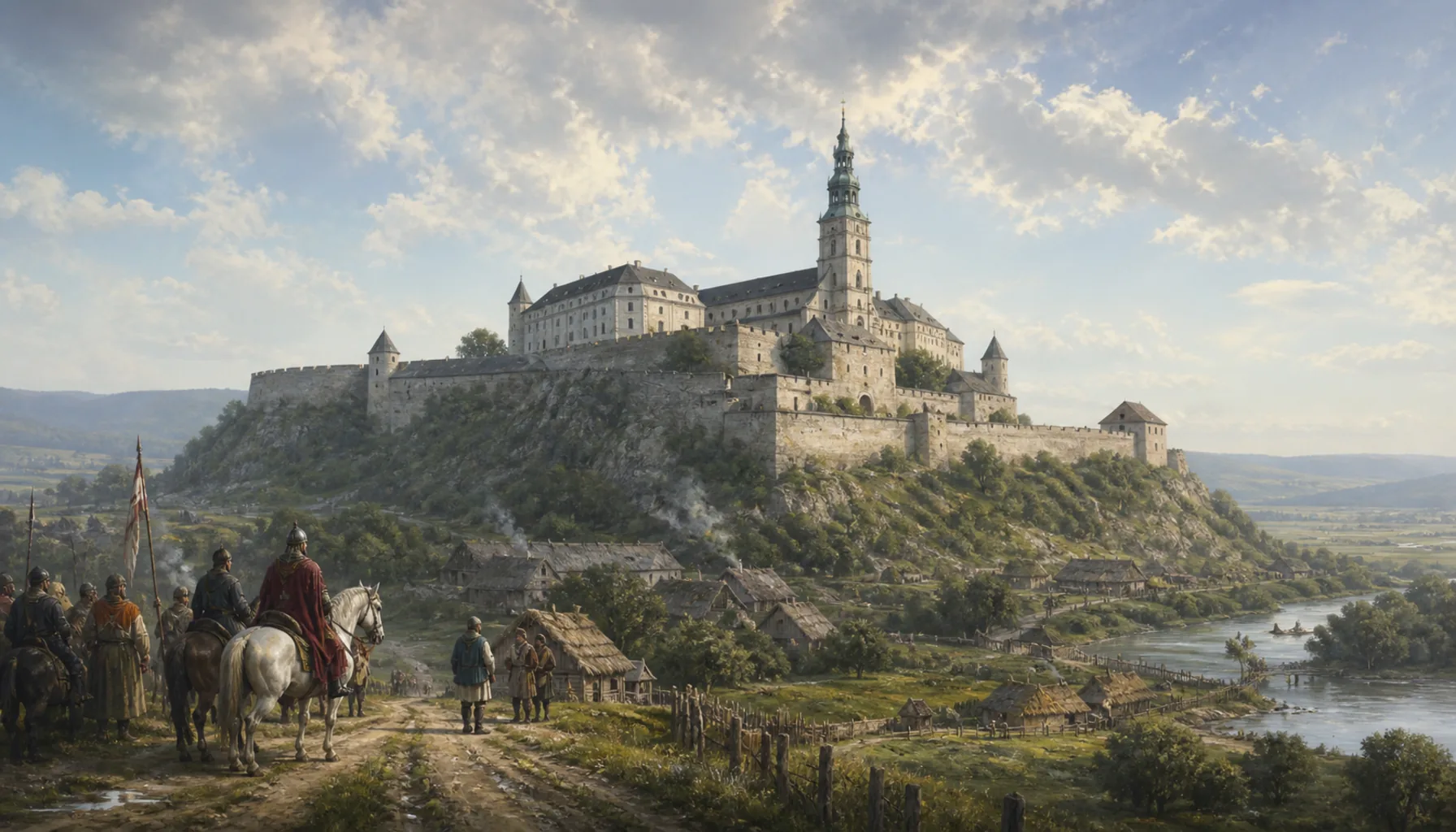
Almost every stone castle in Slovakia can be dated by 1241. The Mongol army swept through the kingdom, found a country defended mostly by wooden forts and left it burning; King Béla IV's answer was a building programme, which is why the great castles at Spiš, Trenčín, Beckov and dozens of others rose in the decades after the invasion rather than before it. Nitra is the exception that shows the rule, because its castle was already stone and already two centuries old when the Mongols came. The town below survived the invasion, and in 1248 the king rewarded it with the privileges of a free royal town.Takmer každý kamenný hrad na Slovensku sa dá datovať podľa roku 1241. Mongolské vojsko sa prehnalo kráľovstvom, našlo krajinu bránenú väčšinou drevenými hradiskami a nechalo ju horieť; odpoveďou kráľa Bela IV. bol stavebný program, a práve preto veľké hrady na Spiši, v Trenčíne, v Beckove a desiatky ďalších vyrástli až v desaťročiach po vpáde, nie pred ním. Nitra je výnimka, ktorá to pravidlo ukazuje: jej hrad bol kamenný a mal už dve storočia, keď Mongoli prišli. Mesto pod hradom vpád prežilo a roku 1248 mu kráľ udelil výsady slobodného kráľovského mesta.