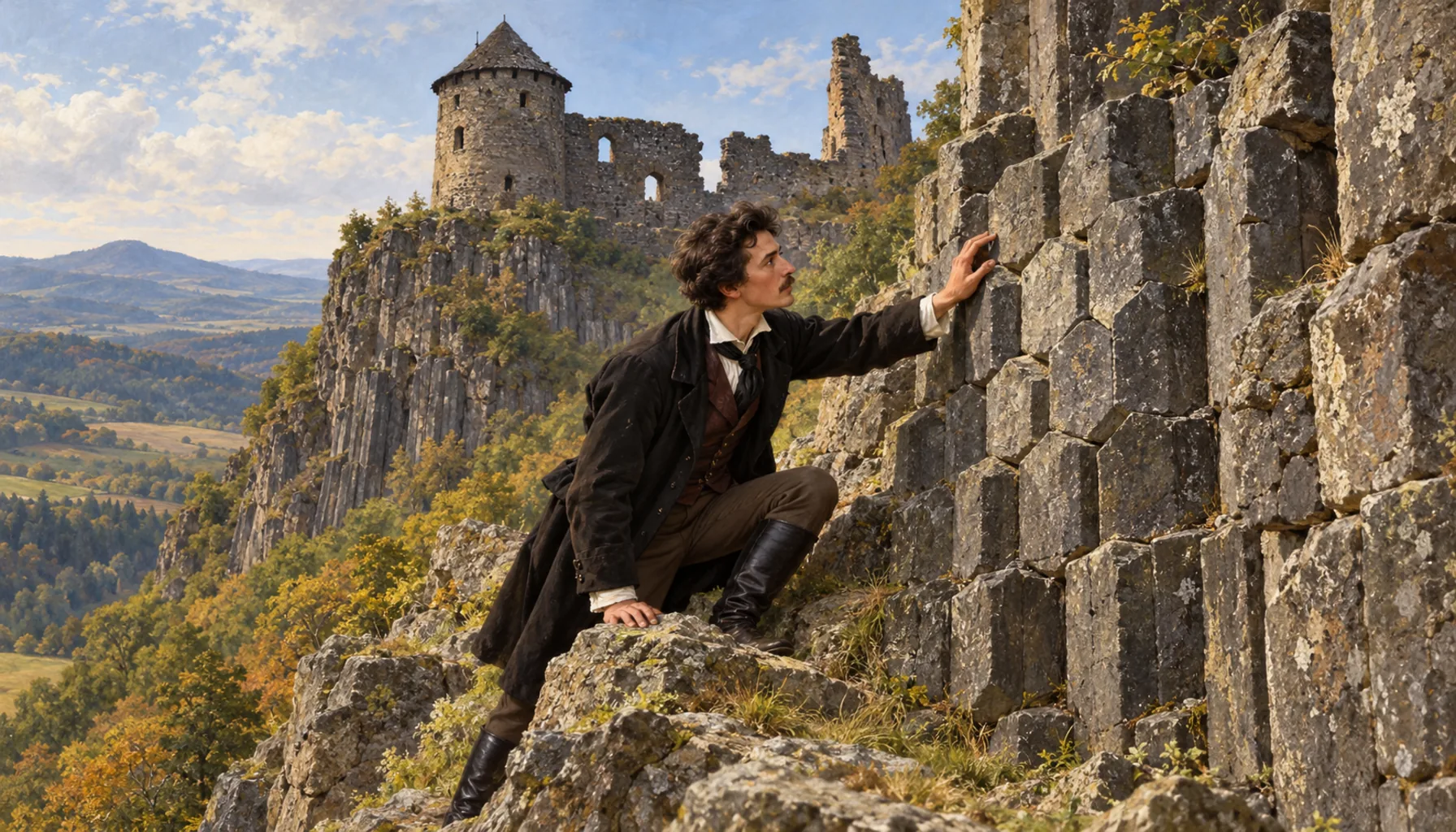
By the nineteenth century the ruin had become a curiosity, and in the 1840s the poet Sándor Petőfi — soon to be the voice of the Hungarian revolution of 1848 — came up to see it and wrote about the strange geometry of the walls, stacked out of hexagons. That is the moment when Šomoška stops being a fortification and starts being a place people travel to look at. Nearly two centuries later it is still exactly why anyone climbs the hill.V devätnástom storočí sa zo zrúcaniny stala zvláštnosť a v štyridsiatych rokoch sem vystúpil básnik Sándor Petőfi — čoskoro hlas maďarskej revolúcie roku 1848 — a napísal o podivnej geometrii múrov poskladaných zo šesťuholníkov. Je to chvíľa, keď Šomoška prestáva byť opevnením a stáva sa miestom, kam sa chodí pozerať. Takmer o dve storočia neskôr je to stále presne ten dôvod, prečo ľudia vyjdú na tento kopec.