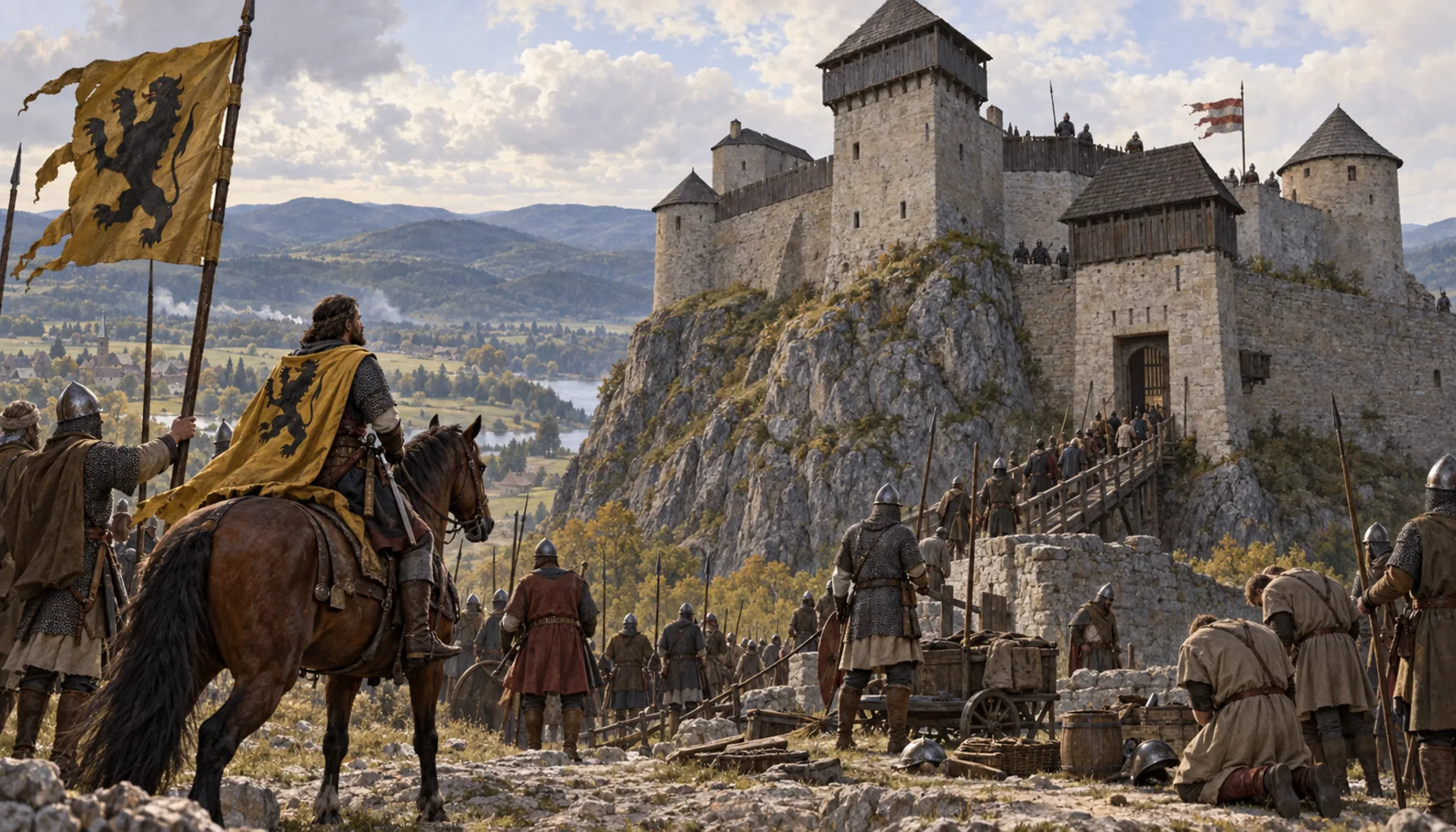
For the first two decades of the fourteenth century the north of the kingdom effectively had no king. Matúš Čák of Trenčín, the most powerful of the Hungarian oligarchs, ran a private state out of his castles, and Modrý Kameň was one of the many he took; after him it was held by Peter Zólyomi. Only when Charles Robert of Anjou broke the oligarchs did castles like this go back to being ordinary noble seats. From the fourteenth century on Modrý Kameň belonged to the Balassa, and their name runs through the history of this whole border country — including, later, the fortified monastery at Bzovík and half the castles of Novohrad.Prvé dve desaťročia 14. storočia nemal sever krajiny fakticky kráľa. Matúš Čák Trenčiansky, najmocnejší z uhorských oligarchov, spravoval zo svojich hradov vlastný štát a Modrý Kameň bol jedným z mnohých, ktoré si vzal; po ňom ho držal Peter Zólyomi. Až keď Karol Róbert z Anjou oligarchov zlomil, vrátili sa hrady ako tento k obyčajnému šľachtickému životu. Od 14. storočia patril Modrý Kameň Balašovcom a ich meno sa tiahne dejinami celého tohto pohraničia — neskôr aj opevneným kláštorom v Bzovíku a polovicou novohradských hradov.