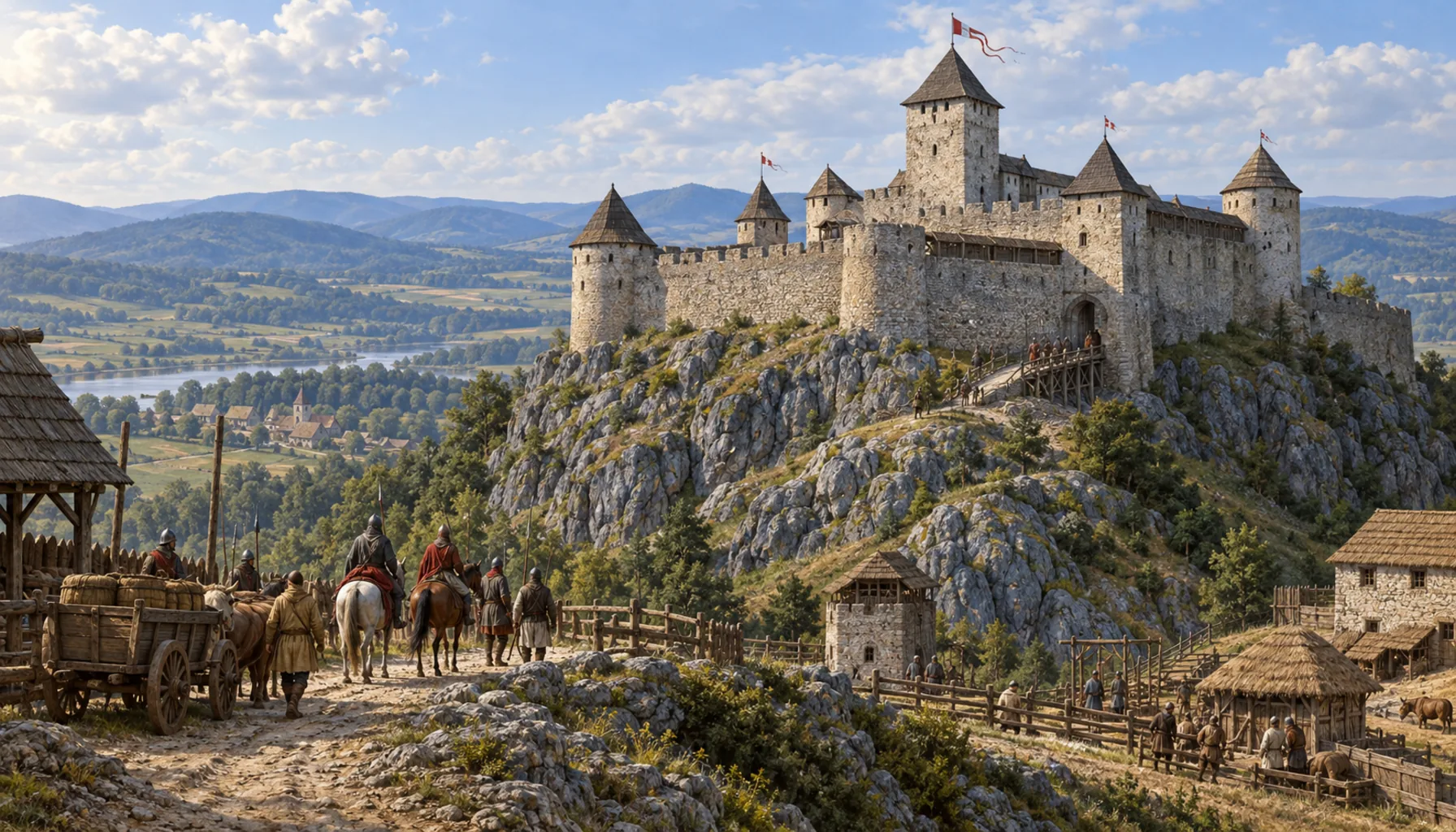
The Mongol invasion of 1241 wrecked the Kingdom of Hungary's wooden forts and taught its king one lesson: build in stone, and build high. In the second half of the thirteenth century the ancestors of the family later known as the Balassa put a castle on this rocky outcrop — a compact upper castle on the crown of the hill with a walled ward beneath it, enough to hold a garrison and take a toll from the road below. The place is first named in writing in 1290, spelled Keykkw, and in that same year its holder, Kazimír of the Hont-Pázmány clan, was forced to surrender it. The name means "blue stone", and it comes from the rock the castle stands on.Vpád Mongolov roku 1241 zničil drevené hradiská Uhorska a kráľa naučil jedno: stavať z kameňa a vysoko. V druhej polovici 13. storočia postavili predkovia rodu, ktorý neskôr poznáme ako Balašovcov, na tomto skalnatom brale hrad — malý horný hrad na temene kopca a pod ním opevnené predhradie, práve dosť na posádku a na vyberanie mýta z cesty popod hrad. Prvý raz sa miesto v písomnostiach spomína roku 1290 v tvare Keykkw a v tom istom roku ho jeho držiteľ Kazimír z rodu Hunt-Poznanovcov musel odovzdať. Meno znamená to, čo hovorí — modrý kameň — a pochádza od skaly, na ktorej hrad stojí.