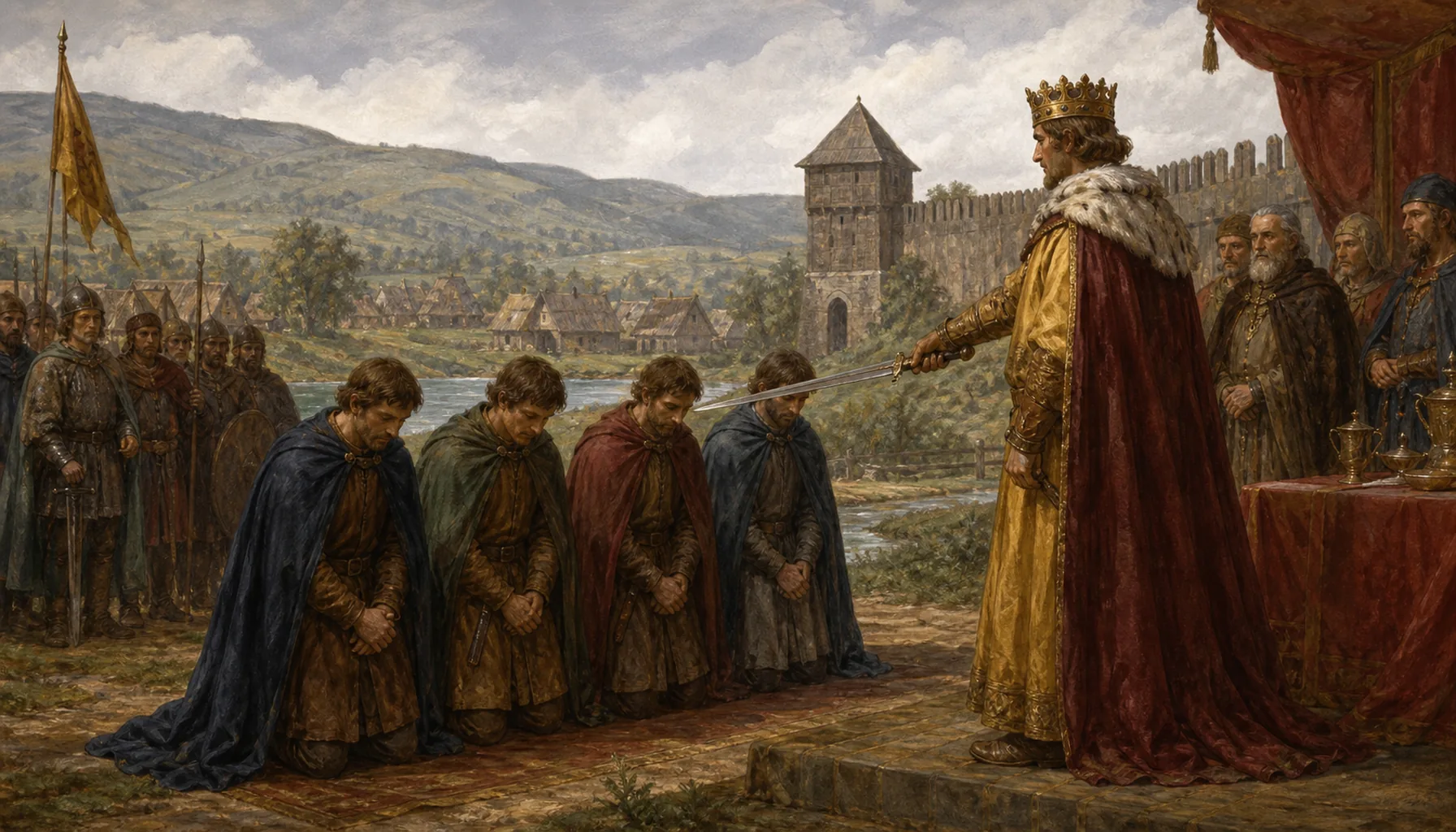
In 1347 King Louis I raised to the nobility a man called Gregor, together with his brothers Matthew and Thomas and with Marcel's son Andrew. Gregor's by-name was Bessenyő, in Latin Bissenius, because he held the office of count of the Hungarian Pechenegs — the Pechenegs being a nomadic people from the steppe whom the early Hungarian kings had settled inside the kingdom in exchange for military service, and who kept their own officer at court. From that by-name came the family name Bešeň, and from the family name came Bešeňová. So the village is named after nomads at one remove: through a man's job title, not because Pechenegs ever lived here.Roku 1347 povýšil kráľ Ľudovít I. do šľachtického stavu muža menom Gregor spolu s jeho bratmi Matejom a Tomášom a s Marcelovým synom Ondrejom. Gregorov prívlastok znel Bessenyő, po latinsky Bissenius, pretože zastával úrad grófa uhorských Pečenehov — Pečenehovia boli kočovný stepný národ, ktorý si prví uhorskí králi usadili v krajine výmenou za vojenskú službu a ktorý mal na kráľovskom dvore vlastného úradníka. Z prívlastku vzniklo rodové meno Bešeň a z rodového mena Bešeňová. Obec je teda pomenovaná po kočovníkoch cez jeden medzičlánok — cez mužov úrad, nie preto, že by tu Pečenehovia niekedy bývali.