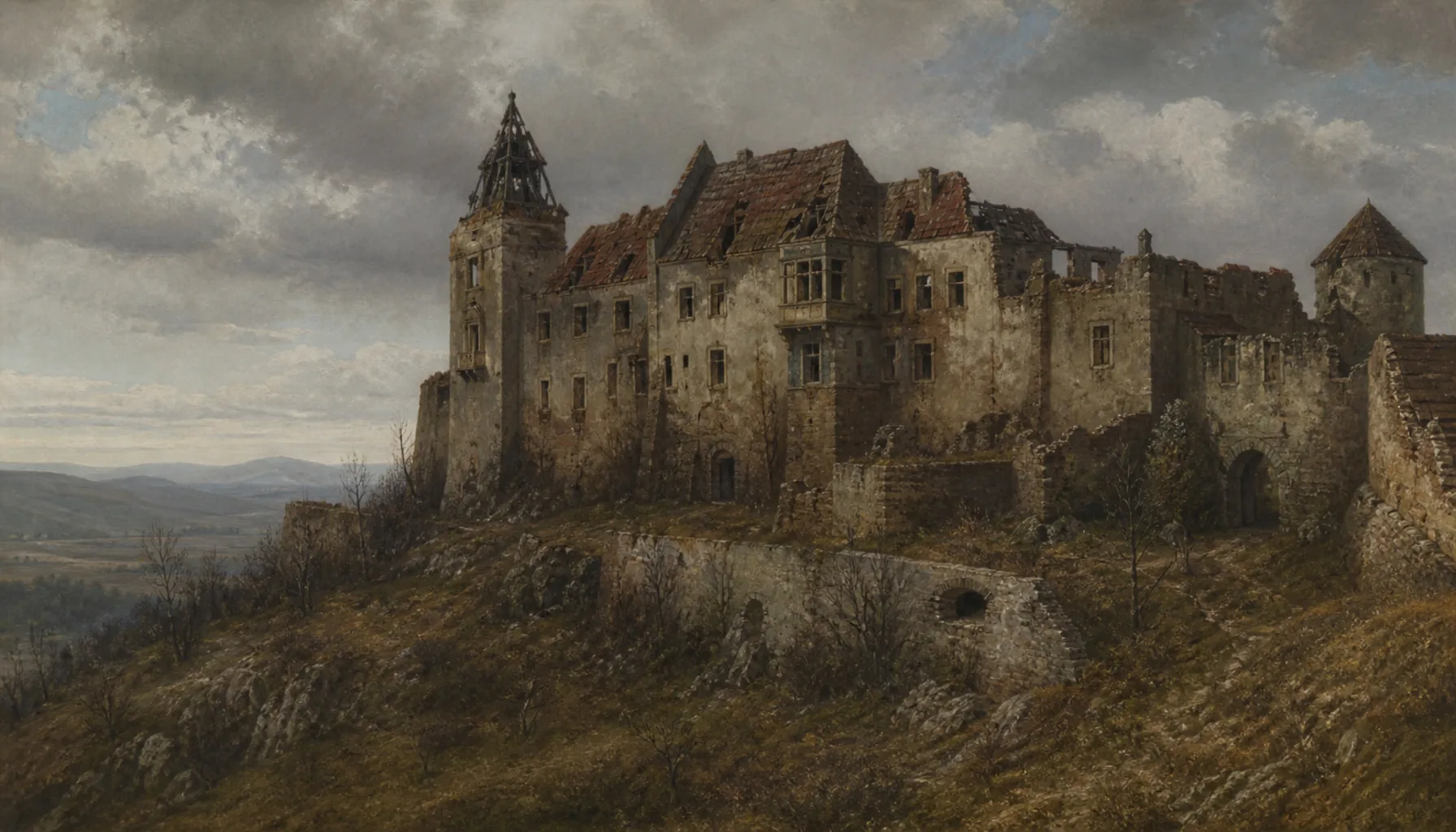
In 1777 Count Ján Pálffy of Pezinok inherited Smolenice and never moved in: the building was in poor condition and there was no money to rebuild it. Through the rest of the century it emptied out and decayed, and during the Napoleonic wars the main building burned, leaving a shell and a five-sided tower standing in the trees. Nobody stormed it and nobody blew it up — it was simply not worth the cost of a roof. That is how most Slovak castles actually ended: not in a siege, but in an account book.Roku 1777 zdedil Smolenice gróf Ján Pálfi z Pezinka a nikdy sa doň nenasťahoval: budova bola v zlom stave a na prestavbu chýbali peniaze. Do konca storočia sa vyprázdnila a schátrala a počas napoleonských vojen hlavná budova vyhorela — v korunách stromov ostal holý múr a päťboká veža. Nikto ju nedobyl a nikto ju nevyhodil do vzduchu — jednoducho sa neoplatilo platiť za strechu. Takto sa v skutočnosti skončila väčšina slovenských hradov: nie obliehaním, ale účtovnou knihou.