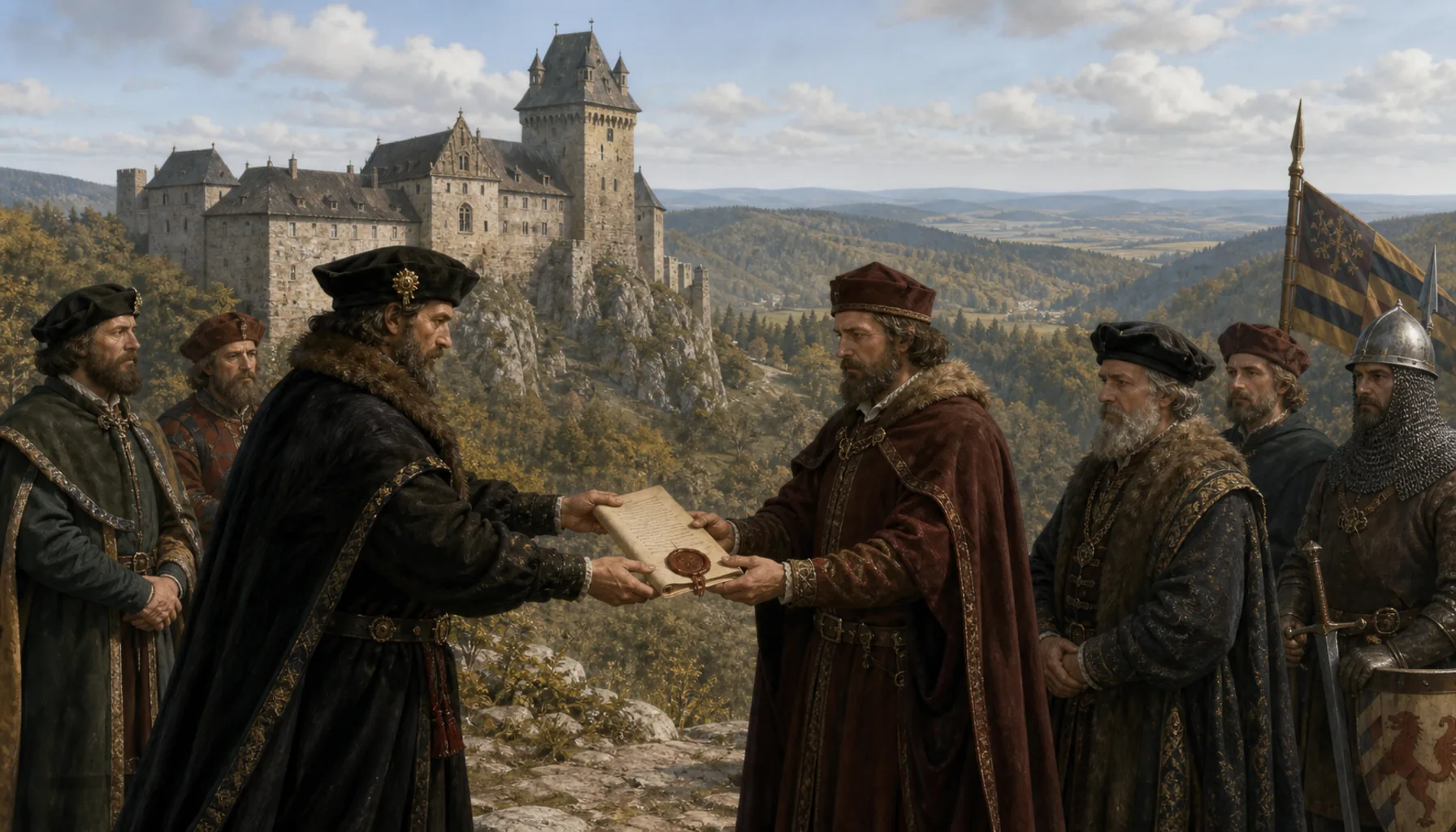
In 1438 the estate passed to the Counts of Svätý Jur and Pezinok, one of the two or three families who between them owned most of the Little Carpathians. These were unsettled years: Czech Hussite troops had been raiding across western Slovakia for a decade, and in the 1430s a Hussite garrison held Trnava itself, half an hour away down on the plain. A castle like Smolenice mattered in such a decade not because armies besieged it — none did — but because whoever held it controlled the road and the taxes on it. Ownership, here, is the whole medieval story: the castle's lords were also the village's lords.Roku 1438 prešlo panstvo na grófov zo Svätého Jura a Pezinka, jeden z dvoch-troch rodov, ktoré si medzi sebou delili takmer celé Malé Karpaty. Boli to nepokojné roky: české husitské oddiely už desaťročie brázdili západné Slovensko a v tridsiatych rokoch 15. storočia držala husitská posádka aj samotnú Trnavu, pol hodiny cesty dole na rovine. Hrad ako Smolenice v takom desaťročí nerozhodoval preto, že by ho obliehali vojská — neobliehali —, ale preto, že kto ho držal, ovládal cestu a mýto na nej. Vlastníctvo je tu celý stredoveký príbeh: páni hradu boli zároveň pánmi dediny.