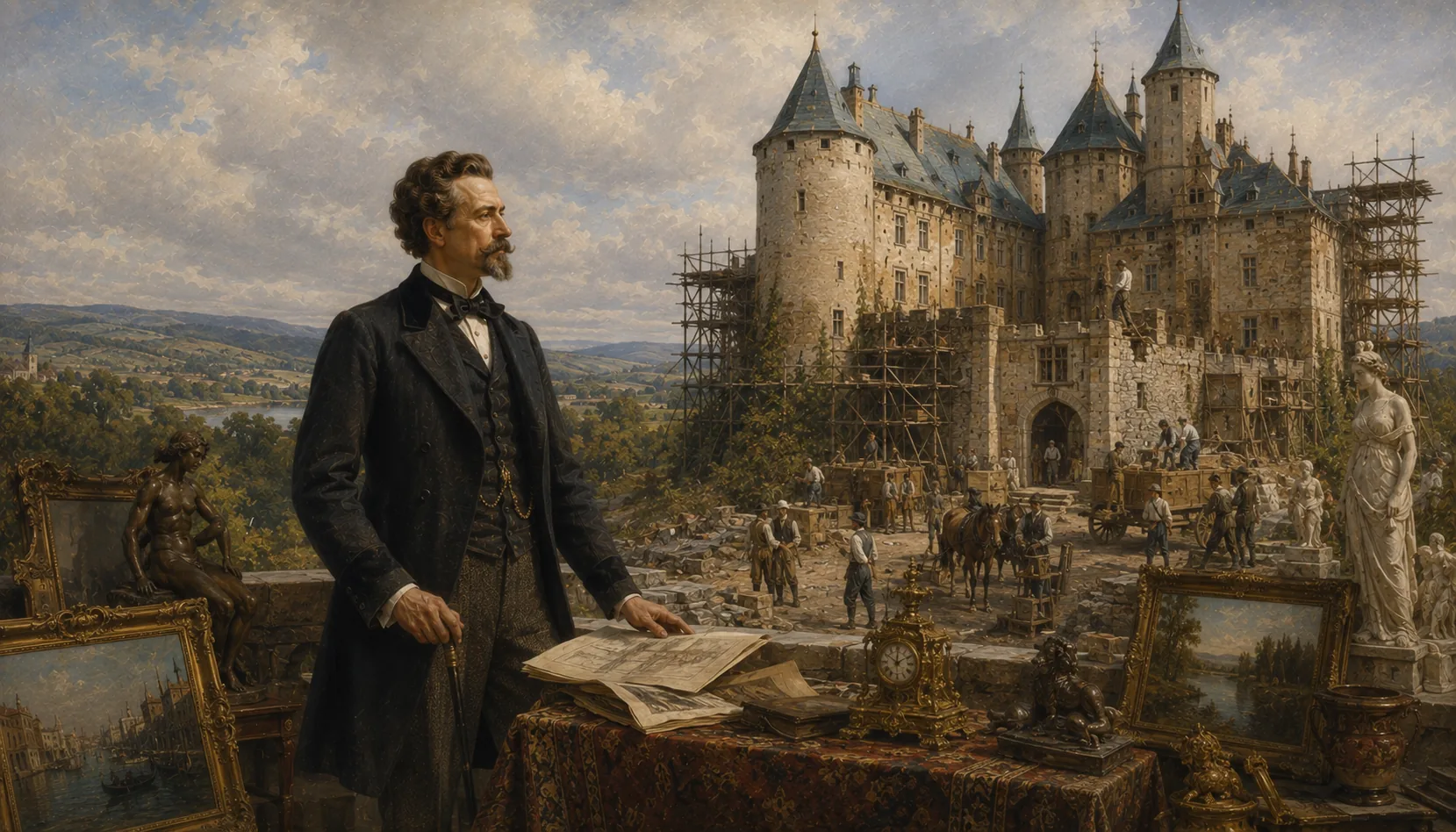
Pálfi's will of 1907 asked that the castle be opened to the public and that the art he had gathered stay in the rooms he had built for it. His heirs went to court against the will, and a great deal was sold. An agreement with the new Czechoslovak state, founded in 1918, kept a large part of the collection in the castle instead of on the auction floor. That is why Bojnice is a furnished museum today and not an empty shell with a ticket desk: a dead man's instruction, a family lawsuit, and a state that decided a collection mattered. The Italian Gothic panel painting in the chapel — usually linked to the circle of the Florentine painter Nardo di Cione, though the attribution is argued over — is one of the pieces that stayed.Pálfiho závet z roku 1907 žiadal, aby sa zámok sprístupnil verejnosti a aby umenie, ktoré nazhromaždil, zostalo v miestnostiach postavených práve preň. Dedičia sa proti závetu súdili a veľa vecí sa predalo. Dohoda s novým československým štátom, ktorý vznikol roku 1918, udržala veľkú časť zbierky v zámku namiesto na dražbe. Práve preto sú dnes Bojnice zariadeným múzeom, a nie prázdnou škrupinou s pokladnicou: rozhodol o tom príkaz mŕtveho muža, rodinný súdny spor a štát, ktorý uznal zbierku za dôležitú. Medzi vecami, ktoré zostali, je aj talianska gotická tabuľová maľba v kaplnke — zvyčajne sa spája s okruhom florentského maliara Narda di Cione, hoci sa o tom vedie spor.