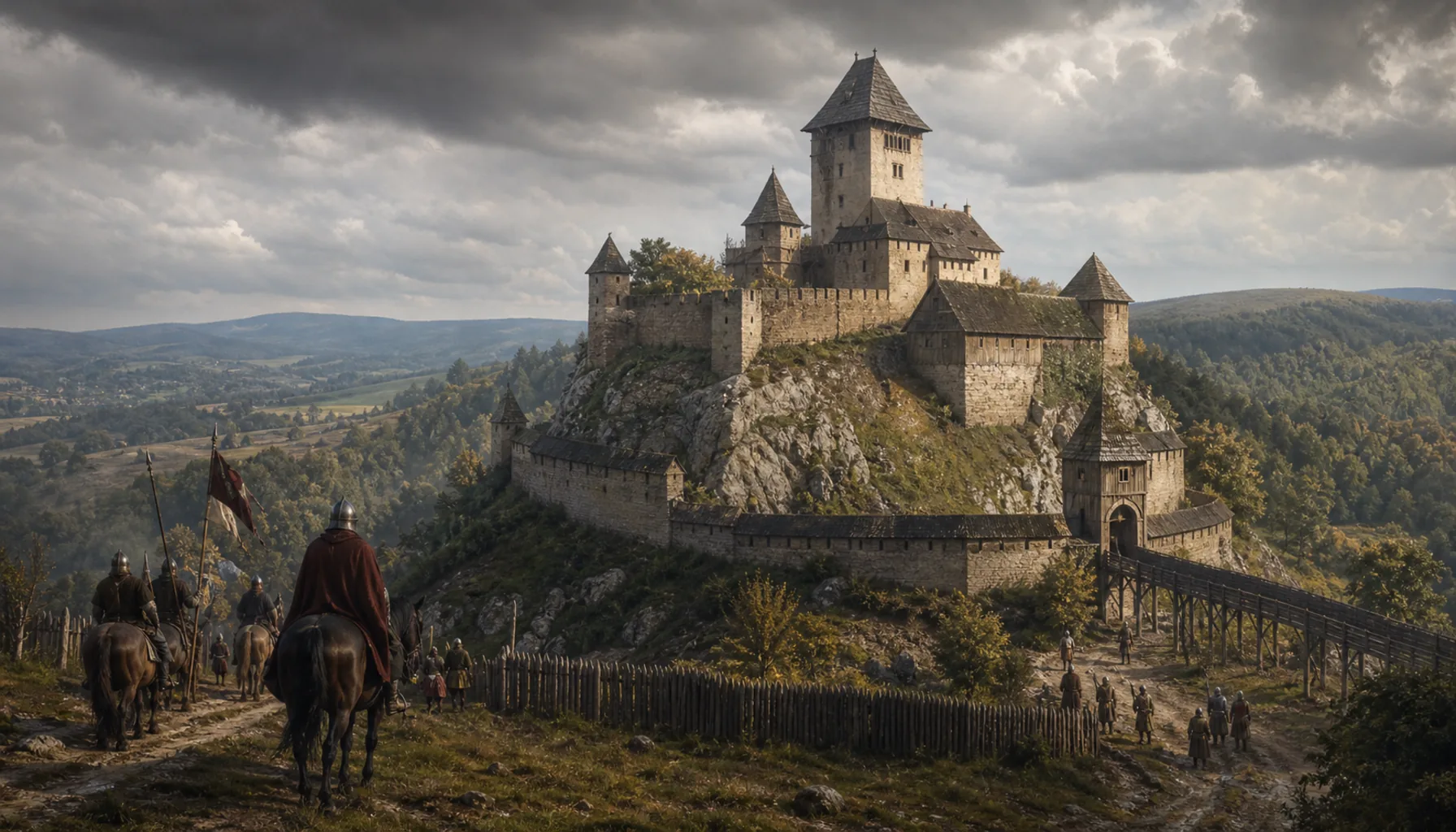
When the Árpád dynasty died out in 1301 the kingdom fell into a scramble for the crown, and the man who profited most in this corner of it was Matúš Čák Trenčiansky. Bojnice came to him in 1302, and from Trenčín he ran the whole north-west almost as a private state, taking notice of the king only when it suited him. He died in 1321 and his lordship collapsed at once. Bojnice went back to the crown and then passed from family to family for a century and a half, among them the Noffrys, who enlarged it. A castle changing hands this often is normal, and it tells you what a castle actually was: not a home, but a piece of property with an income attached, granted, pledged and taken away again.Keď roku 1301 vymrel rod Arpádovcov, kráľovstvo sa pustilo do zápasu o korunu a v tomto kúte z neho najviac vyťažil Matúš Čák Trenčiansky. Bojnice získal roku 1302 a z Trenčína spravoval celý severozápad takmer ako vlastný štát — kráľa bral do úvahy, len keď sa mu to hodilo. Zomrel roku 1321 a jeho panstvo sa vzápätí rozsypalo. Bojnice sa vrátili kráľovi a potom putovali od rodu k rodu ďalšieho poldruha storočia; patrili k nim aj Noffryovci, ktorí hrad rozšírili. Taká častá výmena majiteľov bola bežná a dobre ukazuje, čím hrad naozaj bol: nie domovom, ale majetkom s príjmom, ktorý sa daroval, zálohoval a zase odoberal.