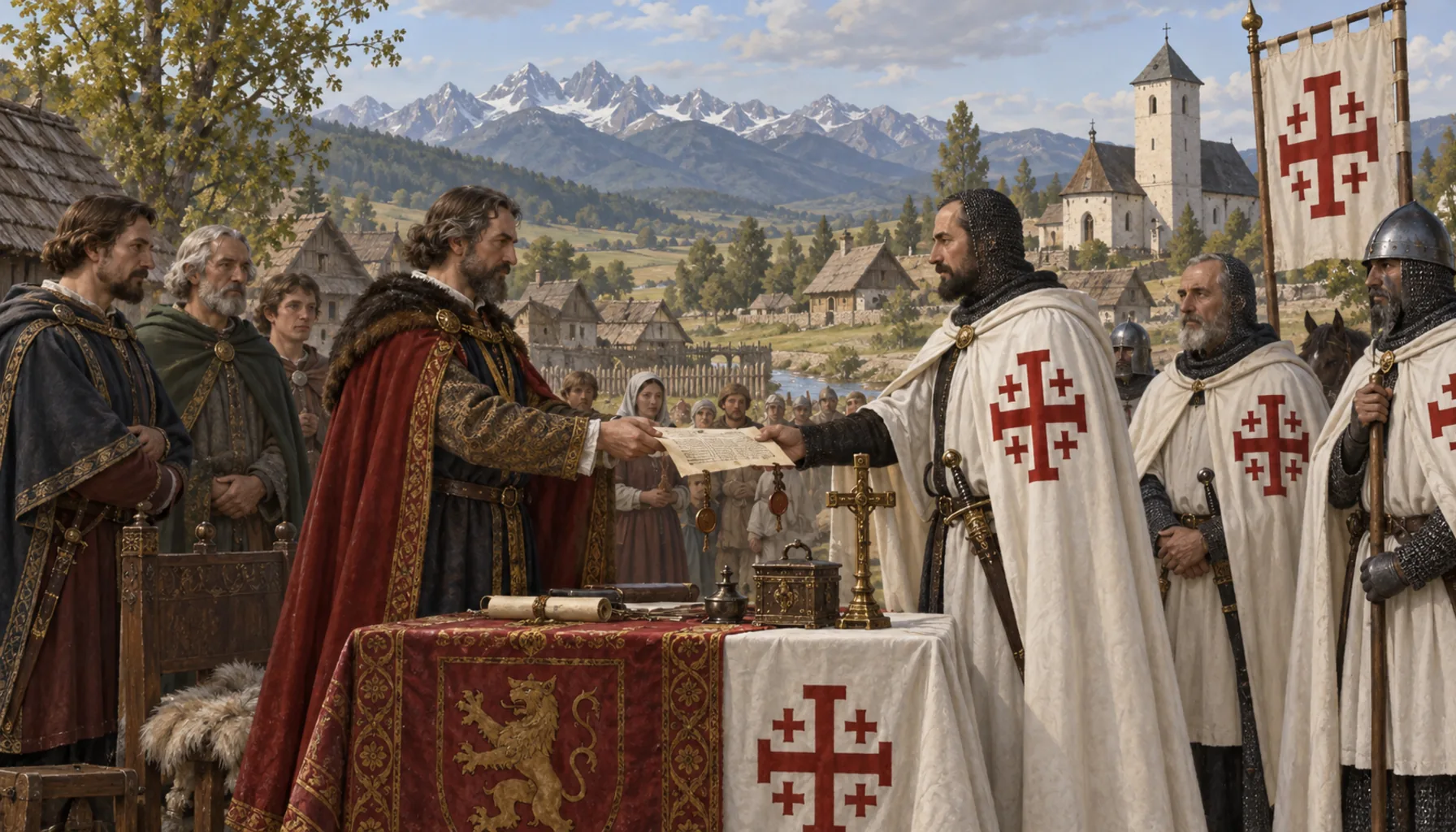
In 1313 the Berzeviczy family traded Lendak away: they gave it to the Knights of the Holy Sepulchre, the order based at Miechów in Poland, in exchange for an estate at Chmeľov. In the same year the order founded a monastery here and the church of St Nicholas, raised on the foundations of an older thirteenth-century church. A Polish order running a village on the Hungarian side of the mountains pulled Lendak northwards, and the pull never entirely let go: the dialect, many of the surnames and much of the custom here are Goral, belonging to the highland culture that lives on both sides of the Tatras rather than to the Spiš towns below.Roku 1313 sa Berzeviczyovci Lendaku zbavili výmenou: dali ho rytierom Božieho hrobu, rádu so sídlom v poľskom Miechove, za majetok v Chmeľove. V tom istom roku tu rád založil kláštor a Kostol svätého Mikuláša, postavený na základoch staršieho kostola z 13. storočia. Poľský rád, ktorý spravoval dedinu na uhorskej strane hôr, ťahal Lendak na sever a ten ťah celkom nepovolil dodnes: nárečie, mnohé priezviská aj veľká časť zvykov sú tu goralské, patria vrchárskej kultúre žijúcej na oboch stranách Tatier, nie spišským mestám dolu v kotline.