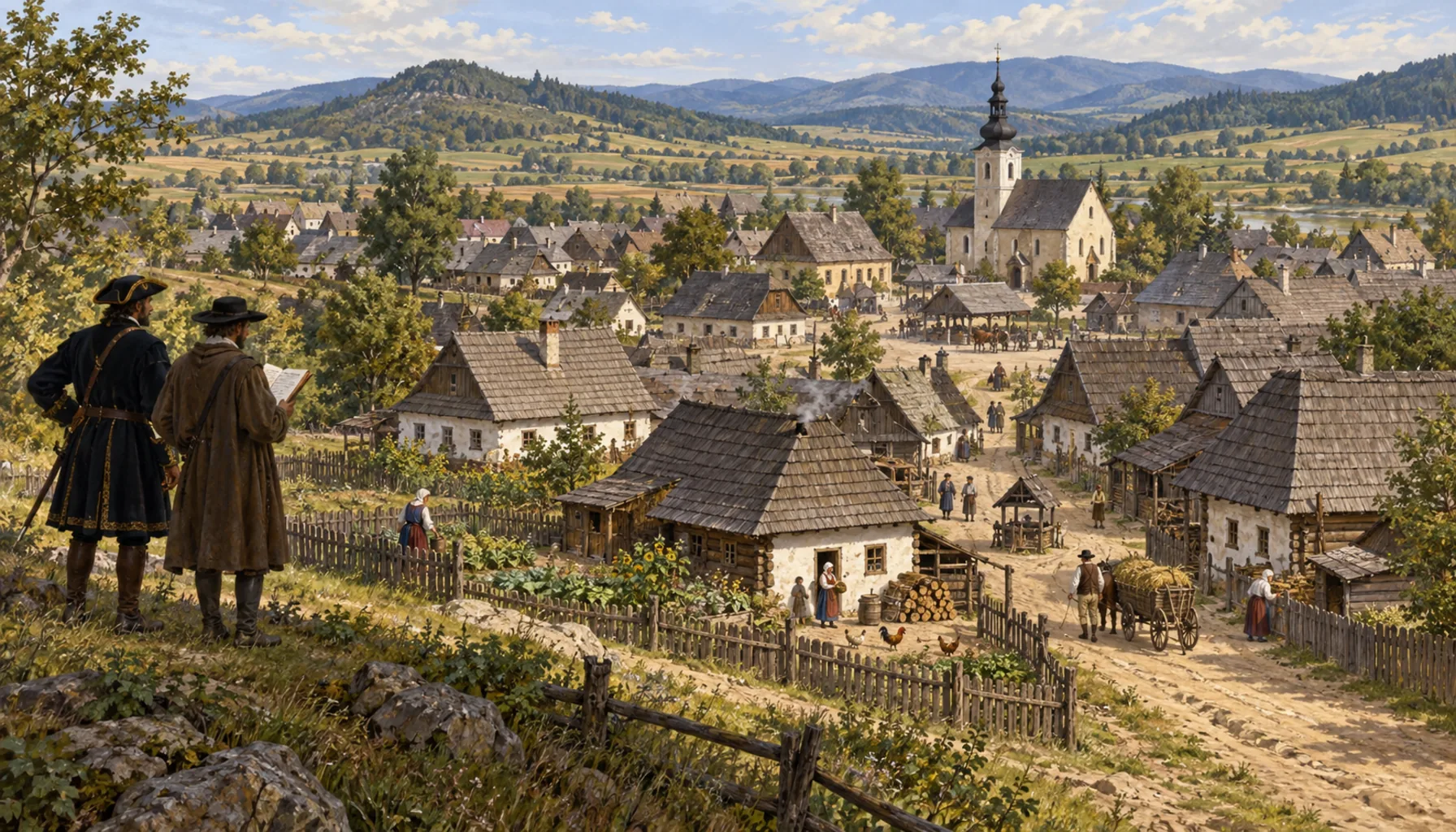
The census of 1715 found 44 lived-in households in Stropkov; by 1720 there were 70, and by 1787 the town had 204 houses and 1,326 people. It lived from crafts and from the market — there were guilds of potters, bootmakers and blacksmiths — and from the plain fact that the Ondava road still ran through it. There were not enough hands for the land, so in the eighteenth century Polish settlers were brought into nearby Sitník from the Nowy Targ area. A town of this size with a manor, a monastery and three fairs was, for this district, a capital.Súpis z roku 1715 našiel v Stropkove 44 obývaných domácností; roku 1720 ich bolo 70 a roku 1787 malo mesto 204 domov a 1 326 obyvateľov. Žilo z remesiel a z trhu — boli tu cechy hrnčiarov, čižmárov a kováčov — a z jednoduchého faktu, že cez mesto stále vedie ondavská cesta. Na pôdu chýbali ruky, a tak v 18. storočí priviedli do neďalekého Sitníka poľských osadníkov z okolia Nového Targu. Mesto tejto veľkosti s kaštieľom, kláštorom a jarmokmi bolo pre tento kraj hlavným mestom.