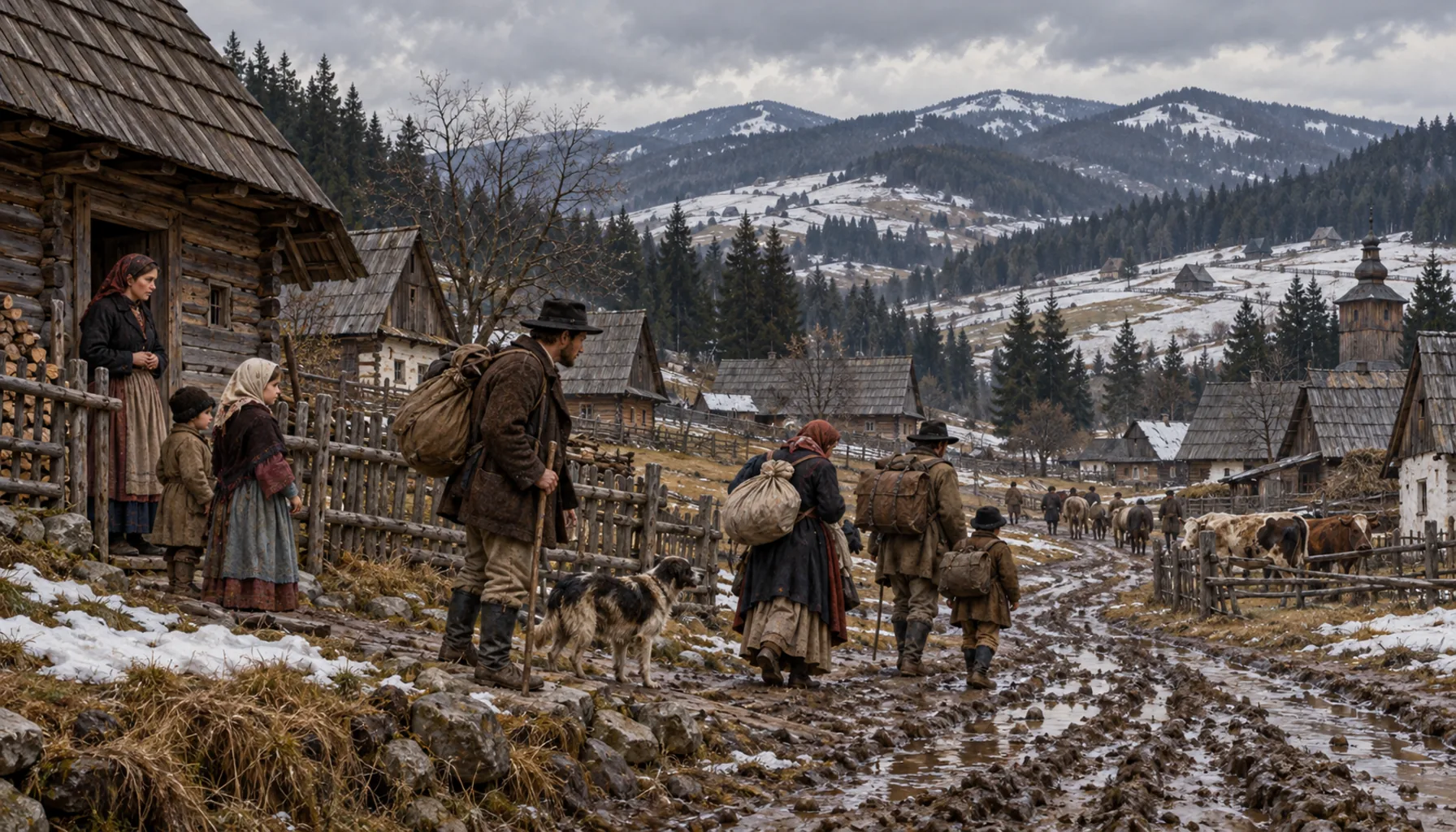
In the last decades of Austria-Hungary Orava was one of the poorest counties in the kingdom, and this corner of it was the far edge: no railway, no road worth the name, a growing season of a few months. People left for the United States and Canada from the 1880s onward, hardest between 1900 and 1910. The village speaks Goral, the highland dialect of the border country, and it held on precisely because the place was remote — a fact you can still measure, since the village reports that about forty-five per cent of adults use it today and only about five per cent of children.V posledných desaťročiach Rakúsko-Uhorska patrila Orava k najchudobnejším stoliciam kráľovstva a tento kút bol jej najvzdialenejším okrajom: bez železnice, bez poriadnej cesty, s vegetačným obdobím niekoľkých mesiacov. Od osemdesiatych rokov 19. storočia ľudia odchádzali do Spojených štátov a Kanady, najsilnejšie medzi rokmi 1900 a 1910. V dedine sa hovorí po goralsky, teda nárečím pohraničných horalov, a udržalo sa práve preto, že miesto bolo odľahlé — dá sa to aj zmerať, obec dnes uvádza, že ho používa asi štyridsaťpäť percent dospelých a len asi päť percent detí.