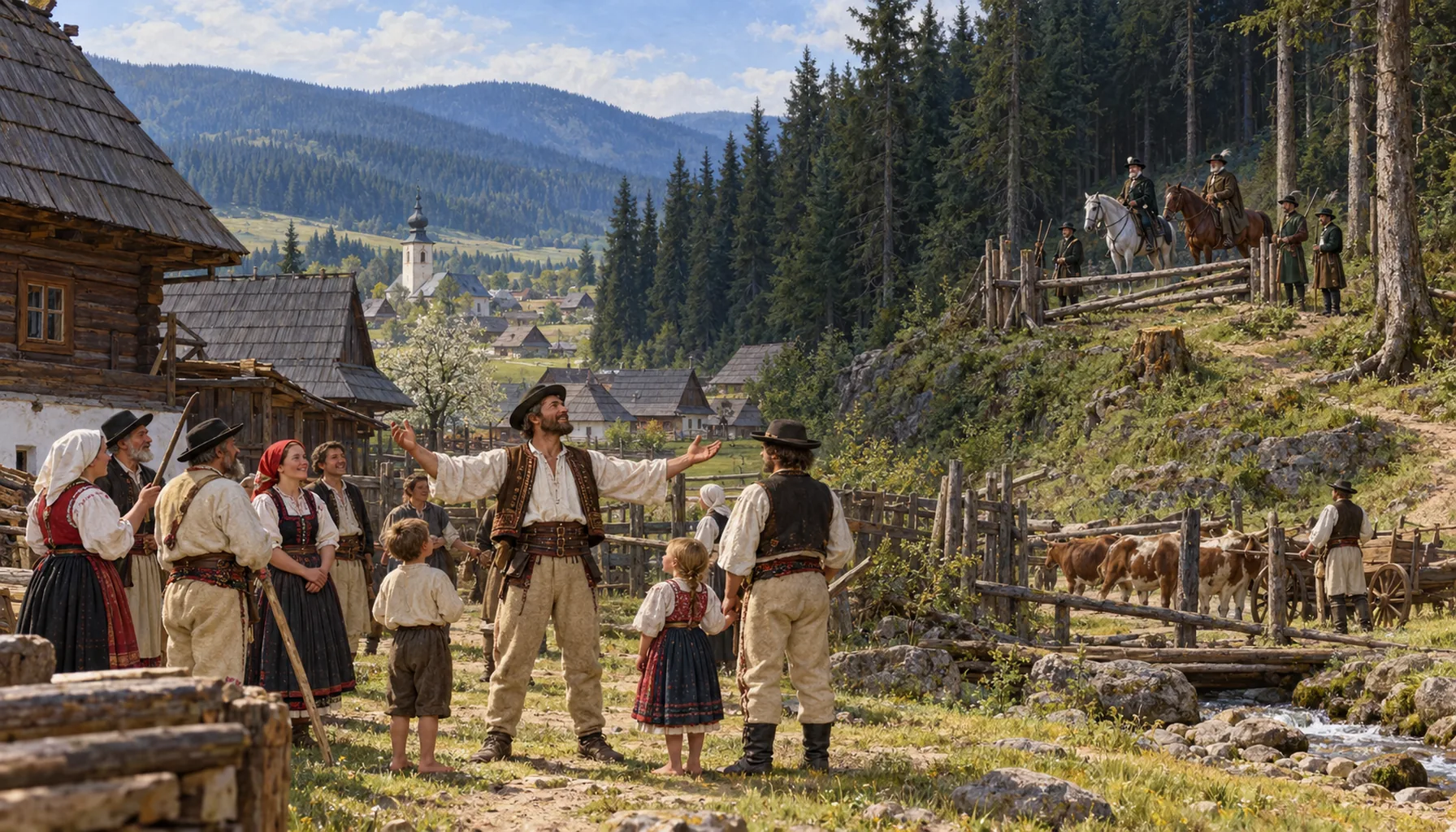
Serfdom was abolished in 1848. Here that meant almost nothing, because there was almost no farmland to free: the ground is spruce forest and pasture at around 800 metres, and the forest belonged to the estate. After the palatine Juraj Thurzo died in 1616 the Orava lands were held jointly by his heirs as the Orava Composessorate — a company of co-owners rather than a single lord — and it ran the woods, the sawmills and the timber yards until 1945. A woodcutters' village that does not own the wood has one employer, and that shaped everything: wages, seasons, and in the end the railway.Poddanstvo zrušili v roku 1848. Tu to neznamenalo takmer nič, lebo tu takmer nebolo čo oslobodzovať: pôdu tvorí smrekový les a pasienky vo výške okolo 800 metrov a les patril panstvu. Po smrti palatína Juraja Thurzu v roku 1616 držali oravské majetky spoločne jeho dedičia ako Oravský komposesorát — spoločenstvo spolumajiteľov namiesto jedného pána — a lesy, píly aj skládky dreva mu patrili až do roku 1945. Drevorubačská dedina, ktorá drevo nevlastní, má jediného zamestnávateľa, a to určilo všetko: mzdy, sezóny a napokon aj železnicu.