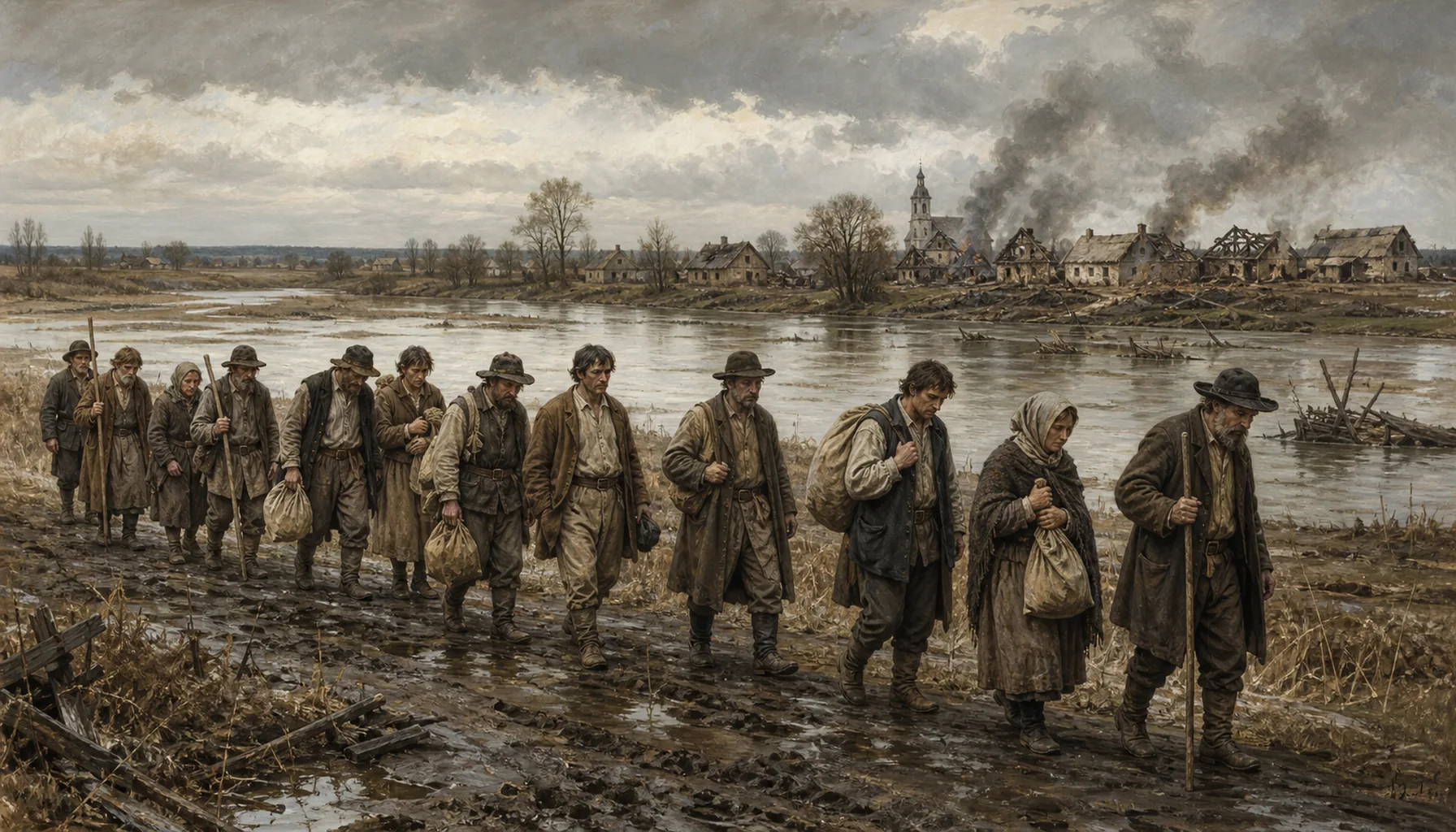
Ferenc Rákóczi II's uprising crossed and re-crossed the lower Váh, and the fighting ran on around Šaľa until 1708. A survey taken in 1715 found thirteen farming households and sixteen landless labourers in the whole town. Everything you can see in the old core is later than that, built by people repopulating an emptied place through the eighteenth century; the church of St Margaret, for instance, was raised only between 1828 and 1837. It is a useful lesson about the towns of the Slovak lowland — they look nineteenth-century because the whole eighteenth century went on recovering.Povstanie Františka II. Rákócziho prechádzalo dolným Považím sem a tam a v okolí Šale sa bojovalo až do roku 1708. Súpis z roku 1715 našiel v celom meste trinásť gazdovských domácností a šestnásť želiarov. Všetko, čo dnes v starom jadre vidíte, je mladšie — postavili to ľudia, ktorí vyprázdnené mesto počas 18. storočia znova zaľudnili; kostol svätej Margity napríklad postavili až v rokoch 1828 až 1837. Je to dobrá lekcia o mestách slovenskej nížiny: vyzerajú na devätnáste storočie preto, lebo celé osemnáste padlo na obnovu.