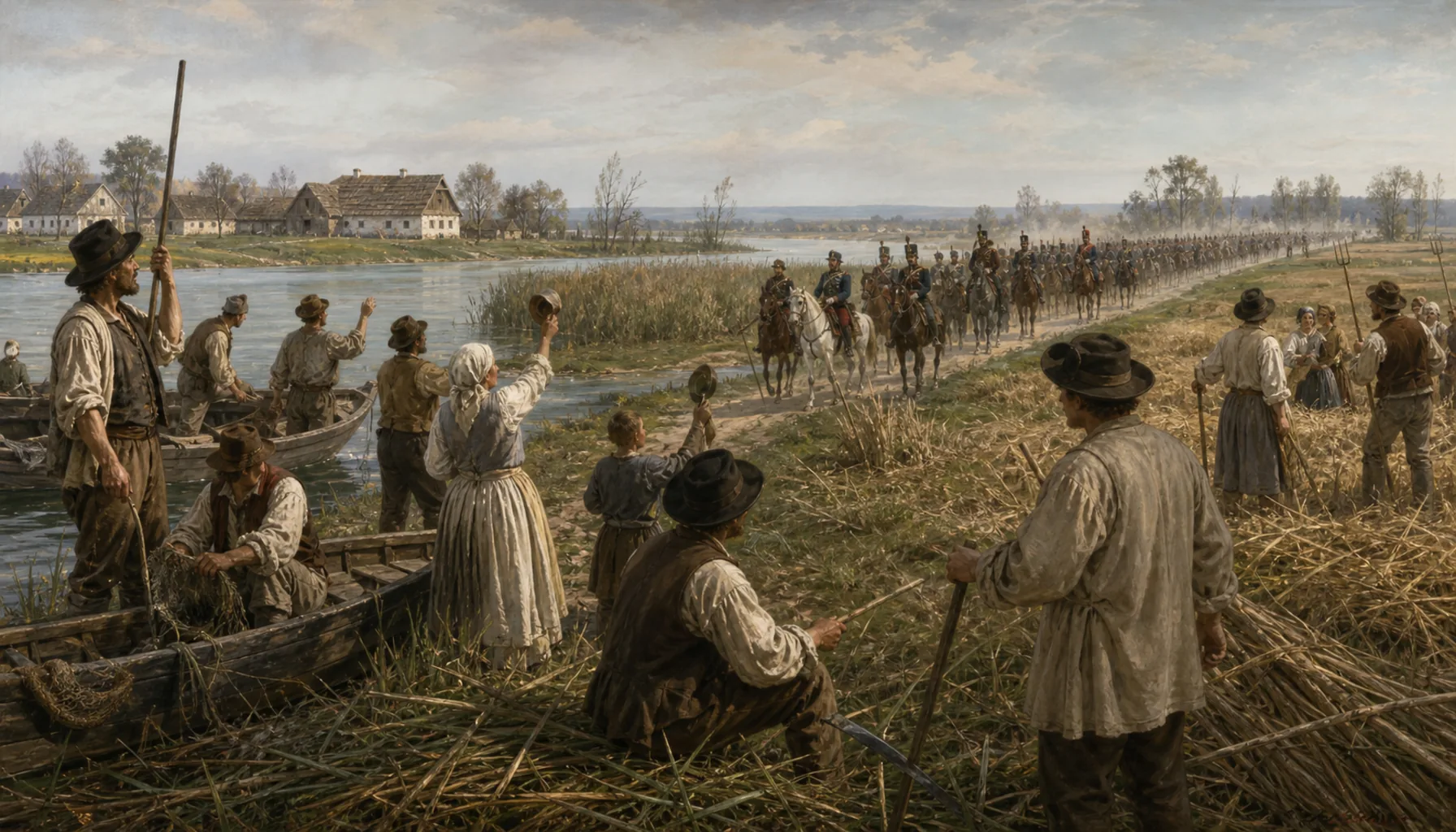
The April Laws of 1848 abolished serfdom across the kingdom, which meant the fishermen, reed-cutters and tenant farmers of Guta were no longer anybody's subjects and the land they worked could become their own. The war that followed reached them the next summer: the June 1849 campaign was fought at Zsigárd and Pered upstream, and troops moving through afterwards fired on the town. Guta had no walls and no garrison worth the name — a big lowland market village is defended by being poor and hard to get to. When the revolution was crushed the abolition of serfdom survived it; almost nothing else did.Aprílové zákony z roku 1848 zrušili v celom kráľovstve poddanstvo — gútski rybári, trstinári a sedliaci tak prestali byť niečími poddanými a pôda, na ktorej robili, sa mohla stať ich vlastnou. Vojna, ktorá nasledovala, sa k nim dostala nasledujúce leto: v júni 1849 sa bojovalo vyššie proti prúdu pri Žihárci a Perede a vojská, ktoré potom prechádzali okolím, na mesto strieľali. Gúta nemala hradby ani poriadnu posádku — veľkú nížinnú trhovú dedinu bráni to, že je chudobná a ťažko dostupná. Revolúciu porazili, no zrušenie poddanstva ju prežilo; takmer nič iné nie.