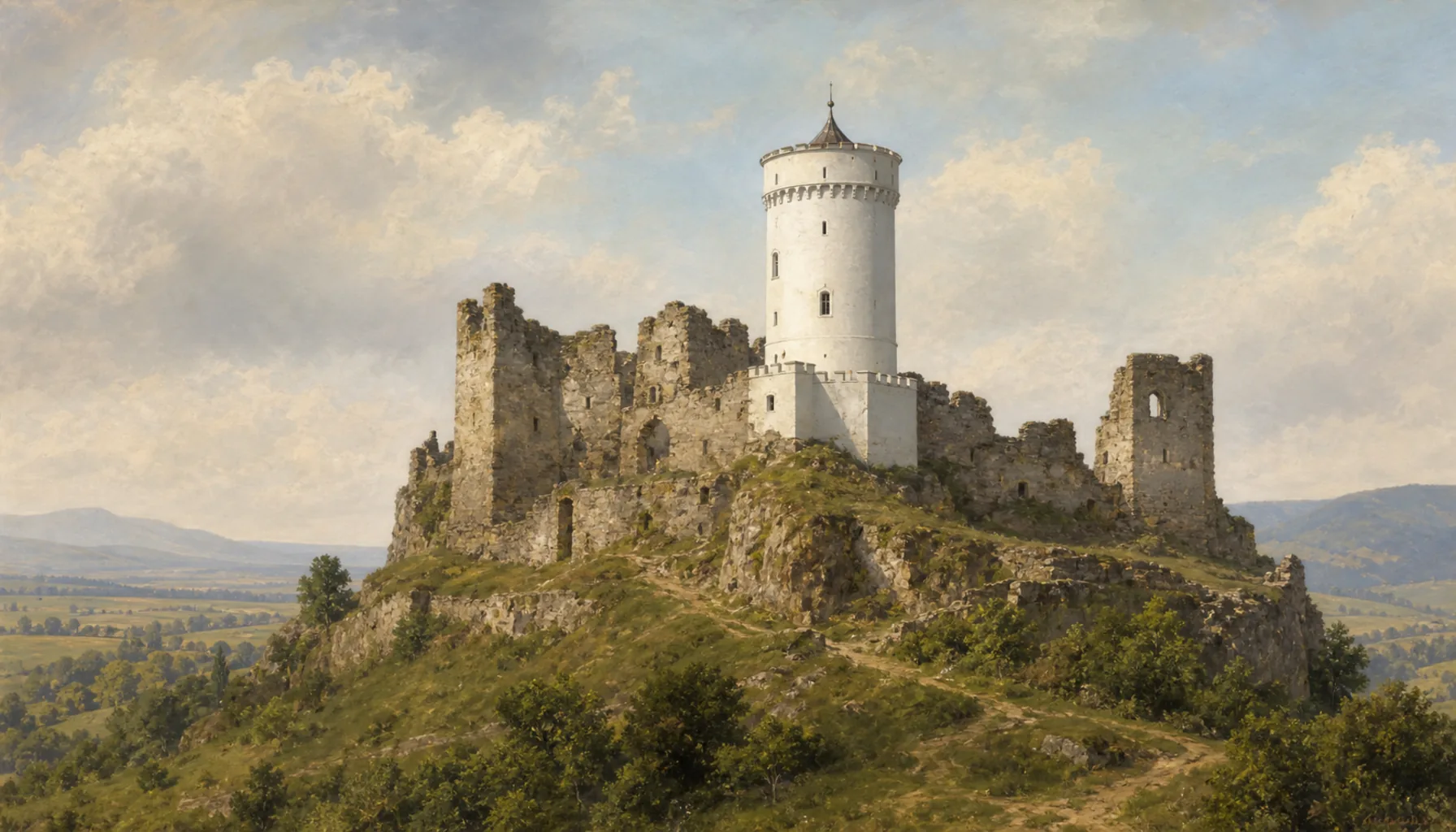
In the nineteenth century educated Europe fell in love with ruins: landowners stopped quarrying them for stone and started improving them instead. The last family to own this castle were the Stummers, industrialists whose money came from the works down in the valley, and in that century — the sources point chiefly to its later decades — the main tower was finished off in the romantic taste and part of the fortification was conserved. That is the slim white tower everybody photographs. It is not a forgery; it is a nineteenth-century opinion about the Middle Ages, built in stone. But it is the youngest thing on the hill, not the oldest.V devätnástom storočí sa vzdelaná Európa zamilovala do zrúcanín: majitelia ich prestali rozoberať na kameň a začali ich vylepšovať. Posledným rodom, ktorý hrad vlastnil, boli Stummerovci, priemyselníci, ktorých peniaze pochádzali z tovární v doline, a v tomto storočí — pramene ukazujú najmä na jeho záver — hlavnú vežu dostavali v romantickom slohu a časť opevnenia zakonzervovali. Práve tú štíhlu bielu vežu dnes všetci fotografujú. Nie je to falzifikát, je to názor devätnásteho storočia na stredovek, postavený z kameňa. Ale je to najmladšia vec na kopci, nie najstaršia.